
Shadow over Ukraine: Why Kremlin escalates ahead of NATO Summit
Elnur Enveroglu
Read moreThe timing is difficult to dismiss as a coincidence. As NATO leaders prepare to gather in Türkiye to discuss the future of European security, Russia has launched one of its fiercest waves of attacks against Ukraine in recent months. Cities across the country have again come under missile and drone bombardment, while fighting continues to intensify along key sectors of the eastern front. Militarily, these operations fit Moscow's broader campaign to wear down Ukraine. Politically, however, they send an unmistakable message beyond the battlefield.
Russia has long sought to shape diplomatic events through military escalation. Whenever significant international meetings approach, whether NATO summits, G7 gatherings or major conferences on Ukraine, the Kremlin has frequently attempted to alter the political atmosphere by changing facts on the ground. The objective is rarely limited to territorial gains. Rather, it is to influence the calculations of foreign governments before they make critical decisions.
The NATO summit in Türkiye provides precisely such an opportunity.
From Moscow's perspective, NATO remains the central strategic challenge. Russian officials have repeatedly argued that the Alliance's expansion towards Russia's borders constitutes an existential threat, a narrative that has been a cornerstone of Kremlin foreign policy for more than two decades. While Ukraine's NATO membership remains distant, Moscow continues to portray every enhancement of NATO's support for Kyiv as further evidence that the conflict has evolved into a broader confrontation with the West.
The location of this week's summit adds another layer of symbolism. Türkiye occupies a unique position within NATO. It controls access to the Black Sea through the Turkish Straits, maintains extensive dialogue with both Kyiv and Moscow, and has often acted as an intermediary during periods of heightened tension. A NATO summit in Türkiye inevitably reinforces the Alliance's visibility in a region that Russia considers central to its own security interests.
Although there is no evidence that Russia's latest attacks are a direct response to the summit itself, the broader strategic context makes the timing highly significant. The Kremlin has consistently warned that increased NATO activity near Russia's perceived sphere of influence risks further escalation. Intensifying military pressure before allied leaders convene allows Moscow to demonstrate that it retains the initiative and cannot be deterred by diplomatic symbolism.
This escalation also serves domestic purposes. Sustaining a narrative of military momentum remains politically important for the Kremlin. Presenting continued offensives as evidence of Russian strength helps reinforce public support while signalling that external pressure has failed to weaken Moscow's determination.
For Ukraine, the response is unlikely to involve dramatic strategic shifts. Kyiv has become increasingly adept at absorbing sustained aerial bombardments while preserving its military effectiveness. Ukrainian forces will continue to rely heavily on dispersed logistics, enhanced air defences, and precision strikes against Russian military infrastructure behind the front lines. Ukraine has also expanded its long-range drone capabilities, allowing it to target airfields, ammunition depots and defence industries deep inside Russian territory. Such operations are expected to continue as Kyiv seeks to impose costs without overextending its conventional forces.
The greater challenge lies in sustaining international support.
President Volodymyr Zelensky is expected to use the NATO summit to underline that Russia's latest attacks demonstrate precisely why Ukraine requires additional military assistance. His argument is straightforward: every pause in Western support creates opportunities for Moscow to escalate.
Whether the United States responds positively depends less on battlefield developments than on political calculations in Washington. American support remains indispensable for Ukraine's air defence, intelligence sharing and long-range strike capabilities. If the White House concludes that Russia is deliberately escalating to intimidate NATO ahead of the summit, it could reinforce arguments for maintaining or even increasing military assistance. Conversely, if Washington prioritises avoiding direct confrontation with Moscow, further support may remain measured and carefully calibrated.
The most likely outcome is continued assistance, but not without limitations. Successive US administrations have attempted to balance strengthening Ukraine with avoiding actions that Russia could interpret as direct NATO participation in the war. That balancing act is unlikely to disappear simply because Russian attacks have intensified.
For Europe, meanwhile, Russia's latest offensive reinforces a broader lesson. The Kremlin increasingly treats military operations and diplomacy as interconnected instruments rather than separate domains. Military escalation has become a means of influencing negotiations, shaping international perceptions and testing Western cohesion.
The consequences of the current offensive therefore extend beyond immediate battlefield losses. Intensified attacks will almost certainly deepen Ukraine's requests for additional air defence systems, accelerate European defence cooperation and strengthen NATO's argument that Russia remains the Alliance's principal long-term security challenge.
Ironically, Moscow's effort to discourage NATO involvement may ultimately produce the opposite effect. Every major Russian escalation since 2022 has strengthened political support within much of Europe for higher defence spending, greater military coordination and deeper strategic planning.
The summit in Türkiye is therefore unlikely to be overshadowed by Russia's latest attacks. Instead, those attacks may become one of the strongest arguments for why NATO leaders believe sustained support for Ukraine remains essential. Rather than weakening Allied resolve, Moscow's renewed offensive risks reinforcing the very strategic unity it seeks to undermine.
In that sense, Russia's missiles are aimed not only at Ukrainian cities, but also at the political calculations of NATO capitals. Whether that strategy succeeds will depend less on events in the skies over Ukraine than on the decisions taken around the negotiating table in Ankara.
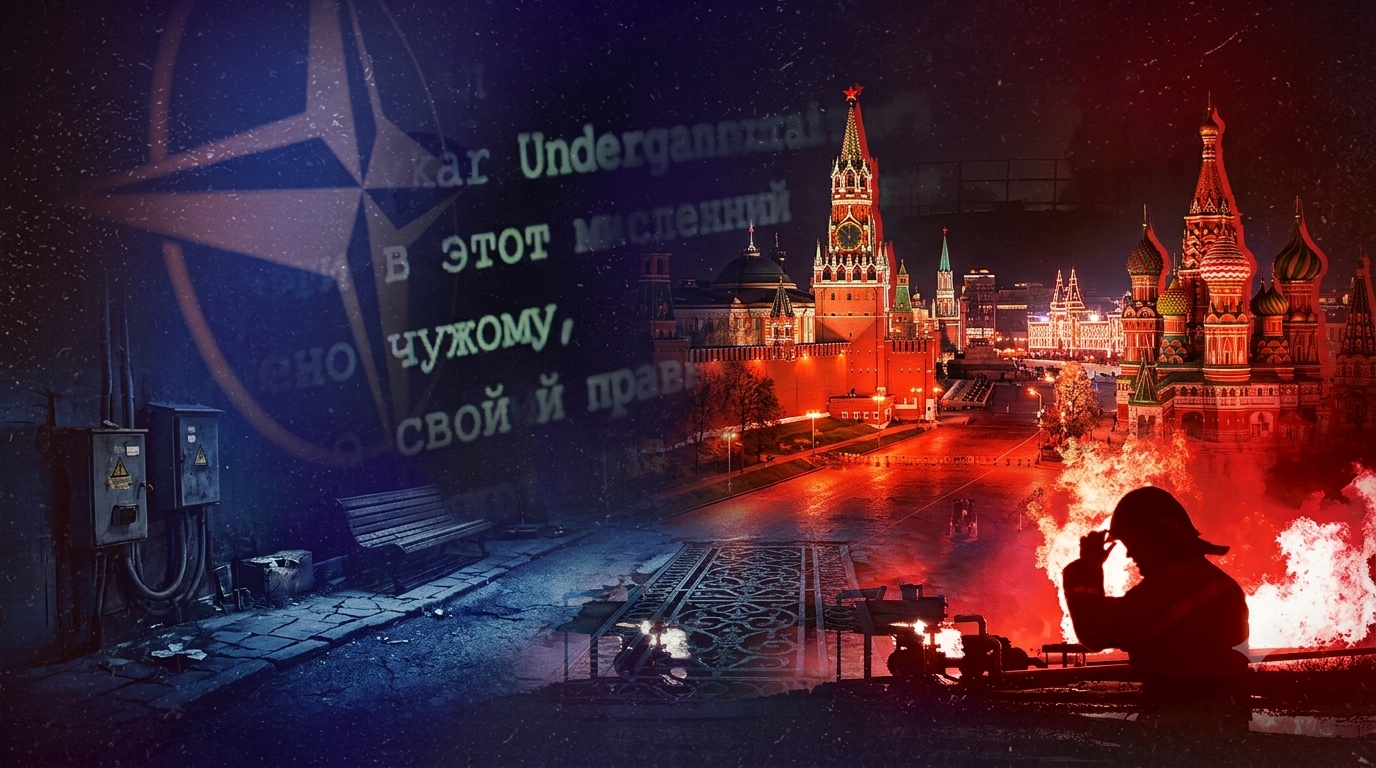
The image was created by AI
Here we are to serve you with news right now. It does not cost much, but worth your attention.
Choose to support open, independent, quality journalism and subscribe on a monthly basis.
By subscribing to our online newspaper, you can have full digital access to all news, analysis, and much more.
You can also follow AzerNEWS on Twitter @AzerNewsAz or Facebook @AzerNewsNewspaper
Thank you!