
Brussels finally realised what Baku has been saying for years
Akbar Novruz
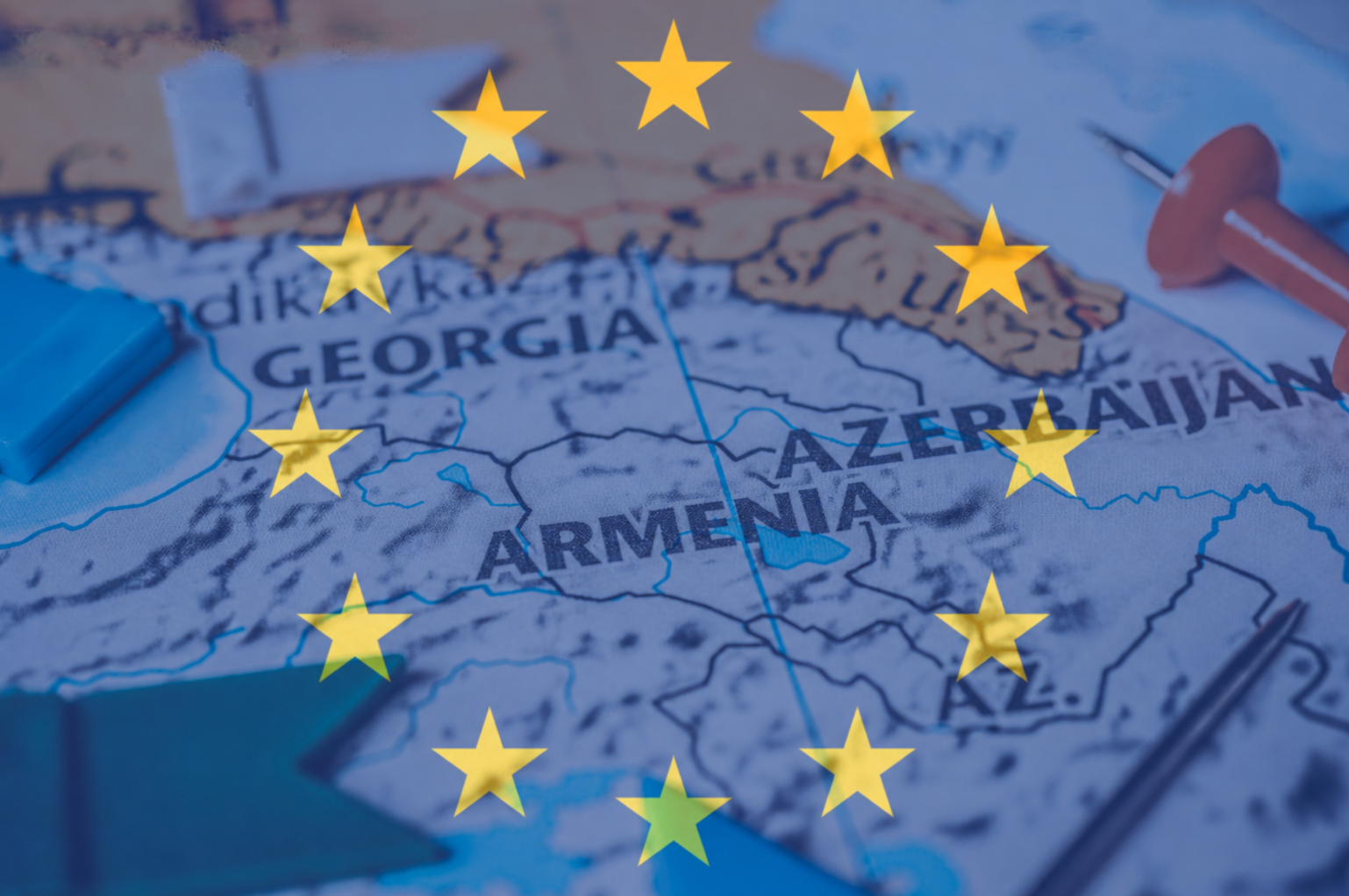
Read moreThere is a particular quality to diplomatic visits that arrive a little late. It brings the vigor of earnest intentions, tinged by the 'small embarrassment' of being too late in realizing something obvious, the feeling that everyone there knows that things could have been much closer much earlier, if only it hadn’t been for the vagaries of history. The two-day visit by Ursula von der Leyen to the South Caucasus this week, Baku on July 1 and Yerevan on July 2, carried that special character. Two cities, two leaders, two entirely different sets of talks, and one thing is certain: the EU has finally realized the importance of this region.
However, the setting could not be more advantageous for the EU than it has been in decades. The historic peace agreement between Armenia and Azerbaijan was signed by the two nations in the White House of US President Donald Trump in August 2025, putting an end to their decades-old dispute over Karabakh and creating the opportunity for a new transport route between Azerbaijan and its Nakhchivan enclave. Despite, or maybe thanks to, little skirmishes, threats coming from Russia, including several economic sanctions against Armenia in the form of prohibitions on importing Armenian flowers, brandy, wine, fruits, and other produce ahead of the elections, Civil Contract, headed by Pashinyan, took the win in Armenia's June election campaign. People, perhaps, chose peace and prosperity.
Baku visit
Now, it is more appropriate to analyze the visit in two spectra. Firstly, the Baku leg of the trip was, in tone and substance, a conversation between equals, or at least between parties that have learned to treat each other as such. President Ilham Aliyev noted at the joint press conference that Azerbaijan's natural gas exports to EU member states have increased by almost 65% since the 2022 strategic energy memorandum was signed, that half of all Azerbaijani gas exports now flow to the European Union, and that the EU is Azerbaijan's single largest trading partner, accounting for over 40% of its total trade. Von der Leyen, for her part, was explicit about what that relationship has meant: that when Russia 'weaponised' energy and cut off supplies to Europe, Azerbaijan stepped up. The gratitude was genuine, and the strategic dependency it expressed was equally so.
What was new about July 1st was the architecture of what follows next. Von der Leyen launched the European Global Gateway Investment Programme, worth €200 million, to link Southern Caucasus countries through transport, energy and digital connectivity and to generate up to €2 billion in total investment. Specific initiatives mentioned by von der Leyen included the construction of railway lines via Nakhchivan and the development of the Baku port infrastructure, which fits perfectly into the project known as the Middle Corridor, the transit corridor between Europe and Central Asia through the Caspian Sea, which offers Europe a way out from the reliance on Russian and volatile Middle Eastern transit routes. The EU suggested establishing the EU-Azerbaijan Connectivity Partnership, alongside a High-Level Connectivity Dialogue on transport, energy, and digital infrastructure, and a Regional Connectivity Investment Conference to be held in Baku. The conference is going to gather representatives of Europe, the Southern Caucasus, and Central Asia, which means that Baku will be able to prove itself not only as an energy supplier but also as a convening power.
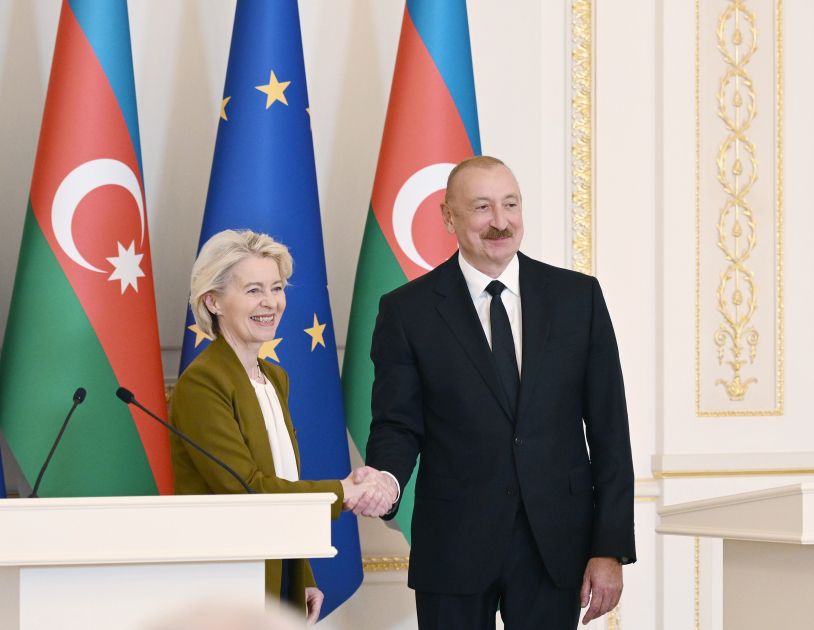
When it came to renewables, the topic brought to light an aspect that was scarcely addressed four years ago. Von der Leyen congratulated Azerbaijan on its intentions to develop wind power in the Caspian Sea and emphasized the significance of the Green Energy Corridor connecting Azerbaijan to the EU, adding that increased production of renewable sources would allow more gas to be exported from the region and would contribute to energy security. Aliyev assured von der Leyen that all contracts that have been signed guarantee eight gigawatts of solar and wind power in five to six years.
The €20 million programme aimed at fostering peace through initiatives in healthcare, mine clearance, rural development, and assistance to small businesses in the border areas of the two countries was the most obvious indication that Brussels is trying to get involved in the process of normalisation rather than just watching it from afar. It remains to be seen whether or not it will be able to exercise such influence.
Yerevan visit
If the Baku visit was a conversation about mutual interests calmly transacted, the Yerevan visit on July 2 carried an entirely different register. It was urgent and more political than anything else, and it was addressed to a third party that was not even mentioned in the official documents. While visiting Yerevan, von der Leyen was set to unveil a number of unusual economic measures which would enable the country to weather “Russia’s economic coercion.”
Well, that is a hefty offer. The EU suggested the implementation of Autonomous Trade Measures that will open up almost 80% of Armenia’s exports to the European Union, including almost 99% of Armenia’s exports of fresh fruit, vegetables and plants to Russia and over 91% of beverages and spirits, precisely the product lines that were prohibited by Rospotrebnadzor in the weeks preceding Armenia’s elections. Now, these were the products Russia used as some sort of leverage, and now the EU is proposing to accept them. Moreover, Armenia received an additional €18 million as the final tranche of a €52 million aid package that Brussels arranged in June, and EU experts will be sent to assist in the diversification of Armenia’s energy imports, just like Brussels did for Ukraine and Moldova after 2022.
Also, what needs to be kept in mind is that Pashinyan announced that Armenia aims to achieve visa liberalisation with the EU by 2029, depending on the pace of reforms. Von der Leyen confirmed that the EU is conducting an assessment mission this autumn and that Armenia is currently the only country in an active visa liberalisation process with the union, a political signal as significant as any financial package announced this week.
Von der Leyen's language in Yerevan was among the most politically pointed she has deployed on any foreign visit in recent months. "The people of Armenia spoke clearly," she said. "They chose democracy. The rule of law. They chose reform and peace. They chose an open, welcoming and inclusive society. And they chose to partner with the European Union." Such an unambiguous message. Pashinyan's victory at the polls, contested by Russian-backed opposition in Armenia's Constitutional Court, was getting its validation from Brussels in real time. Russia, which sees parallels between Armenia's path towards the EU and that of Ukraine and hints at consequences, was being called out through an €18 million check and a trade deal.
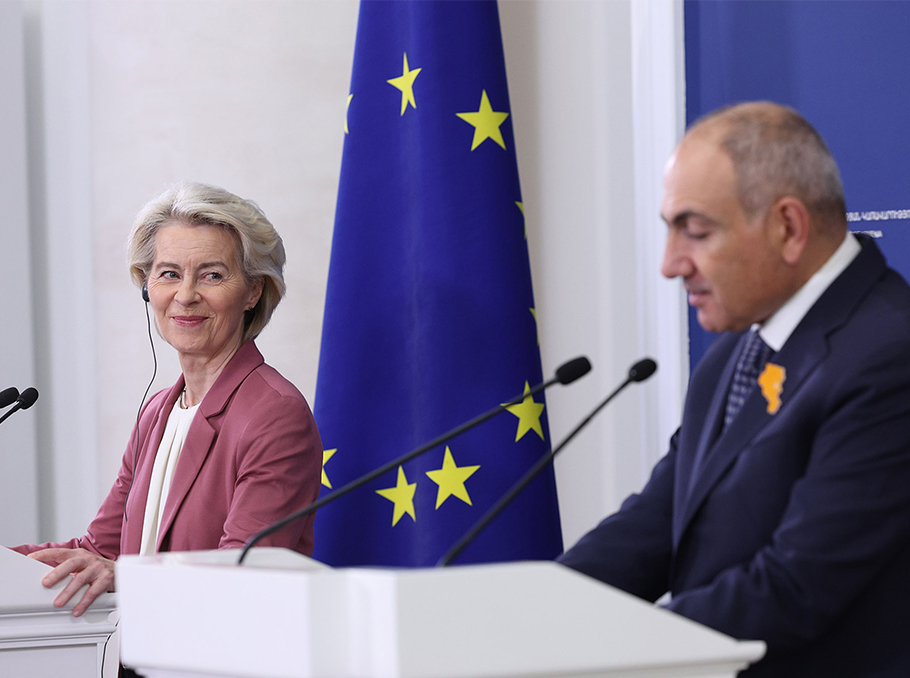
Pashinyan, for his part, said that Armenia will construct power transmission lines with both Azerbaijan and Türkiye, which will improve the energy security of Armenia. The above-mentioned statement is another sign of how the practical steps toward normalisation are proceeding faster than diplomacy; in addition to the internet transit agreement concluded last week by AzerTelecom, now there is another step being made towards the practical implementation of peace in the region. Von der Leyen, on the other hand, backs South Caucasus peace with a €2 billion connectivity vision. Peace might still not have been officially declared, but its form is gradually taking shape.
Hardest pills to swallow
Taken together, the two visits represent the most coherent and consequential European engagement with the South Caucasus since the region's post-Soviet independence. The statements are sincere, the political signals are strong, and although the financial support does not revolutionize the region’s economic situation, the manner in which the aid is distributed fosters dependencies through trade, infrastructure cooperation, and visa requirements.
Nonetheless, the trip brings to attention some of the limitations that Brussels brings to bear in this area. It was not in Brussels, but in Washington, where the peace agreement was negotiated. It was out of necessity that energy ties between Brussels and Azerbaijan were strengthened in 2022, and not due to a planned partnership approach. Brussels now proposes a Connectivity Partnership with Baku, four years after Baku argued for its need. In Armenia’s capital, Yerevan, on the other hand, the strongest economic instrument that was put in place this week, involving the autonomous liberalization of 80% of Armenian exports, was as a result of Russian pressure, and not Brussels’ enlargement plan.
Whether that matters depends on what the EU is actually trying to achieve. Indeed, as the saying goes, for every action, there is an equal and opposite reaction. If the goal is to consolidate the peace, deepen economic ties, and ensure that the South Caucasus's growing infrastructure significance is partially routed through European interests rather than exclusively through Turkish, Russian, or Chinese ones, then this week's visits were a meaningful step. But if the goal is to become the defining external actor in a region where the United States, Russia and Türkiye have all been more consistently present, the work is considerably larger. Ilham Aliyev welcomed Brussels with the cordiality of a person who understood his leverage in Baku. Nikol Pashinyan welcomed it with the relief of a man who knew that he needed their support. Perhaps both reactions told their own story about where the EU stands and how far it still has to go.
Here we are to serve you with news right now. It does not cost much, but worth your attention.
Choose to support open, independent, quality journalism and subscribe on a monthly basis.
By subscribing to our online newspaper, you can have full digital access to all news, analysis, and much more.
You can also follow AzerNEWS on Twitter @AzerNewsAz or Facebook @AzerNewsNewspaper
Thank you!