
Iran faces battle on two fronts: war abroad, divisions at home

Elnur Enveroglu
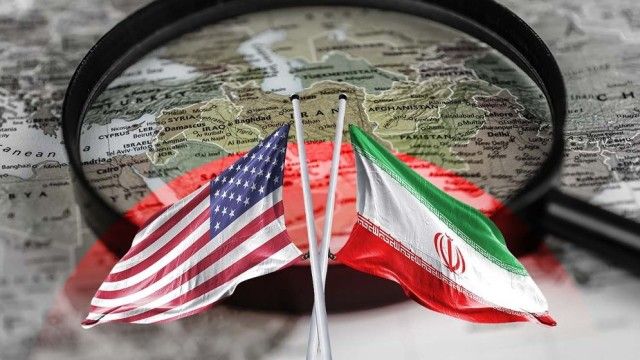
Read moreThe US-Iran relationship, which entered a brief and fragile ceasefire on June 17 but remained punctuated by periodic flare-ups, appears to be shifting into a new phase of confrontation as that arrangement expires. Washington is now signalling that it wants to tighten its grip on the Strait of Hormuz and is increasingly calling on Tehran to raise the white flag.
What is striking is how sharply the American tone has changed. Only a few months ago, Washington appeared considerably more cautious in dealing with Tehran. Today, the rhetoric is far more direct, while the US military is projecting growing confidence in both its tactical capabilities and its ability to make decisions on the battlefield. The message from Washington is increasingly clear that the United States believes it has room to manoeuvre.
Iran's tactical response, however, remains much harder to read.
There are several known and unknown factors at play. Iran is a Middle Eastern power fighting on its own doorstep, and its geography gives its ground forces certain advantages. Tehran knows the terrain, understands the operating environment and has decades of experience preparing for the possibility of a conflict with a technologically superior adversary.
But geography can only go so far.
In terms of weaponry, ammunition, military technology and air-defence capabilities, Iran remains significantly weaker than the United States. That imbalance inevitably raises questions about how Tehran could sustain a conventional war against Washington. Yet Iran's difficult and rugged terrain could also serve as a natural shield, making a straightforward ground campaign far more complicated than the balance of military hardware might initially suggest.
This is where history begins to matter.
The Iran-Iraq War offers a number of lessons that could resonate with the current confrontation. Wars are not fought on spreadsheets alone. Military superiority does not automatically translate into political victory, particularly when an adversary is fighting on the basis of national resilience, historical memory and a determination to survive.
History, at times, becomes an expression of national identity.
Iran has repeatedly demonstrated that it can absorb enormous pressure without necessarily collapsing under it. Its political system has survived war, sanctions, economic isolation and internal upheaval. That does not mean Tehran is invulnerable. It means that any assumption that military pressure alone will produce a rapid political capitulation could prove dangerously optimistic.
For Washington, however, the objective is not necessarily the occupation of Iran.
The strategic prize is more specific: bringing Iran's nuclear facilities under effective control, preventing further uranium enrichment and, ultimately, reshaping the political environment in Tehran so that the country's leadership is more responsive to Western demands.
That is a far more ambitious objective than simply winning a war.
And it raises the central question: can Washington actually achieve it?
Iran's internal political situation adds another layer of uncertainty. Tensions within the ruling establishment appear increasingly significant, particularly between the reformist camp and those aligned with the Supreme Leader and the Islamic Revolutionary Guard Corps.
President Masoud Pezeshkian has advocated greater engagement with the United States and measures aimed at stabilising Iran's battered economy. His political priorities are, in many respects, rooted in the practical realities facing ordinary Iranians: economic pressure, sanctions, declining living standards and the need to restore some form of normality.
The hard-line establishment, by contrast, places far greater emphasis on regime security and political survival.
That difference is becoming increasingly important.
A government can survive political dissent. It can survive external pressure. But when it begins struggling to meet the economic expectations of its own population, the pressure starts coming from both sides of the door.
Reports surrounding the political isolation of senior figures, including the reported difficulties surrounding Pezeshkian's access to the new Supreme Leader, Mojtaba Khamenei, as well as questions over the Supreme Leader's public visibility, have fuelled speculation about cracks within the system.
It would be premature to declare that the Iranian regime is approaching collapse. Political systems rarely fall simply because their opponents expect them to.
But Washington may nevertheless see an opportunity.
Sustained American pressure could deepen existing divisions within Iran's political establishment, particularly if military confrontation is combined with economic pressure and diplomatic isolation. The objective may therefore be less about knocking down the entire Iranian state in one blow and more about gradually weakening its foundations.
That is where the real contest may be decided.
Both Washington and Tehran may speak publicly as though they are prepared for direct war, but neither side is unaware of its own vulnerabilities. The United States possesses overwhelming technological and military advantages, yet a prolonged conflict with Iran could carry enormous regional and economic costs. Iran, meanwhile, may have fewer conventional military options, but it retains the ability to make any confrontation far more expensive and unpredictable than Washington would prefer.
That is why diplomacy remains on the table.
Neither side necessarily wants to blink first, but neither wants the conflict to spiral beyond its control. The rhetoric may sound like war is inevitable; the calculations behind the rhetoric suggest otherwise.
And then there is the geography.
The Strait of Hormuz remains one of the world's most consequential strategic chokepoints. The Bab el-Mandeb and other critical maritime routes across the Middle East add further weight to Iran's ability to disrupt regional trade and energy flows. For Washington, maintaining freedom of navigation through these arteries is not simply a military objective. It is an economic and geopolitical imperative.
As long as those chokepoints remain central to global energy security, Iran will remain under the strategic spotlight.
For Tehran, the challenge is to demonstrate that it can withstand American pressure without pushing the United States towards a more decisive military response. For Washington, the challenge is even more delicate: to apply enough pressure to force concessions without turning pressure into a war it cannot easily contain.
The US-Iran confrontation, therefore, is not simply a question of who has the stronger army.
It is a test of political endurance.
At present, both sides are walking a tightrope. Neither appears ready to give the other a free pass, but neither seems willing to cut the rope either.
The skies over the Middle East may be darkening, and the pressure around Iran is clearly building. But whether those clouds produce lightning or simply another round of brinkmanship remains the defining question.
For now, the storm is gathering. The question is whether either Washington or Tehran is prepared to make the first move into the rain.
Here we are to serve you with news right now. It does not cost much, but worth your attention.
Choose to support open, independent, quality journalism and subscribe on a monthly basis.
By subscribing to our online newspaper, you can have full digital access to all news, analysis, and much more.
You can also follow AzerNEWS on Twitter @AzerNewsAz or Facebook @AzerNewsNewspaper
Thank you!