
Freight rates hit two-year high as geopolitics disrupt global trade

Ulviyya Poladova
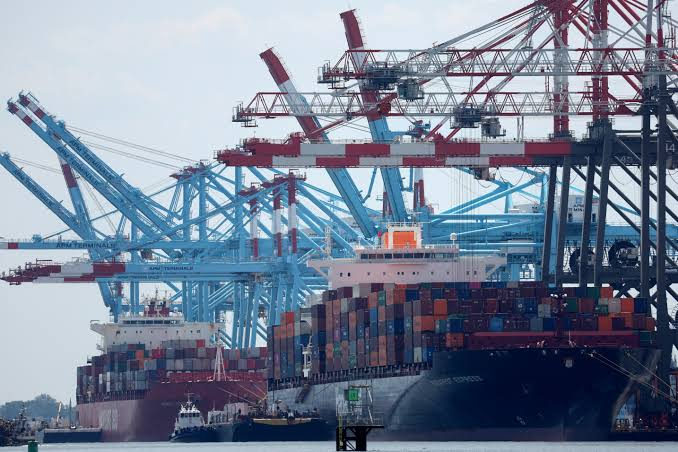
Read moreGlobal maritime freight rates, long regarded as one of the most cost-efficient modes of transporting goods worldwide, have surged to their highest level in two years. The sharp increase reflects a combination of geopolitical instability, shifting trade policy expectations, capacity management by shipping lines, and ongoing disruptions to key maritime corridors.
According to industry data from Freightos and reporting by The Financial Times, container shipping costs on major Asia–US and Asia–Europe routes have climbed steeply, signaling renewed volatility in global supply chains.
One of the most striking developments has been the rapid escalation of rates on key intercontinental routes. Freightos data shows that the cost of shipping a standard 40-foot container from China to the U.S. East Coast has risen to approximately $7,880, marking a 62% increase within a single month. Similarly, shipments from China to the Mediterranean have climbed by 47%, reaching around $6,431 per container.
These levels represent the highest rates recorded since the summer of 2024, when global shipping markets experienced similar turbulence driven by security threats in the Red Sea. At that time, prices briefly approached $9,800 per container on some routes before easing.
Persistent security risks in and around key Middle East chokepoints continue to distort schedules. Even when not directly impacting all container lanes, uncertainty elevates insurance costs, forces re-routings for some services, and contributes to schedule unreliability. When services avoid higher-risk waters and route around Africa, transit times lengthen by 10–15 days, reducing effective capacity and feeding congestion and bunching.
Maritime security risks in the Red Sea have forced many shipping operators to avoid the Suez Canal route, instead diverting vessels around the Cape of Good Hope at the southern tip of Africa.
Although rerouting was initially seen as a temporary precaution, many carriers have maintained these longer routes due to ongoing risk assessments. The cumulative effect has been a reduction in effective global shipping capacity, as vessels spend more time in transit and less time available for new cargo rotations.
Analysts note that even small disruptions in major maritime chokepoints can have outsized effects on global freight pricing due to the highly interconnected nature of container logistics.
In addition to geopolitical risks, shipping companies themselves have contributed to the rise in freight rates through deliberate capacity management. Carriers have increasingly adjusted schedules and reduced available sailings to optimize profitability in a high-cost environment.
By limiting supply, shipping lines can better balance vessel utilization against rising operational expenses such as fuel, insurance, and extended voyage durations.
While this approach stabilizes revenues for carriers, it adds pressure on exporters and importers, who face less predictable pricing and tighter booking availability. In some cases, companies are forced to secure space weeks in advance or pay premium rates for last-minute shipments. There have been cases where ships were deliberately sunk in order to obtain insurance payouts from insurance companies.
Adding to market volatility is growing uncertainty surrounding global trade policy, particularly in the United States. Reports indicate that the White House is considering the introduction of new tariffs of at least 10% on goods from multiple countries, potentially linked to investigations into forced labor practices.
The proposed measures could affect a broad range of major trading partners, including China, the European Union, India, Japan, and the United Kingdom. If implemented, these tariffs would come into force ahead of the expiration of an existing global 10% tariff regime set to lapse on July 24.
The anticipation of these policy changes has already influenced shipping behavior. Importers are reportedly accelerating shipments in an attempt to front-load inventory before potential cost increases take effect.
Historically, expectations of tariff changes have had immediate effects on logistics markets, even before official implementation. The current environment appears to follow the same pattern, with uncertainty driving behavioral shifts across global supply chains.
However, the current market structure suggests that even in a best-case scenario, normalization may be gradual. The combination of rerouted trade flows, cautious carrier capacity management, and ongoing policy uncertainty creates a complex environment that resists quick correction.
The present surge in container shipping costs is not unprecedented but fits within a broader pattern of cyclical volatility in global logistics.
Image: Mika Sager / Reuters
Here we are to serve you with news right now. It does not cost much, but worth your attention.
Choose to support open, independent, quality journalism and subscribe on a monthly basis.
By subscribing to our online newspaper, you can have full digital access to all news, analysis, and much more.
You can also follow AzerNEWS on Twitter @AzerNewsAz or Facebook @AzerNewsNewspaper
Thank you!