
China courts Southeast Asia as confidence in US leadership wavers

Akbar Novruz
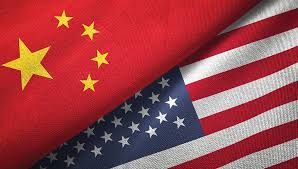
Read moreChina has delivered one of its clearest messages yet to Southeast Asia, insisting that it does not seek regional dominance and should instead be viewed as a force for stability and cooperation. The statement comes at a time when Beijing sees an opportunity to strengthen its position in the region amid growing doubts over Washington's long-term commitment to its Southeast Asian partners, AzerNEWS reports.
Ahead of the ASEAN Summit in Manila, Chinese officials intensified their diplomatic outreach, portraying Beijing as a supporter of multilateralism and regional stability while criticizing what they described as U.S. protectionism and unilateral economic policies.
Chinese Foreign Minister Wang Yi said China would continue to oppose "protectionism and tariff hegemony," promote "true multilateralism," and work with neighboring countries to build "a peaceful home" by managing disputes and preventing conflicts.
During a recent summit in Shenzhen, Guangdong province, a high-ranking official from the Communist Party addressed ASEAN, emphasizing that China does not aspire to be a regional hegemon. He expressed a commitment to enhancing energy cooperation with the Southeast Asian bloc.
Sun Haiyan, the deputy head of the party’s International Department, stated, “For a country like China that inherently values ‘harmonious coexistence,’ it is extremely challenging to undergo a ‘genetic mutation’ and transform into a militaristic power that intimidates the smaller and weaker nations.” Sun oversees party-to-party diplomacy and made these remarks at the Greater Bay Area-ASEAN summit.
Beijing's diplomatic messaging coincides with findings from the State of Southeast Asia: 2026 Survey Report, published by the ISEAS–Yusof Ishak Institute in Singapore, which showed a notable shift in regional sentiment.
According to the survey, 52% of respondents said they would choose China over the United States if forced to align with one major power, marking another year in which Beijing outperformed Washington in regional preference.
Analysts cited in the report argue that the shift reflects not only China's increasing engagement but also growing concerns over the consistency of U.S. policy toward Southeast Asia.
The changing geopolitical landscape was further influenced by the disruption caused by the conflict involving Iran and the temporary closure of the Strait of Hormuz, which significantly affected energy supplies across Southeast Asia.
Several countries, including Vietnam and the Philippines, reportedly drew on strategic fuel reserves, introduced energy-saving measures, and considered shortened work weeks to cope with supply shortages.
During the crisis, China expanded diplomatic engagement with regional governments and offered assistance, including support for aviation fuel supplies. Thailand's foreign minister publicly stated that the country had been forced to borrow $12.2 billion to address rising energy, food, and living costs, highlighting the economic pressures facing the region.
The developments have reinforced China's efforts to present itself as a reliable regional partner while positioning its approach as an alternative to U.S. policies in Southeast Asia.
Here we are to serve you with news right now. It does not cost much, but worth your attention.
Choose to support open, independent, quality journalism and subscribe on a monthly basis.
By subscribing to our online newspaper, you can have full digital access to all news, analysis, and much more.
You can also follow AzerNEWS on Twitter @AzerNewsAz or Facebook @AzerNewsNewspaper
Thank you!