
Europe's return to Baku comes with new strategic realities
Akbar Novruz
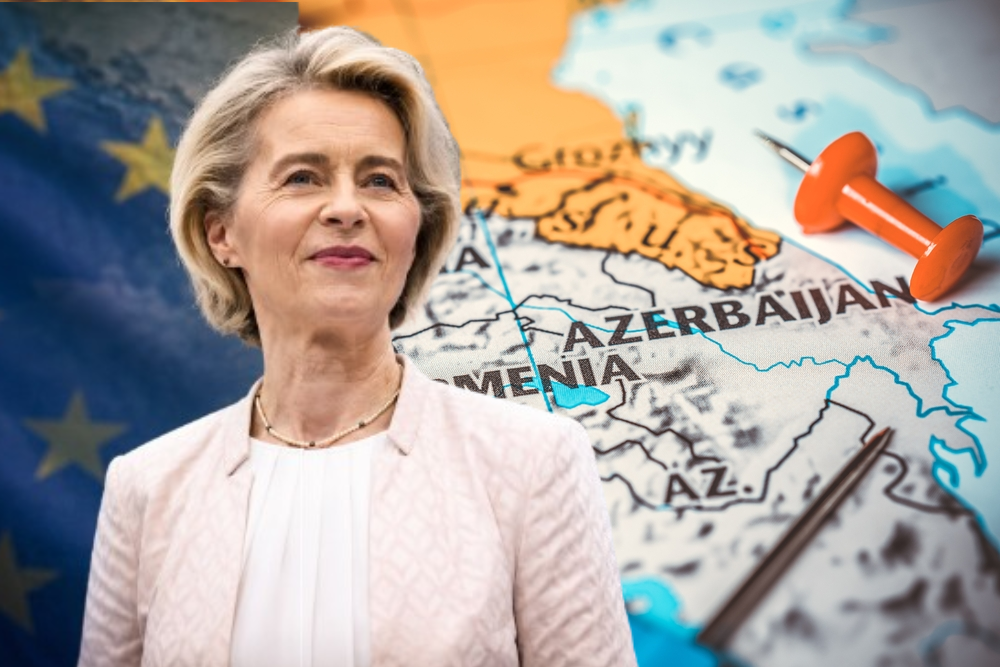
Read moreThe last time Ursula von der Leyen flew to Baku, in the summer of 2022, Europe was in the grip of an energy emergency. Russia had made energy supply its leverage and its weapon, as some would say, gas reserves across Europe were fragile, and Brussels required a new ally, fast. Against this background, the strategic energy memorandum was much more an emergency response than a vision for the future. Four years later, von der Leyen returns to Baku. The background and the parameters of the discussion have changed drastically.
This particular trip, which will happen today, on July 1, is the first to the region since the signing of the agreement in 2022 and also the first after both Armenia and Azerbaijan signed a peace treaty in the White House in August. The European Commission has listed four major areas of priority: assisting the peace process, energy cooperation, improved transport connectivity, and increased digitisation connections. In actual fact, these four headings constitute one overarching question: where the EU stands in relation to the South Caucasus, which has reconfigured itself without awaiting action from Brussels.
Azerbaijan's EU trade share stands at approximately 43% of total foreign trade, making Brussels simultaneously one of the country's largest partners and, interestingly, inconsistent at particular times. Indeed, energy is the most easily quantified component. Post-2022 memorandum, which envisaged bringing Azerbaijani gas exports to the EU to 20 billion cubic metres per year until 2027, Azerbaijan boosted its exports fivefold, covering four percent of the EU's pipeline gas demand. In 2025, for instance, Baku's gas exports to Europe reached 12.9 billion cubic metres, amounting to over half of Azerbaijan's gas exports, which is nearly eight percent of the EU's pipeline gas imports.
At present, sixteen European countries receive Azerbaijani gas, including ten EU member states; the largest EU importer is Italy, where the Azerbaijani company SOCAR concluded an acquisition of Italiana Petroli worth $3.27bn earlier this spring. The Southern Gas Corridor operates at full capacity and is structurally entrenched in the European market. However, what is still to be seen is whether the EU is willing to co-finance the infrastructure build-out to further increase these volumes, or rather will keep enjoying the Azerbaijani gas supply without forming the necessary partnership that could make the expansion economically feasible.
But besides the energy resources, the trip marks the tardy realization by Europe of another critical resource: connectivity. The Middle Corridor that passes through the South Caucasus and connects Europe to Asia has become a vital route of trade, especially in light of the disruptions brought about by the war in Iran. It seems likely that the European Commission president will talk about converting Azerbaijan and Armenia into the route from Central Asia to Europe, in a move that emphasizes not only their role as energy producers but also their role as transportation conduits, given the consideration that she will visit Yerevan as well on Thursday. The EU most definitely acknowledged Yerevan's high interest in integrating with the alliance, which brings a new perspective on the rapprochement agenda in the region.
EU investment in the development of transport, energy and information infrastructure along the route already amounts to more than 80 million euros, with plans to increase this sum to over 2 billion euros. This week, European Commissioner for Enlargement Marta Kos, who accompanied von der Leyen, unveiled the EU Connectivity Agenda Platform.
In numbers, briefly would be like; In 2025, Azerbaijan is expected to export 12.9 billion cubic meters (bcm) of gas to Europe, which will represent approximately 8% of the EU's pipeline imports. The EU accounts for 43% of Azerbaijan's total foreign trade, with 16 countries in Europe receiving Azerbaijani gas, 10 of which are EU member states. Furthermore, the EU has set an investment target exceeding €2 billion for infrastructure development along the Middle Corridor. By 2027, the goal established in a 2022 memorandum is to increase Azerbaijani gas exports to the EU to 20 bcm.
Now, perhaps, it is more complicated in a political context. Azerbaijan’s attitude to Brussels' senior delegations has traditionally been one of “calm pragmatism,” in that there is no demonstration of the sort of excitement seen on occasions of such a visit in smaller countries. Proclamations are important, but results are the decisive factor. It is a position of self-assurance and common sense, given how recent history unfolded. It was only when Europe faced an energy emergency that Brussels recognised Azerbaijan’s strategic value in 2022. Baku has not forgotten the order of events.
As for the process of reconciliation, the EU's contribution here is mostly symbolic as well. The Washington summit of August 2025, organized by the Trump administration, led to the initialling of the treaty, which forms the basis of all later diplomacy in the region. Brussels was not involved. The trip of von der Leyen comes after Antonio Costa, the President of the European Council, held talks with President Ilham Aliyev in Baku in March. There seems to be an escalation of involvement on the part of Europe that could be viewed, at least from the Baku perspective, as Brussels trying to get itself to the table where it does not belong.
All of this, however, does nothing to detract from the importance of the visit. It is significant simply because the President of the European Commission is visiting Baku on July 1, 2026, to interact with the South Caucasus, which is currently making efforts towards peacebuilding and infrastructure development. The EU’s Global Gateway strategy, the Green Energy Corridor, and discussions of expanding the Trans-Adriatic Pipeline- all this comes together in discussions that are taking place right now in this city. What is important about the visit to Baku is not the friendliness of the welcome extended to the delegation, but rather the specifics of what the EU is ready to commit to.
Here we are to serve you with news right now. It does not cost much, but worth your attention.
Choose to support open, independent, quality journalism and subscribe on a monthly basis.
By subscribing to our online newspaper, you can have full digital access to all news, analysis, and much more.
You can also follow AzerNEWS on Twitter @AzerNewsAz or Facebook @AzerNewsNewspaper
Thank you!