
Climate crisis enters heart of global economy

Ulviyya Poladova
Read moreThe world is once again burning. Climate change, driven largely by human activity, is becoming an increasingly deadly force. What was once described as a distant environmental problem has now become an immediate public health emergency, an economic burden, and a structural threat to modern societies. From collapsing infrastructure to rising mortality, the consequences of global warming are no longer theoretical. They are measurable, visible, and accelerating.
In recent decades, the Earth's climate system has undergone profound changes. Some countries are facing unprecedented heat, while others are experiencing unusually harsh winters, intense snowfall, or disruptive shifts in seasonal patterns. These developments are not isolated anomalies. Scientists describe them as part of a broader destabilization of the global climate system - one that includes rising average temperatures, melting glaciers, sea-level rise, altered rainfall cycles, and a growing frequency of extreme weather events such as floods, droughts, hurricanes, and wildfires.
One of the clearest indicators of this transformation has been the steady rise in global average temperature. Scientists reported that during the first ten months of 2015, the planet's average temperature was already 1.02°C above the pre-industrial baseline of the nineteenth century. That moment was symbolically important because it marked the first time in modern recorded history that the one-degree threshold had been crossed. Since then, the warming trend has only continued, reinforcing concerns that the world is moving closer to climate tipping points with each passing year.
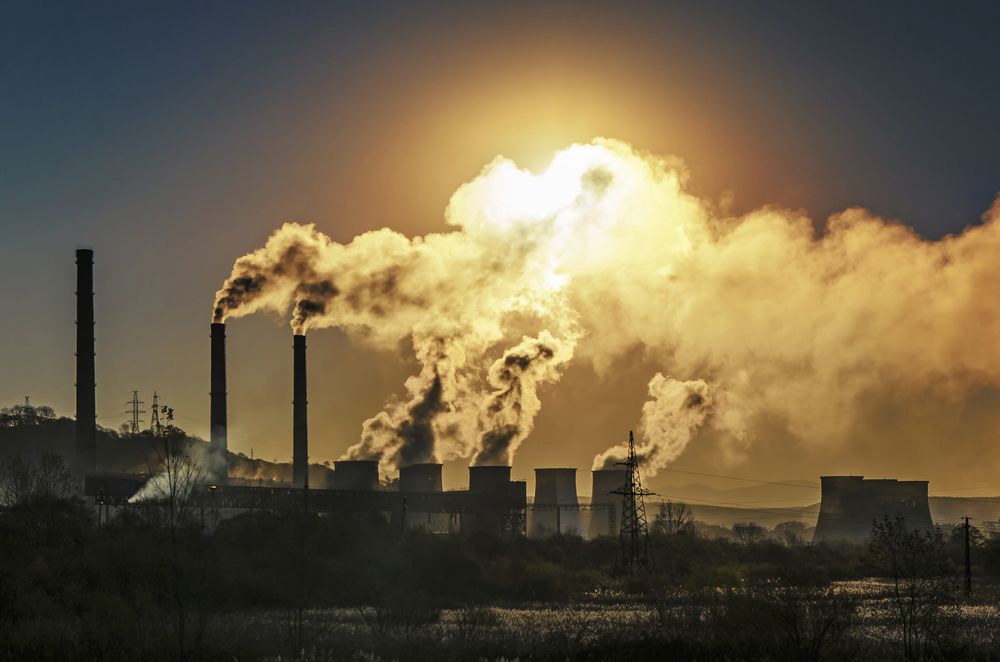
There is now overwhelming scientific consensus that the main driver of this warming is human activity, particularly the burning of fossil fuels such as coal, oil, and gas. These fuels account for the vast majority of greenhouse gas emissions, including nearly 90 percent of carbon dioxide emissions globally. Greenhouse gases trap heat in the atmosphere, intensifying the natural greenhouse effect and causing the planet to warm at a rate unprecedented in human civilization. This process does not simply make summers hotter. It disrupts atmospheric circulation, intensifies droughts, alters ecosystems, and magnifies the severity of extreme weather.
Europe offers one of the most alarming examples of this new climate reality. In recent years, the continent has experienced a series of severe heatwaves that would have once been considered nearly impossible. Countries such as France, Germany, the United Kingdom, Spain, Switzerland, Denmark, the Czech Republic, the Netherlands, Austria, and Hungary have all faced dangerous temperature spikes. These heatwaves have led to deaths, strained hospitals, forced governments to issue emergency restrictions, disrupted public events, and caused substantial economic losses.
The significance of these events lies not only in their intensity but also in their frequency. Heatwaves once described as "once-in-a-generation" are now recurring with disturbing regularity. This change reflects a core feature of climate change: it shifts the baseline. As average temperatures rise, extreme heat events become more likely, more prolonged, and more intense. What used to be exceptional becomes seasonal. What used to be survivable becomes deadly.
Extreme heat is particularly dangerous because it often kills indirectly. Public understanding of heat-related mortality tends to focus on heatstroke, but in reality, high temperatures trigger a cascade of medical complications. Heat puts severe stress on the cardiovascular system, worsens respiratory illnesses, increases the risk of kidney failure, and aggravates chronic conditions. Elderly people, children, those with pre-existing health problems, outdoor workers, and people without access to cooling or shelter are especially vulnerable. In cities, the danger is amplified by the urban heat island effect, where concrete, asphalt, and limited vegetation trap heat and keep nighttime temperatures dangerously high.
This is why heat is often called a "silent killer." Unlike storms or floods, it does not always produce immediate visual devastation. There are no collapsed buildings or dramatic televised scenes. Yet the death toll can be enormous. Mortality rises quietly through hospital admissions, cardiac arrests, respiratory failure, dehydration, and neglected chronic illness. The invisibility of the threat often leads governments and communities to underestimate it, even though it may be among the deadliest consequences of climate change.
Climate scientists have increasingly used attribution research to determine how much global warming contributes to specific extreme events. One of the most influential research collaborations in this field, World Weather Attribution, has shown that many recent heatwaves would have been virtually impossible without human-caused climate change. In some cases, the probability of such events has increased dozens or even hundreds of times compared with a world without significant warming. This is one of the strongest rebuttals to the argument that "the climate has always changed." While that statement is true in a geological sense, the speed, scale, and pattern of current warming are closely tied to industrial emissions.
Europe is warming faster than the global average, making it especially exposed. This matters because much of the continent's infrastructure, housing stock, schools, transport systems, and healthcare services were designed for temperate conditions, not prolonged extreme heat. Many buildings in northern and central Europe were built to retain warmth, not release it. Air conditioning remains less common in some countries than in other hot regions of the world. As a result, even temperatures that might be manageable elsewhere can become highly dangerous in European cities and homes.
The implications go far beyond public health. Extreme heat is increasingly an economic and infrastructural problem. Agriculture suffers from drought stress, lower yields, and livestock losses. Transportation networks are disrupted when roads soften, rails buckle, and airport runways overheat. Energy systems face surging demand as cooling needs rise, often at the same time that hydropower output declines and thermal power plants become less efficient due to warm water conditions. Labor productivity also drops sharply during extreme heat, especially in construction, manufacturing, logistics, and outdoor services.
An often overlooked consequence of climate change is its growing impact on digital infrastructure. Data centers, which form the backbone of the global internet, cloud computing, artificial intelligence, and financial systems, are increasingly vulnerable to extreme weather. Floods, wildfires, storms, and heatwaves now threaten both the physical safety and operational stability of these facilities. This is particularly concerning because modern economies depend on uninterrupted digital services for everything from banking and healthcare to communication and national security.
Heat places a double burden on data centers. According to CNBC, new research highlights the growing vulnerability of the world’s digital infrastructure to extreme weather events, raising concerns about the resilience of modern data centers.
First, high ambient temperatures strain server hardware and increase the risk of equipment failure. Second, cooling systems require enormous amounts of electricity, and during heatwaves that demand rises sharply. In some facilities, cooling can account for up to 40 percent of total electricity consumption. This creates pressure not only on the data centers themselves but also on wider energy grids, which may already be struggling under peak demand from households and businesses.
As climate risks intensify, technology companies are being forced to rethink design strategies. Real-time environmental monitoring, liquid cooling technologies, improved thermal tolerance in hardware, and site selection based on long-term climate risk are becoming essential rather than optional. The fact that climate change now shapes decisions in sectors as advanced and capital-intensive as cloud infrastructure demonstrates how deeply it has penetrated the foundations of modern life. Climate change is no longer only about nature. It is about the resilience of the systems that support civilization.
The underlying cause, however, remains clear. The dominant driver of global warming is still the large-scale combustion of fossil fuels. Since the early twentieth century, industrial growth has been powered by carbon-intensive energy. That model produced unprecedented economic expansion, but it also generated an atmospheric imbalance with global consequences. The costs are now becoming impossible to ignore. Every additional fraction of a degree increases the risk of irreversible damage, more intense heat extremes, ecological loss, and social instability.
What is becoming clear is that adaptation alone will not be enough. Societies can redesign cities, improve emergency warning systems, expand green spaces, strengthen healthcare readiness, and modernize buildings. These are necessary steps. But unless greenhouse gas emissions are rapidly reduced, adaptation will become progressively more expensive, less effective, and in some cases impossible. There are physical limits to how much human bodies, food systems, power grids, and ecosystems can endure.
The world is not simply warming. It is entering a new era in which extreme heat may define the boundaries of safety, productivity, and survival. The question is no longer whether climate change is real or whether humans are responsible. The real question is: "How long can the Earth endure?"
-----
Image source: Moneyweb
Here we are to serve you with news right now. It does not cost much, but worth your attention.
Choose to support open, independent, quality journalism and subscribe on a monthly basis.
By subscribing to our online newspaper, you can have full digital access to all news, analysis, and much more.
You can also follow AzerNEWS on Twitter @AzerNewsAz or Facebook @AzerNewsNewspaper
Thank you!