
Azerbaijan's green tourism strategy looks beyond visitor numbers
Akbar Novruz
Read moreAt an international conference on green tourism in CICA countries held in Baku last week, State Tourism Agency chairman Fuad Naghiyev offered a formulation that is both true and convenient: "Today, success in tourism is no longer measured only by the number of tourists visiting the country. Currently, the criteria for assessing success in tourism are changing."
This statement is indeed accurate, at least to a degree, as it correctly describes the change in approach to assessing the sustainability of destination management from the sheer numbers of visitors to their impact on the environment, benefits to the local population, preservation of cultural heritage, and quality of experience. The statement is convenient as it moves the goalposts at a time when Azerbaijan is trying to reach the old ones. President Ilham Aliyev noted back in April this year that reaching 5-6 million tourists "seems completely realistic." Both statements are equally valid, and this paradox needs to be explored.
When we look at the baseline of tourism in Azerbaijan, we see that the numbers are below the 2019 pre-pandemic period. It is yet to exceed the numbers. According to the survey responses gathered from the author's thesis, 31 foreign tourists and 40 Azerbaijani nationals, Azerbaijan’s tourism brand remains only slightly recognisable on the global stage. More than half of international respondents (51.6%) said they found the brand only mildly recognisable, while only 16.1% considered it highly recognisable. Tourism contributes 4.5% to the country's GDP, compared to 7–8% for Georgia, which competes for the same markets.
The three main objectives set by Naghiyev for the CICA summit included the creation of nature tourism routes, promotion of ecotourism and agrotourism, and incorporation of tourism strategy with sustainable development. Each of these goals is valid on its own. However, all of them face some certain gaps compared to the findings of independent studies on the industry.
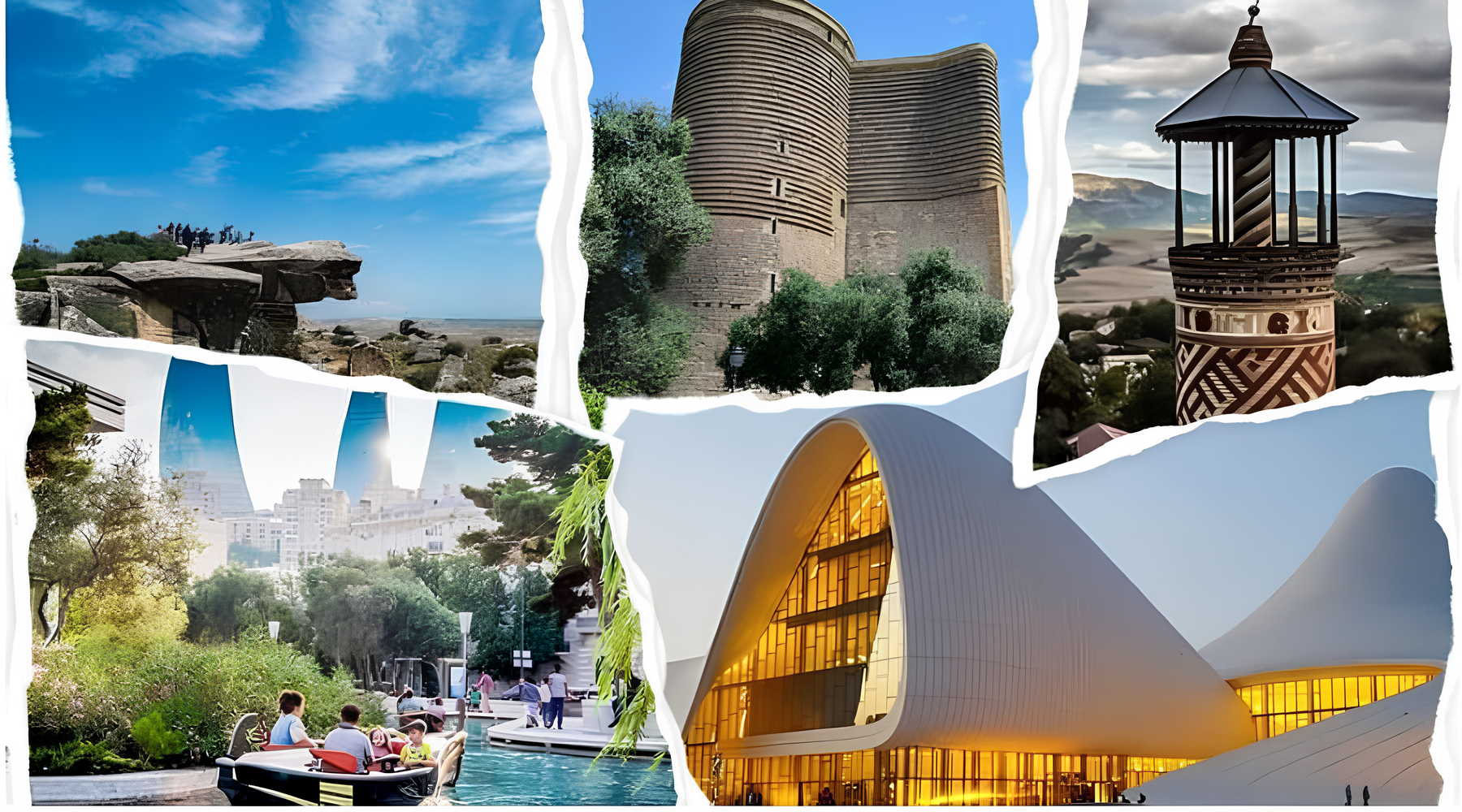
On nature-based routes: Azerbaijan has genuine assets, nine climate zones, UNESCO-listed Gobustan petroglyphs, the Caspian shore, the Caucasus highlands, and more than 40 protected areas. The problem, documented across multiple independent assessments, including the author's 2025 master's dissertation on Azerbaijan's tourism branding conducted at Azerbaijan Technical University, is that branding remains heavily concentrated on Baku, and the conversion of natural assets into navigable tourist products is incomplete. For the research conducted, both foreign and local survey respondents listed poor infrastructure, lack of multilingual signs, and poor road conditions in the rural areas as some of the most prevalent complaints. A nature trail which cannot be easily accessed, traversed, and communicated to foreign tourists through their language does not qualify to be a tourism product.
On ecotourism and agrotourism: this is exactly where the community-based tourism experiments run in Azerbaijan in such villages as Lahij, Khinalig, and Basgal (which is famous as a Silk Road village) have made some real progress since about 2018. It has been shown through the UNDP-sponsored project aimed at the development of rural tourism that when local people become guides and narrators rather than mere background to the tourists, the experience of the latter is much improved. The difficulty is the scale issue, these are still niche projects, whereas the traditional tourism product still operates via the urban offerings of Baku, big hotels and the Formula 1/MICE event tourism.
So can Azerbaijan meet the "new criteria"?
| Sustainable Tourism Criterion | Naghiyev's Stated Commitment | Current Evidence | Gap Assessment |
|---|---|---|---|
| Environmental protection | "Protecting a healthy environment and efficient use of natural resources" | Green energy zone designation in Karabakh; AZURE transmission line underway; Aliyev committed 8 GW renewables by 2032 | Structural commitment present; ecotourism zones need formal certification frameworks |
| Heritage preservation | "Protect, develop and pass on rich natural and cultural heritage to future generations" | UNESCO credentials (Walled City of Baku, Gobustan); national mugham and carpet weaving recognition, but Karabakh reconstruction heritage questions about destroyed and rebuilt sites | Credible for intangible heritage; complicated by post-conflict reconstruction context |
| Brand recognition depth | Implicit in presenting Azerbaijan as a leading green destination | 51.6% of foreign visitors rate brand as "slightly recognizable"; Instagram reach 150,000–50,000 per reel; Georgia still outperforms significantly (AzTU dissertation, 2025) | Significant gap: green credentials require a brand architecture to carry them |
| Community benefit | "Nature-Based routes; ecotourism and agrotourism" | Promising pilots in Lahij, Khinalig, Basgal; but 42.5% of local respondents consider tourism brand to have limited visibility even domestically | Pilots exist; systematisation and funding scale do not yet match ambition |
| Digital presence for green offer | Not specifically addressed in conference remarks | ATB TikTok: 8,200 followers, average 800–1,500 views; narrow geographical influencer focus (Russia, Türkiye, India); Western European and North American markets largely untargeted | Most significant structural gap for reaching high-value green tourism demographics |
Other paradoxes
The most interesting structural dynamic in Azerbaijani tourist policy is between the "new criteria" of framing Naghiyev used this week and the concrete numerical targets that the industry is pursuing. The research on sustainable tourism warns repeatedly that volume growth and quality development do not go automatically hand-in-hand. The destinations with the highest scores of visitor satisfaction have become more and more those which refused the temptation to maximize their number of arrivals in favour of maximizing the value created per visitor. In Georgia, which is a competitor of Azerbaijan on the regional market, this exact problem emerged as a post-COVID influx to 9 million tourists annually pushed their hotels and inflated the cost of living in Tbilisi.
While Azerbaijan's existing baseline of 3 million visitors per year leaves some leeway, its target of 5-6 million requires an increase of 67-100 percent over existing numbers, and if this is accomplished by relying on Baku's existing formula for MICE and event tourism, the "new criteria" mentioned by Naghiyev will only remain a wishful hope. However, the 5-6 million target and the sustainable quality criteria can go together only if there is an intention to attract a certain percentage of the new tourists to the ecotourism and agrotourism routes being built, and this can happen only when these routes are ready and capable of serving the tourists at the required quality level.
There is a structural gap, however, that Naghiyev did not consider in his CICA presentation and which emerges from the research data as being the most important single limitation: human capital. In fact, the survey showed an incredible consensus of opinion (97.5% among locals and 96.8% among foreigners), regarding the need for educational institutions for regional tourism. Foreigners repeatedly mentioned that the qualification level of the tourism sector was their problem. A green tourism trail that cannot be told in the tourists' native language, and whose local guides do not know anything about sustainable tourism, is not green tourism at all. It is merely a nature walk.
State Tourism Agency conference speech was directed at an international audience of sustainability, and it showed true policy intention. The gap that it leaves behind is not one of intention and its articulation, since the articulation of Azerbaijan's green tourism plans made by Naghiyev was proper for such an event. Rather, the gap is that between the articulation and the infrastructure needed to implement the articulation: the multilingual signs, the certified ecotourism agencies, the tourism schools in the region, the amplification process via social media in non-Russian languages, and feedback mechanisms that would provide real-time improvement to the product. This will be the criterion by which Azerbaijan's green tourism policy will ultimately be judged, not by the speeches, but by whether the German tourist visiting Lahij could get there and describe his experience back home to his friends.
Here we are to serve you with news right now. It does not cost much, but worth your attention.
Choose to support open, independent, quality journalism and subscribe on a monthly basis.
By subscribing to our online newspaper, you can have full digital access to all news, analysis, and much more.
You can also follow AzerNEWS on Twitter @AzerNewsAz or Facebook @AzerNewsNewspaper
Thank you!