
Turkic Investment Fund: sovereign shield against great power competition

Qabil Ashirov
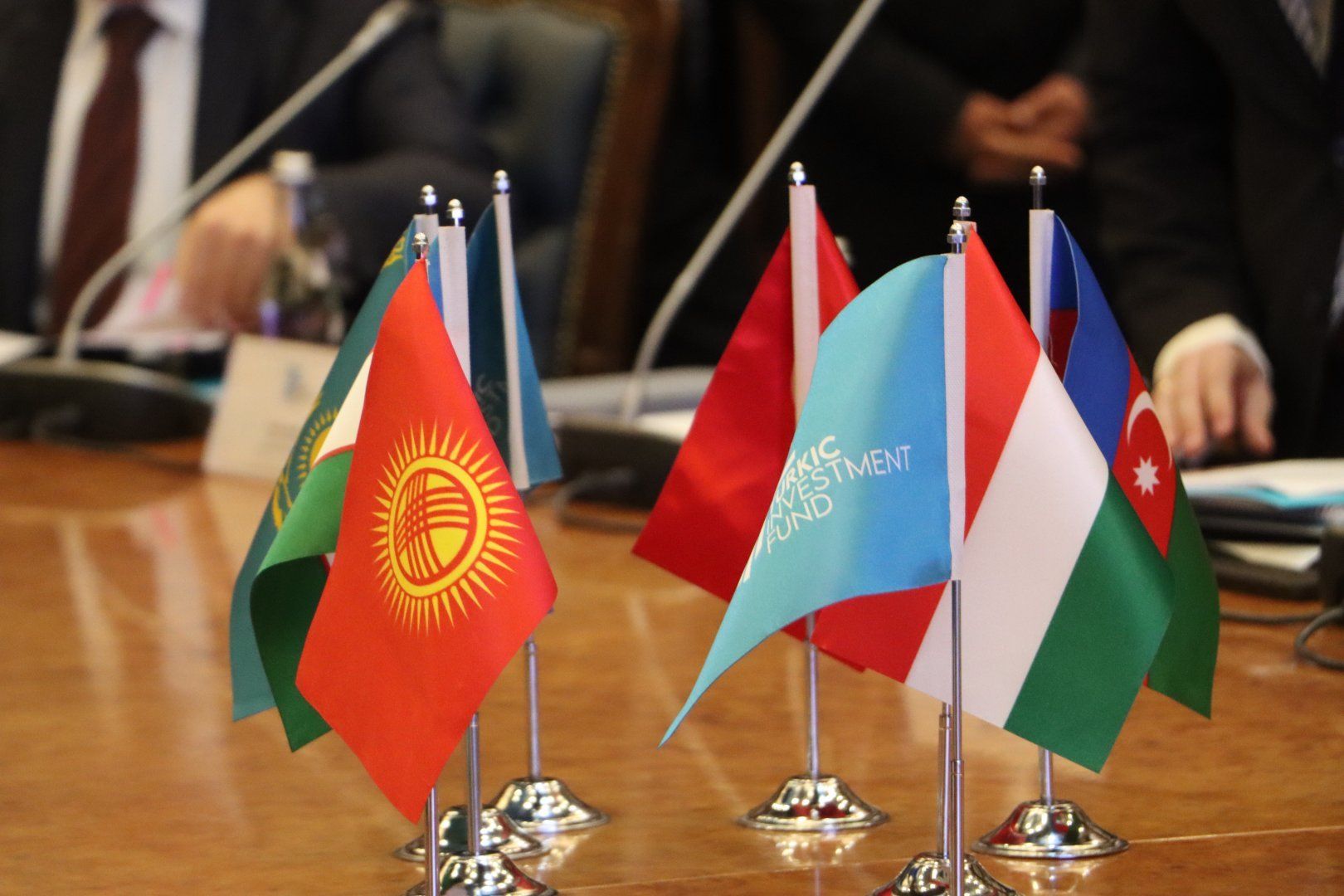
Read moreThe contemporary geopolitical landscape of Eurasia is increasingly defined by intense competition among global superpowers. Positioned as the vital terrestrial bridge between East and West, the strategic corridor stretching across Central Asia and the South Caucasus has long found itself at the crossroads of competing external architectures. From China’s expansive Belt and Road Initiative to Russia’s historic economic frameworks and Western alternative trade routes, the region faces constant systemic gravitational pulls. In this environment of intersecting ambitions, the true imperative for regional states is the preservation of strategic autonomy. The entry into force of the Turkic Investment Fund (TIF) represents a historic pivot in this regard—shifting the Turkic world from a state of navigating external dependency to actively engineering a sovereign economic shield.
Historically, the cohesion of the Turkic states—ranging from Azerbaijan and Turkey to Kazakhstan, Uzbekistan, and Kyrgyzstan—has been rooted primarily in shared cultural heritage, linguistics, and high-level diplomatic alignment through the Organization of Turkic States. While these cultural and political pillars have built robust institutional trust, the modern geopolitical arena demands tangible material frameworks to withstand external economic pressures. By transitioning into an operational, dedicated financial institution with an initial capital of $600 million, the TIF provides the essential material engine required to convert diplomatic solidarity into an unassailable economic bloc.
The primary strategic value of the Turkic Investment Fund lies in its capacity to independently capitalize critical intra-regional infrastructure. For decades, infrastructure development in developing Eurasian economies relied heavily on foreign multi-lateral lenders or bilateral loans from dominant economic powers. While these external investments facilitated physical development, they occasionally introduced asymmetric leverage and long-term economic vulnerabilities. By establishing an autonomous intra-regional financing mechanism, the TIF allows Turkic nations to set their own developmental priorities according to their sovereign national interests, completely free from external conditionalities.
This financial independence is especially critical for the development of the Middle Corridor—the Trans-Caspian International Transport Route. As global trade seeks alternatives to volatile maritime paths and congested northern routes, the Middle Corridor offers the most secure, efficient, and direct logistical link between European and Asian markets. However, realizing the full potential of this corridor requires deep infrastructural integration across multiple borders, including modernized port facilities along the Caspian Sea, expanded rail networks, and streamlined digital customs systems. The TIF is uniquely positioned to act as the primary institutional catalyst for these multi-border projects, seamlessly blending public mandate with private capital to transform Eurasia's transport geography.
Beyond massive logistical corridors, the fund plays an indispensable role in strengthening the internal economic resilience of its member nations. Global supply shocks and changing financial conditions have demonstrated that true sovereignty requires a high degree of economic diversification. The TIF’s strategic focus on empowering small and medium-sized enterprises (SMEs), building modern agricultural supply chains, and funding digital transformation serves as a foundational defense against external shocks. When local industries are robust and interconnected across the Turkic world, the entire region becomes less vulnerable to global economic downturns or targeted trade disruptions.
Furthermore, this financial cooperation fosters a highly integrated regional market. By facilitating intra-regional trade and joint industrial ventures, the fund ensures that capital remains within the Turkic ecosystem, compounding its value over time. For instance, combining Azerbaijan’s strategic logistics and energy capabilities with Turkey’s industrial experience, Azerbaijan’s and Central Asia’s vast natural resources creates a highly complementary economic zone. This internal synergy ensures that the region ceases to be a passive arena for external exploitation and instead emerges as an active, self-sustaining pole of economic power.
Ultimately, the institutionalization of the Turkic Investment Fund represents a sophisticated blueprint for medium-power diplomacy in the 21st century. It proves that regional integration does not require alignment with a single global superpower. Instead, by pooling resources, sharing risks, and aligning long-term strategic visions, the Turkic states are demonstrating that collective self-reliance is the most effective path toward long-term stability.
As the fund moves forward with its initial portfolio of projects, the underlying behind-the-scenes momentum reflects a deeper, irreversible historical trend. The Turkic Investment Fund is more than a financial platform; it is a declaration of economic sovereignty. By building an independent financial architecture, the Turkic world is successfully insulating its future from the pressures of global power rivalries, ensuring that the development of Eurasia is guided solely by the collective will and shared destiny of its own nations.
Here we are to serve you with news right now. It does not cost much, but worth your attention.
Choose to support open, independent, quality journalism and subscribe on a monthly basis.
By subscribing to our online newspaper, you can have full digital access to all news, analysis, and much more.
You can also follow AzerNEWS on Twitter @AzerNewsAz or Facebook @AzerNewsNewspaper
Thank you!