
AI reveals hidden text in 2,000-year-old Vesuvius scroll

Ulviyya Poladova
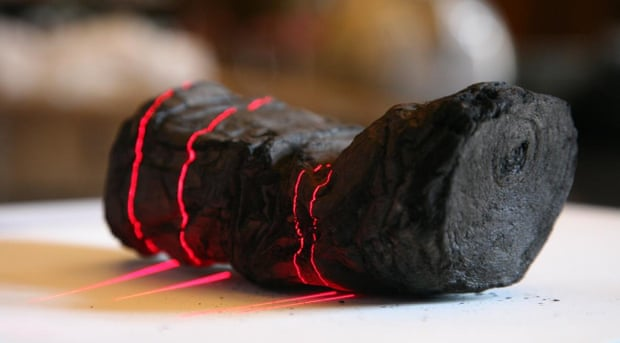
Read moreA fragment of an ancient scroll that was charred during the eruption of Mount Vesuvius nearly 2,000 years ago has been digitally unwrapped and read using artificial intelligence (AI), AzerNEWS reports, citing The Guardian.
Researchers were able to reveal around 20 columns of previously hidden text spanning more than one metre of carbonised papyrus without physically opening the fragile manuscript. The content is believed to discuss Stoic philosophy, focusing on themes such as ethics, art, and human behaviour, and is thought to date back to the second or late third century BC.
The scroll, known as PHerc 1667, is considered one of the oldest items among hundreds of papyri recovered from a luxurious Roman villa in Herculaneum. The settlement was buried under volcanic ash and extreme heat during the eruption of Vesuvius in AD 79, which also destroyed nearby Pompeii.
Over the centuries, the scroll suffered extensive damage. It was reportedly broken in half at some point, and earlier attempts to physically unroll it led to further deterioration, with outer layers flaking away. Today, only about half of the original scroll remains, measuring roughly 8 cm in height and 2 cm in width.
Dr Federica Nicolardi of the University of Naples Federico II noted that while the full scroll has not survived, successfully virtually unwrapping what remains is a major breakthrough, demonstrating that such fragile artifacts can be studied without physical damage.
The findings will be presented at a conference in Naples and are part of the ongoing Vesuvius Challenge, launched in 2023. The initiative encourages researchers worldwide to use artificial intelligence and advanced imaging techniques to decipher carbonised scrolls from Herculaneum. The project has already awarded substantial prizes for successful efforts to reconstruct and read ancient texts from high-resolution scans.
Much of the recovered Herculaneum library is associated with the Epicurean philosopher Philodemus of Gadara. However, the authorship of PHerc 1667 remains uncertain. Based on linguistic and thematic analysis, researchers suggest the work may be a Stoic philosophical treatise, possibly written by Chrysippus, a leading figure in Stoic philosophy. The text also references his nephew and pupil, Aristocreon.
Image: EduceLab
Here we are to serve you with news right now. It does not cost much, but worth your attention.
Choose to support open, independent, quality journalism and subscribe on a monthly basis.
By subscribing to our online newspaper, you can have full digital access to all news, analysis, and much more.
You can also follow AzerNEWS on Twitter @AzerNewsAz or Facebook @AzerNewsNewspaper
Thank you!