
Washington to host conference on ethnic cleansing of Azerbaijanis

Ulviyya Poladova
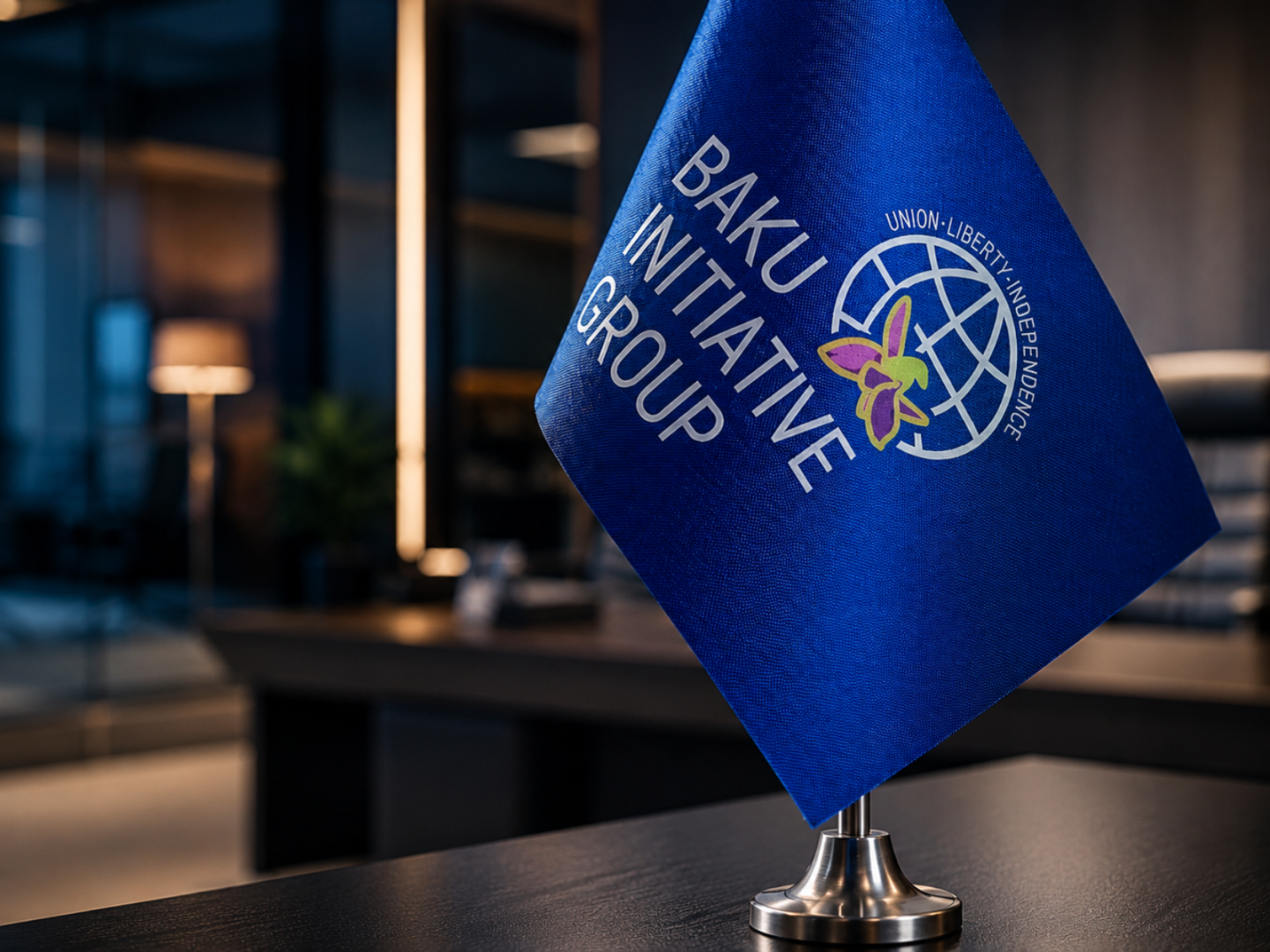
Read moreOn June 24, 2026, an international conference is scheduled to take place in Washington, D.C., at the U.S. Congress building (Capitol Hill), organized by the Baku Initiative Group. The event, titled "The right of return and self-determination: double standards and selective approaches," is expected to bring together legal experts, human rights advocates, diaspora representatives, and civil society actors to discuss contested interpretations of international law regarding displacement, return rights, and ethnic conflict.
The organizers describe the conference as a landmark event, framing it as the first such discussion in the U.S. Congress focusing on allegations of ethnic cleansing affecting Azerbaijanis displaced from territories that are now part of Armenia. The program emphasizes issues related to forced displacement, cultural heritage destruction, and the legal framework governing the right of return under international humanitarian law.
At the center of the discussion is the principle of the right of return, a concept rooted in international legal instruments such as the 1951 Convention Relating to the Status of Refugees and broader customary international law. The right of return is generally understood as the entitlement of displaced persons to return voluntarily, safely, and with dignity to their former homes or places of origin.
Conference materials highlight the case of Azerbaijanis who were reportedly displaced from what is now Armenian territory during multiple historical periods in the 20th century, including 1905-1906, 1918-1920, 1948-1953, and 1987-1991. According to this perspective, these waves of displacement resulted in large-scale population movements, loss of life, and the breakdown of established community structures.
Additionally, the discussions will address the legal recognition at the international level of alleged destruction of Azerbaijani cultural, religious, and historical heritage in Armenia, including toponyms, mosques, cemeteries, and sacred sites.
It should be noted that more than 2,000 place names of Azerbaijani origin were changed.
The event will also include debates on the implementation of the right to self-determination for peoples affected by colonialism, particularly the proposal to place the issue of adding colonies to the UN list of Non-Self-Governing Territories requiring decolonization on the United Nations agenda.
During the late 1980s and early 1990s, a large-scale displacement of Azerbaijanis from Armenia took place amid escalating ethnic and political tensions. As a result of what is described as a systematic ethnic policy implemented between 1988 and 1992, approximately 250,000 Azerbaijanis were forcibly expelled from their homes in Armenia.
The last and most tragic in scale and methods deportation of Azerbaijanis from Armenia was carried out in 1987–1991. Unlike the 1948–1953 deportation, it coincided in time with the beginning of Armenia’s territorial claims against Azerbaijan, and therefore was marked by particular harshness. The hopelessness of the situation for Azerbaijanis was linked to the fact that the deportation was carried out with the direct involvement of the administrative and law enforcement bodies of Armenia, which attempted to justify their unlawful actions by the "historical belonging of these lands to Armenians," on which Azerbaijanis lived.
The majority of Azerbaijani refugees from Armenia were villagers who were forced to leave their native lands - pastures, fields, orchards, and meadows, where their fathers, grandfathers, and great-grandfathers had worked for centuries.
These individuals, who had lived for generations in various regions of Armenia, were reportedly compelled to leave their ancestral settlements amid rising interethnic conflict and instability. Many of those displaced sought refuge in Azerbaijan.
The 1951 Geneva Convention on the Status of Refugees confirms the right of return as one of the important requirements of international law, the restoration of the rights of persons displaced as a result of ethnic cleansing. In this regard, ensuring the safe, voluntary, and dignified return of Western Azerbaijanis forcibly expelled from the territory of present-day Armenia to their historical homeland, the restoration of their rights to housing, land, property, cultural and religious heritage should be assessed in the context of Armenia's international legal responsibility.
Here we are to serve you with news right now. It does not cost much, but worth your attention.
Choose to support open, independent, quality journalism and subscribe on a monthly basis.
By subscribing to our online newspaper, you can have full digital access to all news, analysis, and much more.
You can also follow AzerNEWS on Twitter @AzerNewsAz or Facebook @AzerNewsNewspaper
Thank you!