
Armenia becomes new fault line in global power contest

AzerNEWS Staff
Read moreAs argued in our previous analysis, the conflict in Ukraine is no longer simply a war over territory. It has become an undeclared struggle over the future international order. If that assessment is correct, Armenia may soon emerge as the next critical arena in that confrontation.
Four years into the war, the battlefield has expanded far beyond Ukraine. What began as Russia's attempt to restore its influence over a former Soviet republic has gradually evolved into a broader geopolitical contest between the US-led West and the Russia-Iran partnership. Like the Cold War, this confrontation is no longer confined to a single front. It is being fought simultaneously in Eastern Europe, the Middle East, Latin America, Africa and the South Caucasus. The objective is not simply to win a regional conflict but to shape the geopolitical architecture of the emerging world order.
The strategic trend has become increasingly difficult to ignore. Russia has failed to bring Ukraine back into its sphere of influence and has, in many respects, lost the country for the foreseeable future. Beyond Ukraine, Moscow has suffered setbacks across several regions that once formed the backbone of its foreign policy. The fall of Bashar al-Assad's government significantly weakened Russia's position in the Middle East. In Latin America, Venezuela, long considered one of Moscow's closest strategic partners, has slipped from Russia's orbit following dramatic political developments. In Africa, Russia's influence has come under growing pressure in countries such as Mali. Meanwhile, Iran has watched much of its regional proxy network deteriorate after successive confrontations across the Middle East. Viewed individually, these developments may appear unrelated. Taken together, however, they reveal a gradual weakening of the Russia-Iran geopolitical axis.
If this trajectory continues, the next significant test may take place in Armenia.
Ironically, Armenia's current political direction reflects aspirations that existed at the very beginning of its independence. During the final years of the Soviet Union, Armenia was among the republics that voted against preserving the USSR. Independence was widely viewed as an opportunity to pursue a more sovereign foreign policy rather than remain tied to Moscow indefinitely.
History, however, took a different course.
The Karabakh clan usurped power and dominated Armenian politics for more than two decades. Instead of pursuing a balanced foreign policy, successive governments deepened the country's political, military and economic dependence on Russia. Armenia became increasingly isolated from major regional economic initiatives while remaining heavily dependent on Moscow for security and strategic support.
The domestic consequences of that model gradually became impossible to ignore. While neighboring countries attracted larger volumes of foreign investment, diversified their economic partnerships and integrated into new regional transport and energy projects, Armenia lagged behind. For much of this period, it remained the weakest economy in the South Caucasus in terms of GDP per capita. Economic stagnation, limited opportunities and growing public dissatisfaction eventually culminated in mass protests, bringing an end to the Karabakh clan's long dominance over Armenian politics.
Nikol Pashinyan came to power promising a different future. His central message was not simply political reform but also the gradual normalization of relations with the West and the reduction of Armenia's excessive dependence on Moscow. Unsurprisingly, this vision was viewed with deep concern in both Moscow and Tehran.
Over the following years, Russia repeatedly attempted to pressure the Armenian government through political and economic means. Restrictions on Armenian agricultural exports periodically became instruments of pressure whenever relations deteriorated. Iran adopted a different approach. As discussions surrounding new regional connectivity projects intensified, Tehran conducted military exercises along the Aras River and publicly declared that it was against Zangazur corridor. Although these actions were officially presented as defensive measures, they also served as clear geopolitical signals aimed at discouraging Armenia from drifting further away from the Russia-Iran axis.
Today, however, the strategic environment has changed dramatically. Russia remains deeply absorbed by the war in Ukraine, while Iran faces mounting military, economic and security challenges of its own. Neither country possesses the same freedom of action it enjoyed only a few years ago.
This does not mean Armenia has already changed camps. Far from it. Powerful political forces inside the country continue to favor close relations with Moscow, and Armenian society remains divided over the country's long-term geopolitical orientation. The transition is therefore far from complete.
Nevertheless, the direction pursued by Pashinyan's government appears increasingly clear. Armenia has sought to strengthen dialogue with West, supported major regional connectivity initiatives such as the TRIPP framework, pursued cautious efforts to establish limited economic engagement with Azerbaijan and continued diplomatic normalization with Türkiye. Pashinyan's participation in a high-level regional meeting hosted by Türkiye would have been almost unimaginable only a decade ago.
Yet one major obstacle remains. Armenia continues to suffer from regional isolation, and that isolation cannot be fully overcome without a comprehensive peace agreement with Azerbaijan. Achieving such an agreement will almost certainly require constitutional amendments capable of removing one of the principal legal obstacles to lasting normalization. Should that process succeed, Pashinyan's domestic and international position would be considerably strengthened.
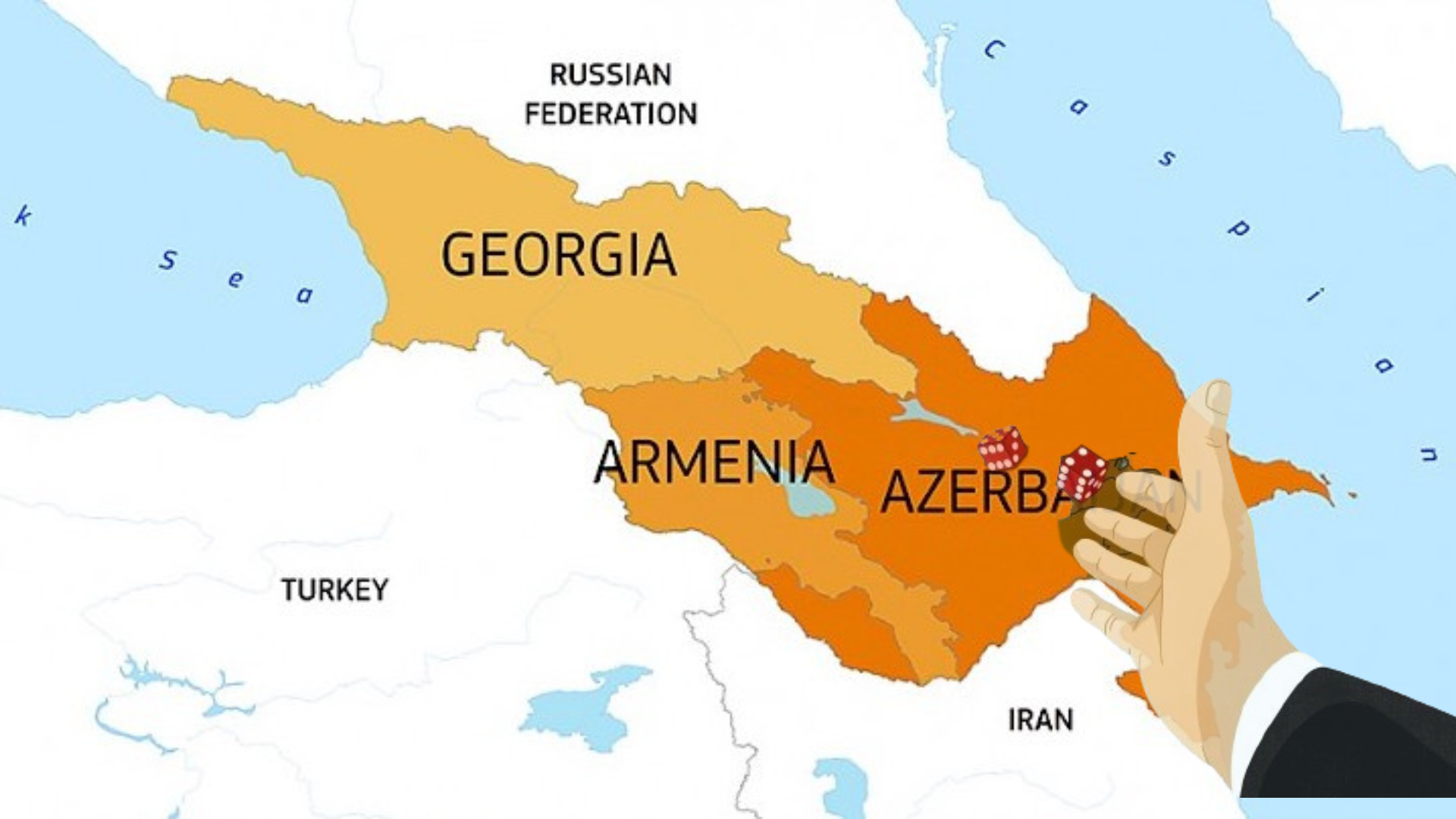
This explains why Armenia has become one of the most sensitive geopolitical fault lines in the emerging confrontation between the West and the Russia-Iran partnership. If Yerevan ultimately succeeds in reorienting its foreign policy, Russia would lose one of its last remaining strategic pillars in the South Caucasus, while Iran would face a fundamentally altered geopolitical environment along its northwestern flank. In that sense, the struggle over Armenia is no longer simply about one country's future. It is increasingly becoming another chapter in the undeclared contest over the shape of the next world order.
Here we are to serve you with news right now. It does not cost much, but worth your attention.
Choose to support open, independent, quality journalism and subscribe on a monthly basis.
By subscribing to our online newspaper, you can have full digital access to all news, analysis, and much more.
You can also follow AzerNEWS on Twitter @AzerNewsAz or Facebook @AzerNewsNewspaper
Thank you!