
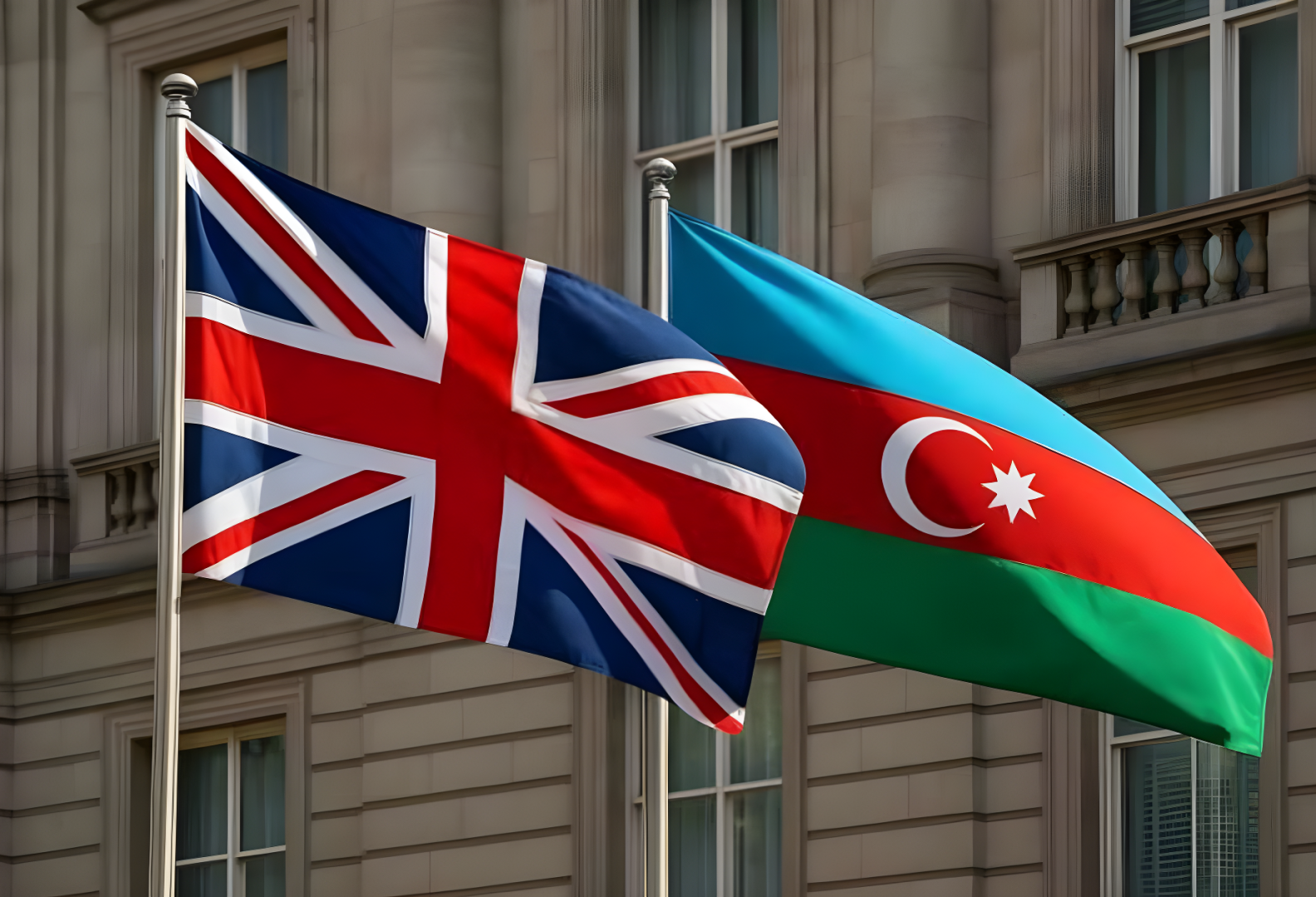
Azerbaijan - UK strategic partnership: Baku adds another global power to its diplomatic network
By Elnur Enveroglu and Qabil Ashirov | AzerNEWS
Over the past three decades since regaining its independence, Azerbaijan has signed strategic cooperation agreements with more than 27 countries. In recent years, Baku has also consolidated its position as a serious and increasingly prominent partner on the Western and European political agenda. The diplomatic developments of 2026 offer a clear illustration of this trajectory. In February, Azerbaijan signed a joint cooperation declaration with the United States, followed by a similar agreement with Germany in July and, most recently, with the United Kingdom on 12 November, on the sidelines of the European Political Community (EPC) Summit. Taken together, these agreements reflect the expansion of Azerbaijan's diplomatic engagement with key Western partners and its efforts to formalise a broader framework of political cooperation.
The elevation of Azerbaijan - United Kingdom relations to a strategic partnership, in this particular term, marks a significant development in Baku’s foreign policy, opening a new chapter in a relationship that has traditionally been anchored in energy cooperation. The joint declaration signed by President Ilham Aliyev and British Prime Minister Andy Burnham in Dublin on November 12, 2026, carries a message that extends beyond bilateral diplomacy: Azerbaijan is continuing to expand its network of strategic relationships with major international powers while maintaining an independent, multi-vector foreign policy.
The timing and substance of the agreement are particularly important, as over the past three decades, British engagement with Azerbaijan has been closely associated with the development of Caspian oil and gas resources. British investment, particularly through bp, helped shape the country's emergence as an important energy supplier and a regional transport and logistics hub. The new declaration provides an institutional framework for extending that relationship into defence and security, trade and investment, education, innovation and emerging technologies.
According to Azerbaijan's Ministry of Energy, British investment in the country has exceeded $39 billion, making the United Kingdom its largest foreign investor. This figure reflects the scale of a relationship built around long-term commercial commitments, energy infrastructure and confidence in Azerbaijan's role in the Caspian region.
What makes the November 12 declaration particularly relevant is its recognition that the next phase of bilateral cooperation will extend beyond the traditional hydrocarbons model. Renewable energy, green finance, low-carbon technologies, infrastructure, artificial intelligence and digital governance have all been incorporated into the partnership's agenda. The document also identifies the Middle Corridor as an important area for joint engagement, connecting the Caspian region with European markets through an increasingly relevant east-west transport network.
Besides, for London, this creates an opportunity to deepen its economic and political presence in a strategically positioned country at the intersection of Europe, Central Asia and the wider Middle East. And given Baku, it means access to British expertise, investment, financial institutions, technology and security cooperation as the country seeks to diversify its economy and expand its international connectivity.
The agreement also reflects a broader shift in the geographical and political scope of Azerbaijan's international partnerships. Over the past several years, Baku has concluded strategic partnership or allied-relations documents with countries representing different political, economic and security centres of influence. For instance, the relationship with Türkiye was elevated to an allied level through the Shusha Declaration of June 2021, while Azerbaijan and China established a strategic partnership in July 2024 and upgraded it to a comprehensive strategic partnership in April 2025. In August 2024, Azerbaijan and Uzbekistan signed a Treaty on Allied Relations, further strengthening cooperation within the Turkic world.
The addition of the United Kingdom to this network carries particular diplomatic significance. Britain represents a major financial centre, a permanent member of the UN Security Council and an influential actor in European and international affairs. Its inclusion alongside China, Türkiye and Uzbekistan illustrates the geographical diversity of Azerbaijan's diplomatic engagement. These relationships have different legal forms, objectives and levels of commitment, but collectively demonstrate Baku's preference for developing multiple channels of cooperation rather than concentrating its foreign policy around a single geopolitical axis.
Moreover, this is an important distinction in understanding Azerbaijan's multi-vector foreign policy. Strategic partnerships with countries that have different international priorities allow Baku to pursue economic, security and diplomatic interests across several directions simultaneously. Cooperation with China provides an avenue for engagement with one of the world's largest economies and a major participant in global infrastructure and trade. Relations with Türkiye have a distinct allied and security dimension, while the partnership with Uzbekistan strengthens Azerbaijan's connections across Central Asia. The British agreement adds another important Western dimension to this architecture.
The significance of this approach becomes clearer when viewed against the changing geopolitical importance of the South Caucasus. The region is increasingly connected to discussions about European energy security, alternative trade routes, access to Central Asian markets and the diversification of international supply chains. Azerbaijan's geographical position gives it a role in several of these processes, while its diplomatic relationships provide the political framework for turning geographical advantages into practical economic opportunities.
The Middle Corridor is a particularly important example. As companies and governments seek additional transport connections between Asia and Europe, Azerbaijan's position on the Caspian Sea creates opportunities for cooperation with countries interested in more diversified logistics networks. The British declaration explicitly identifies the development of the Middle Corridor as an area of cooperation, linking bilateral diplomacy to a much wider European and Eurasian economic agenda.
Further to the Azerbaijani perspective, the agreement also represents international recognition of its growing relevance as a partner in discussions extending beyond the traditional energy sector. The willingness of major powers to institutionalise relations with Baku reflects the country's importance in energy supply, regional connectivity, investment and diplomacy. This recognition is particularly relevant as Azerbaijan seeks to position itself as an economic and logistical bridge between several regions.
Energy cooperation provides a practical illustration of how this transition could unfold. The existing partnership has already created a substantial commercial foundation, but the next stage increasingly involves the financing and development of infrastructure supporting the energy transition. Discussions surrounding the 240 MW Shafag solar power plant and the decarbonisation of the Sangachal Terminal demonstrate how British-linked cooperation can contribute to Azerbaijan's evolving energy model. The Ministry of Energy has also highlighted the potential for cooperation on green energy corridors connecting the Caspian region and Central Asia with European markets.
There is also a security dimension worth examining. The declaration envisages cooperation in defence training, capacity building, interoperability, border management, law enforcement and judicial institutions. These provisions broaden the relationship beyond its established commercial foundations and create opportunities for institutional exchanges and technical cooperation. At the same time, the document should be understood in its actual legal context: it establishes a framework for cooperation rather than a mutual defence guarantee. Its implementation will depend on available resources, domestic legislation and the willingness of both governments to translate political commitments into practical projects.
The institutional arrangements are equally relevant. The two countries have agreed to hold annual strategic partnership meetings and use their existing Joint Intergovernmental Commission on Trade and Economic Cooperation as the principal platform for advancing investment, economic diversification, energy cooperation and Middle Corridor initiatives. This creates a mechanism through which political dialogue can be connected to measurable economic outcomes.
Ultimately, the November 12 declaration should be viewed as part of a broader development in Azerbaijan's international positioning. Baku is expanding its relationships with influential countries across different geopolitical and economic centres, while preserving the flexibility to pursue cooperation according to its national interests. The British agreement adds an important Western partner to this expanding network and gives the relationship a more comprehensive institutional structure.
Another important question, however, is what this declaration means for London and what strategic interests it serves from the British perspective. The answer lies largely in Azerbaijan's geographical position and its growing strategic importance, which offer London a range of political, economic and connectivity opportunities across the wider region. In a nutshell, regarding London's interests, Azerbaijan offers an established energy partner, a gateway to the Caspian region and a potential contributor to Europe's evolving connectivity and energy security architecture. Of course, in exchange for what Baku welcomes from Britain as well: investment, financial expertise, technology and access to an influential international diplomatic network.
The larger message is that Azerbaijan's strategic relevance is increasingly reflected in the diversity of countries seeking deeper institutional relations with it. From Beijing and Ankara to Tashkent and London, the expanding network of agreements demonstrates the breadth of Baku's diplomatic engagement. The challenge ahead is to convert this diplomatic capital into investment, technology transfer, trade opportunities and sustainable economic growth. However, the strategic partnership with Britain provides another framework through which that objective can be pursued.
Here we are to serve you with news right now. It does not cost much, but worth your attention.
Choose to support open, independent, quality journalism and subscribe on a monthly basis.
By subscribing to our online newspaper, you can have full digital access to all news, analysis, and much more.
You can also follow AzerNEWS on Twitter @AzerNewsAz or Facebook @AzerNewsNewspaper
Thank you!