
U.S. tested a new nuclear-capable aircraft
by Alimat Aliyeva
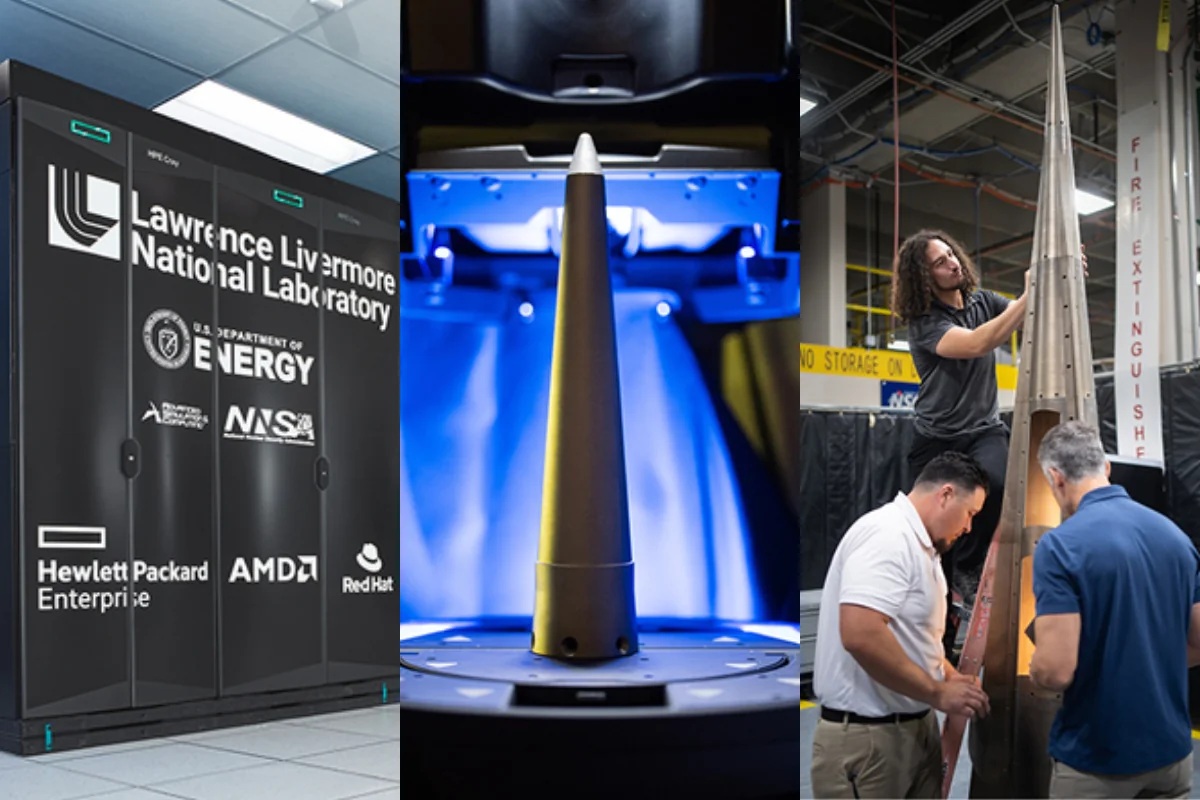
The administration of U.S. President Donald Trump has announced the successful development and testing of a new aerospace system linked to the nuclear program, which integrates artificial intelligence, advanced supercomputing, and 3D-printing technologies, AzerNEWS reports.
According to Fox News, the project, known as Aires Tide, was developed by the U.S. National Nuclear Security Administration (NNSA). The system is designed to replicate the extreme conditions — including high temperatures, intense pressure, and strong vibrations — that nuclear weapons may experience during flight.
Officials emphasize that the device itself is not a weapon, but rather a sophisticated testing platform used to evaluate the durability and reliability of nuclear-related components under realistic stress conditions. By combining AI-driven simulations with physical testing, researchers can significantly improve accuracy while reducing the need for costly real-world experiments.
Brandon Williams, head of the NNSA, described the project as a major technological milestone, comparing its significance to the early breakthroughs of the Manhattan Project. He stated that the new system could greatly accelerate the modernization, testing, and maintenance of the U.S. nuclear arsenal, while also improving safety and efficiency.
One of the key innovations of the program is the use of digital simulation models — often described as “digital twins” — which allow scientists to recreate the behavior of complex nuclear systems in a virtual environment. This approach is increasingly seen as a cornerstone of next-generation defense technology.
Interestingly, experts note that the integration of AI into nuclear research marks a broader shift in strategic defense: from physical testing toward highly advanced computational modeling. This reduces reliance on traditional underground testing, which has been largely suspended for decades.
Earlier, the Financial Times reported that the United States is also considering expanding the deployment of dual-capable aircraft within NATO countries in Europe. These aircraft are capable of carrying both conventional and nuclear weapons, reflecting ongoing adjustments in NATO’s deterrence strategy amid rising global tensions.
Overall, these developments highlight how modern nuclear infrastructure is evolving — increasingly shaped not only by engineering and physics, but also by artificial intelligence, data science, and advanced simulation technologies.
Here we are to serve you with news right now. It does not cost much, but worth your attention.
Choose to support open, independent, quality journalism and subscribe on a monthly basis.
By subscribing to our online newspaper, you can have full digital access to all news, analysis, and much more.
You can also follow AzerNEWS on Twitter @AzerNewsAz or Facebook @AzerNewsNewspaper
Thank you!