
Architecting non-oil future: strategic imperative of Azerbaijan’s Industrial Zones

Qabil Ashirov
Read moreThe global economic landscape is undergoing a profound structural transformation, driven by the dual imperatives of sustainability and diversification. For resource-dependent economies, the challenge is no longer merely about managing oil price volatility but fundamentally re-engineering the engines of national growth. Azerbaijan’s contemporary economic strategy offers a compelling case study in this regard, moving decisively past the rhetorical commitment to diversification toward real, institutionalized transformation. At the absolute vanguard of this transition is the nation’s specialized network of industrial zones. Far from being simple real estate developments or manufacturing clusters, these zones have mutated into the primary institutional and structural platforms required to actualize long-term non-oil export objectives, signaling a sophisticated shift from passive resource extraction to active industrial orchestration.
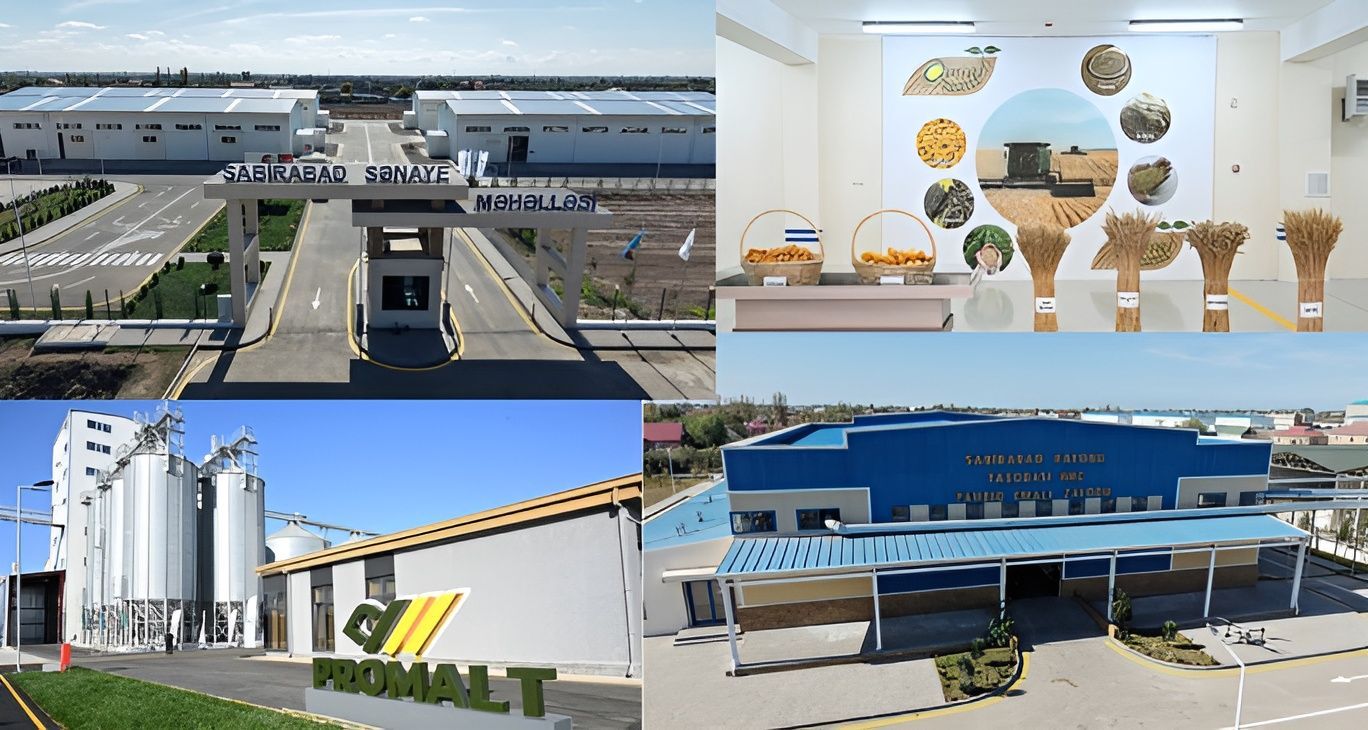
The operational logic underpinning these industrial hubs rests on a highly strategic model of regional specialization. Rather than pursuing a generalized, one-size-fits-all approach to industrialization, the structural framework deliberately exploits the distinct economic topography, raw material availability, and geographic advantages of different regions. Heavy and chemical industries are systematically anchored within the historical industrial infrastructure of Sumgait, effectively modernizing legacy capabilities to capture higher value-added segments. Concurrently, specialized domains such as pharmaceuticals are concentrated in Pirallahi, while textile and cotton processing are driven down to Mingachevir, and agro-industrial fabrication takes root in Neftchala and Masally. This systematic mapping ensures that industrial growth is not localized or unbalanced, but rather dispersed organically to create self-sustaining regional economic ecosystems linked to international trade corridors.
Crucially, the sustainability of this model is reinforced by an aggressive, highly competitive fiscal architecture designed to systematically de-risk private capital investments. The provision of comprehensive ten-year exemptions from profit, property, and land taxes, combined with the complete elimination of value-added tax and customs duties on imported technical equipment, represents a potent fiscal mechanism. The tangible impact of these incentives is clearly reflected in the structural balance sheets of participating enterprises, where cumulative investment savings now exceed half a billion manats. By directly lowering the initial capital expenditure threshold and accelerating the investment payback period, the state effectively subsidizes the operational setup phase of high-tech manufacturing. This targeted fiscal relief transforms these zones into highly attractive sanctuaries for both domestic capital and foreign direct investment, turning theoretical comparative advantages into realized competitive market positions.
The macroeconomic dividends of this structural framework are already manifesting in robust, multi-year production and export trajectories that outpace general economic growth. Recent data reveals that total sales from these industrial zones have converged upon the four-billion-manat threshold, with more than a quarter of that volume destined directly for international markets. This trajectory is underscored by a double-digit expansion in both aggregate production and export capacity, demonstrating a structural resilience that operates independently of fossil fuel market dynamics. Even looking at shorter, localized operational horizons, such as the opening quarters of the current fiscal year, the momentum remains visibly unbroken, generating nearly a billion manats in output within highly compressed timeframes. This output is not confined to basic commodities, but spans complex metallurgical, chemical, and mechanical engineering fabrications, successfully penetrating over seventy sovereign markets across Europe, the Middle East, and the Commonwealth of Independent States.
Ultimately, the deeper significance of Azerbaijan's industrial zones extends far beyond their immediate statistical output or the physical square footage of their manufacturing facilities. They represent a fundamental paradigm shift in how a modern state can strategically intervene to construct a competitive, knowledge-driven, and export-oriented economy from the ground up.
By resolving traditional structural bottlenecks, such as fragmented logistics, high regulatory burdens, and prohibitive infrastructure setup costs, these clusters allow high-value industries to scale with unprecedented velocity. As global supply chains continuously reorganize around geopolitical and logistical realities, these industrial hubs position the nation not merely as a passive transit corridor, but as a dynamic, high-output manufacturing node. The ongoing evolution of these zones establishes a definitive template for resource-abundant nations aiming to successfully navigate the complex transition toward a post-hydrocarbon future.
Here we are to serve you with news right now. It does not cost much, but worth your attention.
Choose to support open, independent, quality journalism and subscribe on a monthly basis.
By subscribing to our online newspaper, you can have full digital access to all news, analysis, and much more.
You can also follow AzerNEWS on Twitter @AzerNewsAz or Facebook @AzerNewsNewspaper
Thank you!