
Yerevan's peace agenda faces new test after Israel's genocide decision
Akbar Novruz
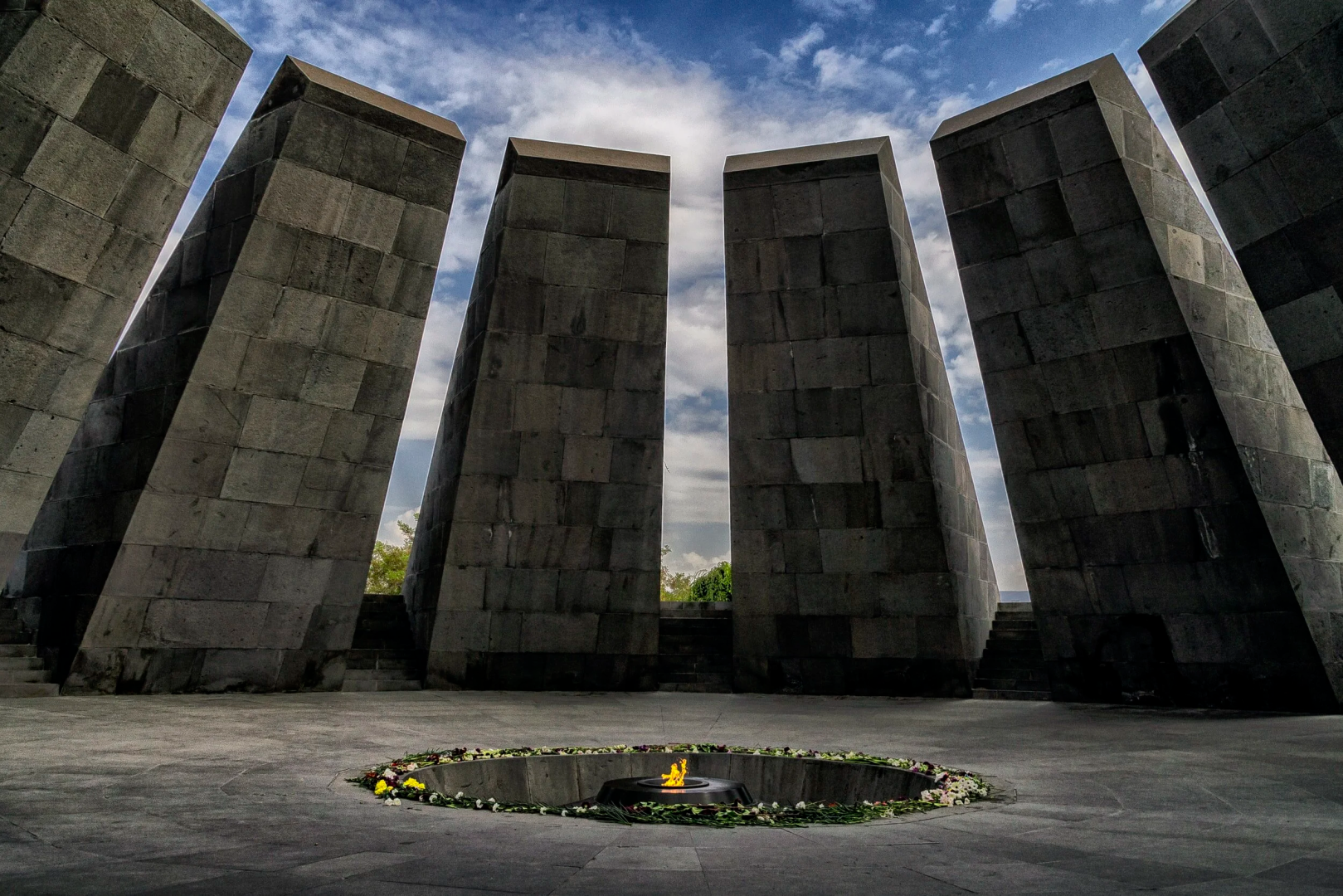
Read moreThe Israeli cabinet recently made a unanimous decision to recognise the Armenian genocide, 111 years after the incident took place and a couple of weeks after the prime minister of Armenia won the country’s general election on the grounds that the country’s future belongs to peace, not to the reexamination of the past. Speaking about the decision, Israel’s foreign minister, Gideon Sa’ar, emphasised the importance of morality in this case, saying, “It is never too late to do the right thing.” In its essence, this is an impeccable phrase. The reason why this decision is interesting – besides its important significance for the world as the thirty-fifth official recognition- is the particular time when this statement was made, the particular message that it should convey to someone, and the particular country of the South Caucasus.
For decades, Israel refrained from formally recognising the Armenian genocide while maintaining diplomatic and commercial relations with Türkiye and Azerbaijan. The logic was indeed straightforward, of course. Ankara and Baku were too valuable allies to anger them over an issue from more than a hundred years ago. Türkiye was a regional partner, some would say, at least for a decent amount of period, and Azerbaijan provided roughly 40% of Israel's oil imports and offered strategic depth in the South Caucasus. The genocide question was treated as a diplomatic grenade best left unfused. There has been no change in the historical account, which has remained the same, but rather in the bilateral atmosphere. However, Israeli-Turkish relations have worsened dramatically since the events in Gaza in October 2023, and Turkish leader Erdoğan’s constant description of the Israeli actions in Gaza as genocide has made it harder for Israeli politicians to justify their position of non-recognition.
As of 2026, 32 countries, members of the UN, such as the US, Canada, Russia, and Germany, have officially acknowledged the existence of the genocide. Israel will be the 35th country to do so. The motion now heads to the Knesset plenum for voting. According to legal experts, there are two ways forward: either a government motion that is politically binding but imposes no new legal obligation, or a proper Knesset law.
The text of Sa'ar’s resolution does not shirk from addressing who the recipient is. “The Armenian genocide continues to be the object of an organised denial and minimisation effort, including a selective rewriting of history textbooks, primarily by Türkiye.”
Now, of course, it is the direct mention of someone – uncommon in genocide recognition resolutions – that makes it clear that there is no room for misunderstanding concerning what the timing means. Türkiye’s Foreign Ministry warned in August 2025 already that Netanyahu’s earlier comments on the genocide were “a politically motivated attempt to capitalise on a past tragedy.” The vote today takes that conversation from a one-on-one interview to the government level, awaiting the Knesset’s final stamp.
Timing is especially significant for Türkiye. In just nine days’ time, Türkiye will be playing host to the NATO Leaders' Summit in Ankara, which will mark the first time in almost twenty years that a NATO summit is being held on Turkish soil. There is COP31 coming up in November in Antalya as well. Ankara had been using these hosting duties as a way of restoring its ties with the West after years of tension due to the S-400 deal, the F-35 ban, and its relationship regarding the Ukraine war. And here comes the recognition of Israel’s genocide, subtlety be damned.
But the picture somehow gets even bigger than it seems...
Here is where it gets genuinely interesting for the South Caucasus, predominantly Armenia. Pashinyan was elected three weeks ago with 49.81% of the votes, with his platform including, among other things, the point that the future of Armenia should be about peace with Azerbaijan and normalised relations with Türkiye, rather than the international recognition of the genocide as a tool of diplomacy. Pashinyan has stated, in a way that has certainly not pleased parts of the diaspora and certain quarters at home, that he places more weight on the normalisation of relations with Türkiye than on making progress on the genocide recognition issue as a priority of foreign policy. The Zurich protocols of 2009, which attempted but did not manage to normalise relations between Armenia and Türkiye, have made Yerevan understand that the two issues – recognition and normalisation – cannot be pursued together easily.
However, this decision is quite odd in view of current voting in Israel, not for the sake of Yerevan, but rather due to the necessity of triangulation. Armenia cannot publicly voice its opposition to the recognition of the genocide on which Armenia is based. At the same time, publicly supporting a recognition decision taken by Israel as a message to Türkiye when Pashinyan is trying to open the Armenian-Turkish border after 33 years is a complicated decision. Kars-Iğdır-Aralık-Dilucu railway is being constructed in Türkiye; the TRIPP corridor agreement signed in Washington, normalisation of relations facilitated by the agreement with Azerbaijan, made geographically possible, all of this requires relations with Ankara. It is clear that relations between Ankara and Tel Aviv are currently marked by considerable strain. However, it would not be an exaggeration to argue that the Knesset's decision places a heavier burden on Armenia than on Türkiye or Azerbaijan. Viewed from another perspective, however, Azerbaijan and Israel have one of the South Caucasus's most strategically significant bilateral relationships, and perhaps this does not rupture the Israel-Azerbaijan relationship, which is robust enough to absorb one Israeli cabinet resolution. But it is the kind of development that makes a relationship more complicated to manage in public, at a moment when Baku is trying to be everybody's friend simultaneously.
What it really means is that we see a picture where the peace-building process that Azerbaijan, Armenia, Türkiye, and all their respective outside partners have been developing up to this point now overlaps with a diplomatic development arising completely out of the blue, in the unique bilateral dynamics between Israel and Türkiye, that none of the South Caucasus players had anything to do with. But for now, the Armenian-Turkish border will remain closed, not because of today's vote, but because the 41 kilometres of Zangezur corridor through Armenian territory still haven't been built, which is the actual constraint on the regional connectivity that would make normalisation economically meaningful. But whatever comes at a political rate is something that needs to be checked closely. Given the benefit of the doubt, history, as the South Caucasus keeps demonstrating, is rarely only about the past, but also about the future from now on.
Here we are to serve you with news right now. It does not cost much, but worth your attention.
Choose to support open, independent, quality journalism and subscribe on a monthly basis.
By subscribing to our online newspaper, you can have full digital access to all news, analysis, and much more.
You can also follow AzerNEWS on Twitter @AzerNewsAz or Facebook @AzerNewsNewspaper
Thank you!