
Mouthwatering nut delicacies passed down through generations

Laman Ismayilova
Read moreIn Azerbaijan, nuts have never been merely something placed in a bowl and served as a snack. They are ground into fillings, layered between sheets of pastry, mixed with sugar and spices, cooked with meat and pomegranate, and placed on festive tables.
Walnuts, hazelnuts and almonds have found their way into some of the country's most recognizable foods, becoming part of the tastes associated with family gatherings, weddings, Novruz and regional culinary traditions.
Walk into an Azerbaijani kitchen before Novruz and the scent of freshly ground nuts is often among the familiar signs of preparation. Bowls of walnuts, hazelnuts or almonds are brought out, shells are cracked, kernels are cleaned and the nuts are ground for pastries.
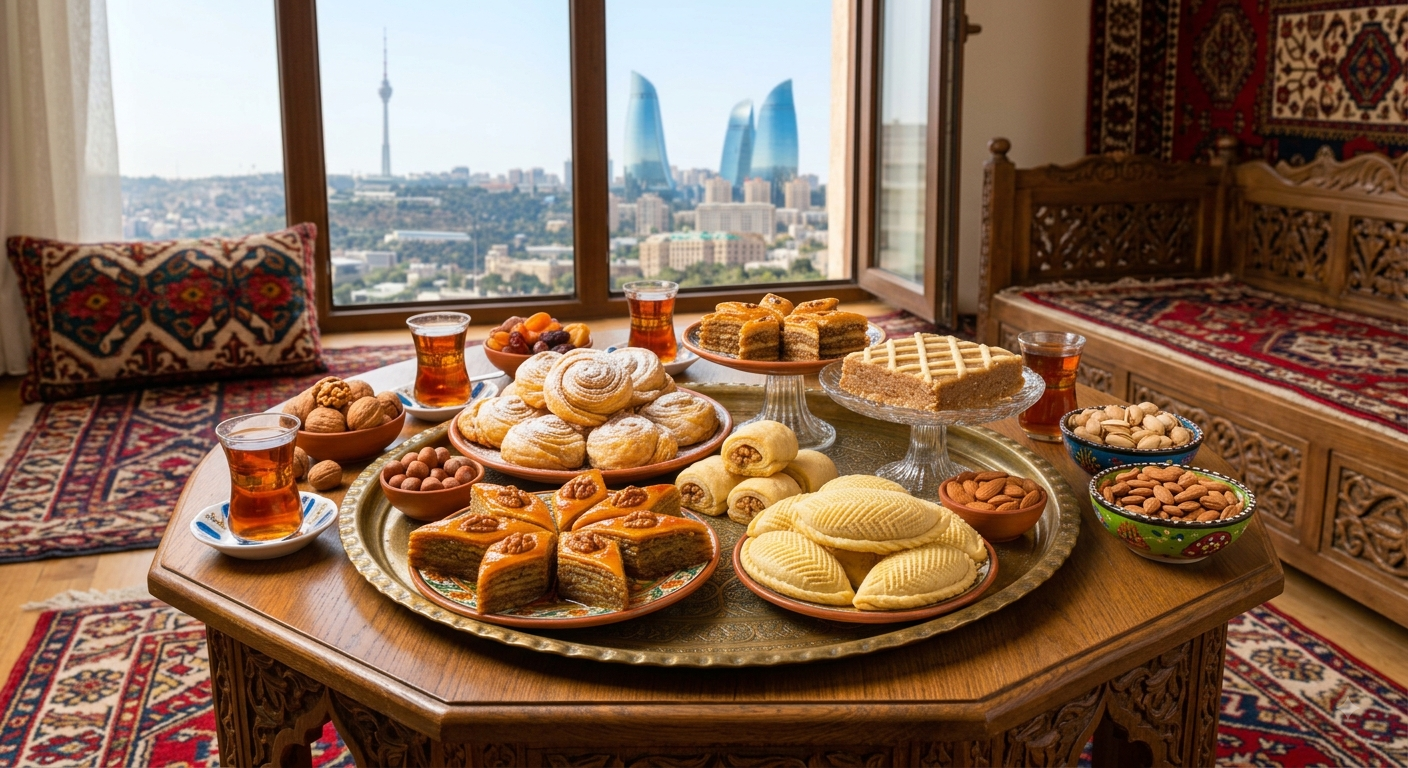
Among Azerbaijan's traditional pastries, shekerbura has perhaps the clearest connection with this custom. The delicate, crescent-shaped pastry is filled with ground nuts and sugar, with hazelnuts, almonds or walnuts used according to the recipe and family tradition. The patterned surface is made by hand with special tweezers, creating the familiar decorative design. Shekerbura is particularly associated with Novruz, when it appears alongside pakhlava and gogal on the festive table.
Pakhlava has an even wider regional story. There is no single Azerbaijani pakhlava: different parts of the country have developed their own versions, with variations in shape, dough, filling and spices. Baku, Guba and Ganja are among the places particularly associated with different styles of the sweet. Nuts are central to many of these recipes, giving the filling its rich texture and characteristic flavor.
In Guba, for example, pakhlava is prepared with a filling based on walnuts, while the pastry is assembled in layers and finished with syrup. The result is quite different from the more familiar commercial versions of baklava found elsewhere in the region.
Then there is Shaki halva, one of the country's best-known regional delicacies. Despite its name, it is closer to a layered pastry than to the soft halva found in many other countries. Thin sheets of rice-flour dough are arranged in layers and filled with a mixture containing hazelnuts, sugar and spices. Saffron gives the upper layer its distinctive appearance, while coriander and cardamom contribute to the aroma. For visitors to Shaki, trying the local halva is almost inseparable from experiencing the city itself.
Badambura takes its name from the Azerbaijani word for almond. It is a light, layered pastry filled with ground almonds, sugar and cardamom. Like shekerbura and pakhlava, it has a particularly strong association with Novruz and is also prepared for family celebrations and special occasions.
The role of nuts becomes even more interesting when the conversation moves away from sweets. Azerbaijani cuisine has never drawn a strict line between nuts and savory food.
One of the best examples is fisincan. The dish combines ground walnuts with pomegranate, creating a deep, rich and slightly sour sauce that is served with poultry or meat. The contrast between the oiliness of the walnuts and the acidity of pomegranate is characteristic of the flavor combinations found in Azerbaijani cooking.
In the south, particularly around Lankaran, nuts are part of lavangi, a dish traditionally prepared with chicken or fish. The stuffing can include ground walnuts, onions and sour ingredients such as plum paste or lavashana. The mixture is cooked inside the bird or fish, allowing the flavors to develop slowly. Lavangi is closely connected with the cuisine of southern Azerbaijan and is one of the dishes through which the country's regional differences become especially apparent.
Nuts also appear in pilaf, meat dishes and a variety of sauces and fillings. In some recipes, walnuts provide richness where other cuisines might use cream or butter; in others, they provide texture or balance the acidity of pomegranate, plum or dried fruit.
The tradition is especially visible during Novruz. The khoncha, the decorated festive tray prepared for the holiday, traditionally carries sweets, colored eggs, dried fruits and nuts. Hazelnuts, walnuts, almonds and other nuts sit alongside shekerbura and pakhlava. Their presence is not decorative alone. They represent the abundance of the season and are part of the food that families share during the holiday.
There is also something particularly Azerbaijani about the way nuts are used in these foods. The same ingredient can move from one part of the meal to another. A walnut may be ground for a sweet pastry, mixed with pomegranate for a savory dish or simply served with dried fruits and tea. Hazelnuts can be exported by the tonne but can just as easily end up in a family's Novruz sweets.
This connection between the orchard and the kitchen is particularly strong in northern Azerbaijan. The Shaki-Zagatala region is the country's principal hazelnut-growing area, and villages around Zagatala, Gakh, Gabala and neighboring districts have long been associated with hazelnut cultivation. The nut is part of the landscape there: orchards occupy the foothills, and hazelnuts are harvested, dried, stored and prepared for both domestic consumption and sale.
Azerbaijan has turned that traditional crop into an important export business.During the first six months of the year, Azerbaijan exported 8,341 tonnes of hazelnuts worth $95.584 million, according to official data released by the State Customs Committee.
Walnuts have their own long-standing place in Azerbaijani agriculture, while almond cultivation has also been developing. State agricultural programs currently support the establishment and development of intensive orchards for hazelnuts, walnuts, almonds and several other crops.
It is there in the sound of walnuts being cracked before a family celebration. It is in the smell of cardamom and ground almonds in freshly prepared badambura. It is in the careful decoration of shekerbura before Novruz. It is in the saffron-colored surface of Shaki halva and the walnut-pomegranate richness of fisincan. It is in a bowl of roasted hazelnuts placed beside tea when guests arrive.
Azerbaijan's relationship with nuts is part of the country's memory of food. Recipes have passed from mothers and grandmothers to younger generations, regional sweets have carried the names and tastes of their hometowns, and nuts have remained one of the ingredients capable of connecting everyday meals with the country's oldest celebrations.
AI Generated Image
Here we are to serve you with news right now. It does not cost much, but worth your attention.
Choose to support open, independent, quality journalism and subscribe on a monthly basis.
By subscribing to our online newspaper, you can have full digital access to all news, analysis, and much more.
You can also follow AzerNEWS on Twitter @AzerNewsAz or Facebook @AzerNewsNewspaper
Thank you!