
Last solar eclipse of year lats more than four hours

Laman Ismayilova
Read moreThe second and final solar eclipse of 2026, a total solar eclipse, occurred on August 12, AzerNEWS reports.
The phenomenon was not visible from Azerbaijan, according to the Astrophysics Department of Baku State University.
The partial phase of the eclipse began at 19:34 and ended at 23:57, lasting approximately 4 hours and 24 minutes. The maximum phase occurred at 21:46. The central phase began at 20:57 and ended at 22:30.
The total phase of the eclipse lasted a maximum of 2 minutes and 18 seconds. NASA data also confirms that the maximum duration of totality was 2 minutes and 18 seconds, with the greatest eclipse occurring at approximately 17:46 UTC.
The total eclipse was visible along a relatively narrow path stretching across Greenland, Iceland, northern Russia, Spain and a small part of Portugal, while a partial eclipse could be observed across much of Europe, parts of North America and northwestern Africa.
The event was particularly significant for Europe, as it was the first total solar eclipse visible from central and western Europe since 1999. Large numbers of people gathered in parts of Spain and Iceland to observe the rare astronomical phenomenon.
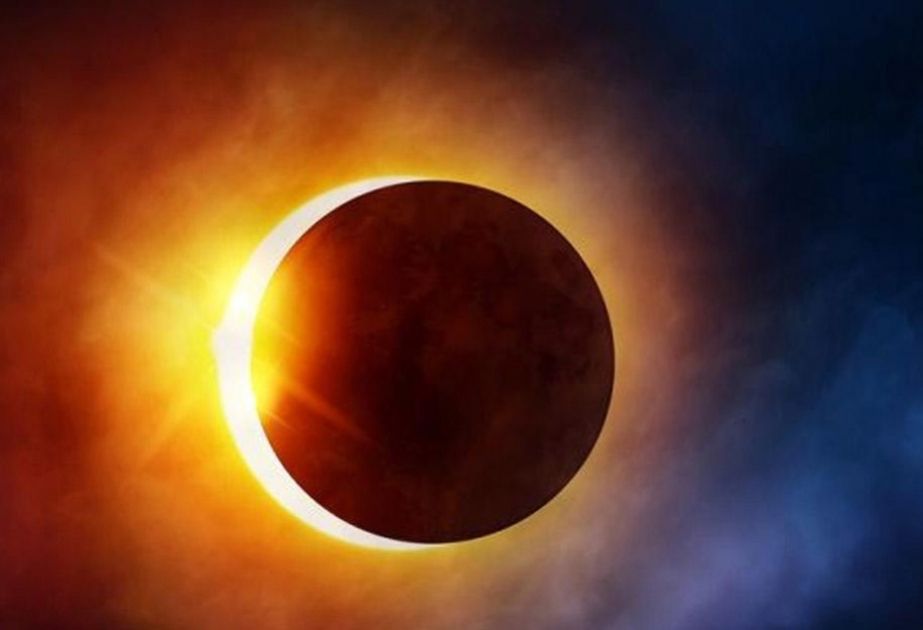
During a total solar eclipse, the Moon passes directly between the Earth and the Sun and completely covers the Sun's bright disk.
This allows the Sun's outer atmosphere, or corona, to become visible to observers within the path of totality.
Here we are to serve you with news right now. It does not cost much, but worth your attention.
Choose to support open, independent, quality journalism and subscribe on a monthly basis.
By subscribing to our online newspaper, you can have full digital access to all news, analysis, and much more.
You can also follow AzerNEWS on Twitter @AzerNewsAz or Facebook @AzerNewsNewspaper
Thank you!