
EU sees Azerbaijan as cornerstone of energy and trade strategy
Elnur Enveroglu
Read moreRelations between Azerbaijan and the European Union appear to be entering a new and more consequential phase. What was once largely defined by energy cooperation is evolving into a broader strategic partnership encompassing connectivity, regional security, green energy and economic integration. Recent high-level diplomatic engagement suggests that Brussels increasingly views Azerbaijan as more than a supplier of natural gas, even as an indispensable geopolitical partner in one of the world's most sensitive regions.
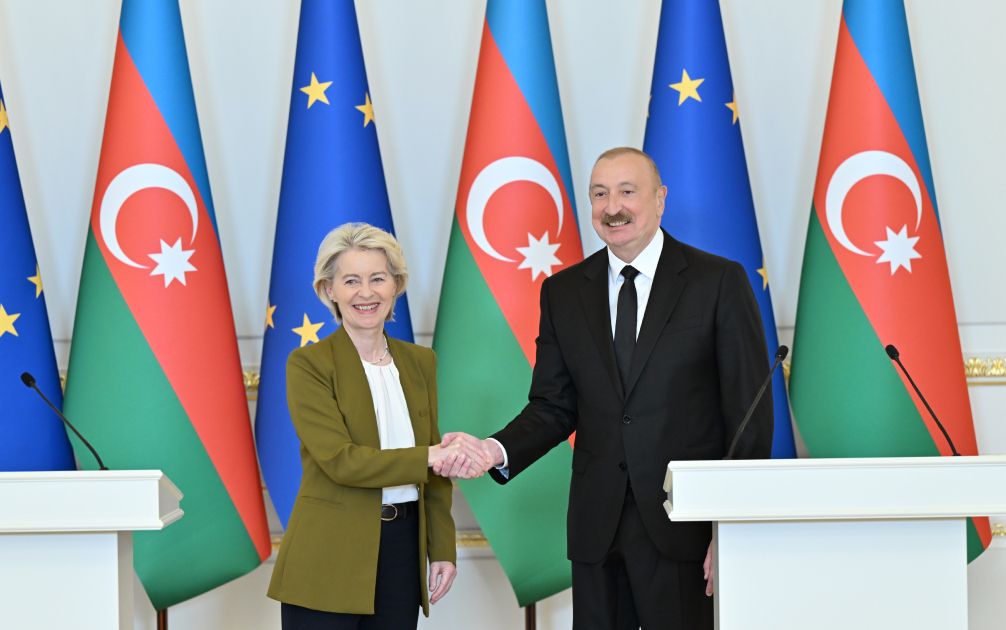
Therefore, the visits by European Council President António Costa and the current visit of European Commission President Ursula von der Leyen symbolise more than diplomatic protocol. They reflect a growing recognition in Brussels that Azerbaijan has become central to Europe's long-term interests in the South Caucasus and beyond.
Particularly significant is the language now emerging from the European leadership. Describing Azerbaijan as a "strategic partner" represents an important political signal at a time when Europe is reassessing its external partnerships amid growing geopolitical uncertainty. Equally notable is the acknowledgement of Azerbaijan's role as a regional leader and an important contributor to the peace agenda in the South Caucasus, with recognition of President Ilham Aliyev's leadership in shaping regional developments.
This change in tone has not emerged in isolation. Russia's invasion of Ukraine fundamentally altered Europe's energy calculations. When the EU faced an urgent need to reduce dependence on Russian natural gas in 2022, Azerbaijan emerged as one of the few reliable alternative suppliers capable of increasing deliveries quickly. Since then, Azerbaijani gas exports to the European Union have increased by around 65 per cent, transforming the Southern Gas Corridor from an important infrastructure project into a cornerstone of Europe's energy diversification strategy.
However, today's partnership extends well beyond hydrocarbons.
Brussels increasingly views Azerbaijan as a country that combines strategic geography with modern infrastructure capable of connecting Europe to the Caspian region and Central Asia. Situated at the crossroads of East-West and North-South transport corridors, Azerbaijan has positioned itself as a critical logistics hub linking European markets with the rapidly expanding economies of Central Asia.
Trade figures reinforce this strategic importance. Approximately 70 per cent of the European Union's trade with the South Caucasus is conducted with Azerbaijan, underlining the country's economic weight within the region. As Brussels seeks to diversify supply chains and strengthen connectivity with Asia, Azerbaijan's transport infrastructure becomes an increasingly valuable strategic asset.
Another emerging pillar of cooperation is green energy.
The EU's energy dialogue with Azerbaijan is evolving beyond natural gas towards renewable energy and electricity interconnection. Azerbaijan's substantial wind and solar potential, particularly in the Caspian Sea, combined with the renewable energy resources of Central Asian states, offers Europe an opportunity to diversify not only gas supplies but also future electricity imports through the planned Green Energy Corridor across the Black Sea.
President von der Leyen's proposal to establish a broader platform for energy and connectivity cooperation reflects this wider strategic vision. Such an initiative would expand bilateral relations beyond energy security into infrastructure investment, digital connectivity and regional integration, creating a more comprehensive partnership capable of serving both European and Azerbaijani interests over the coming decades.
Security and regional stability are also becoming increasingly important components of the relationship.
The European Union's proposal for a €20 million assistance package for border regions affected by the Armenia-Azerbaijan peace process signals growing European interest in supporting lasting stability in the South Caucasus. By focusing on border communities and promoting the economic benefits of peace between the two societies, Brussels appears eager to complement diplomatic efforts with practical measures aimed at building confidence and encouraging regional development.
This reflects a broader recognition that sustainable peace in the South Caucasus is increasingly linked to economic connectivity rather than geopolitical confrontation.
For Azerbaijan, these developments represent the outcome of a foreign policy that has sought to build constructive partnerships with multiple global centres of power simultaneously. Strategic cooperation with the United States, a comprehensive partnership with China, and increasingly strategic relations with the European Union demonstrate Baku's commitment to maintaining a balanced and diversified foreign policy.
Rather than aligning exclusively with any single geopolitical bloc, Azerbaijan has pursued a pragmatic approach centred on national interests, regional stability and economic connectivity. This strategy has enhanced the country's diplomatic flexibility while strengthening its international profile.
Europe's growing engagement with Azerbaijan, therefore, reflects more than changing energy markets. It signals an evolving understanding that Azerbaijan has become a pivotal state linking Europe with the Caspian region, Central Asia and the wider Eurasian transport network. As geopolitical competition intensifies and Europe continues to diversify its economic and energy partnerships, Azerbaijan's strategic significance is likely to grow further.
The emerging relationship is no longer simply about securing additional gas supplies. It is increasingly about building a long-term partnership founded on connectivity, regional stability, economic cooperation and shared strategic interests. In that sense, EU-Azerbaijan relations may indeed be reaching a genuine turning point, one that could redefine Europe's engagement with the South Caucasus for years to come.
Here we are to serve you with news right now. It does not cost much, but worth your attention.
Choose to support open, independent, quality journalism and subscribe on a monthly basis.
By subscribing to our online newspaper, you can have full digital access to all news, analysis, and much more.
You can also follow AzerNEWS on Twitter @AzerNewsAz or Facebook @AzerNewsNewspaper
Thank you!