
Afyonkarahisar looks beyond plate to build global brand
By News Centre
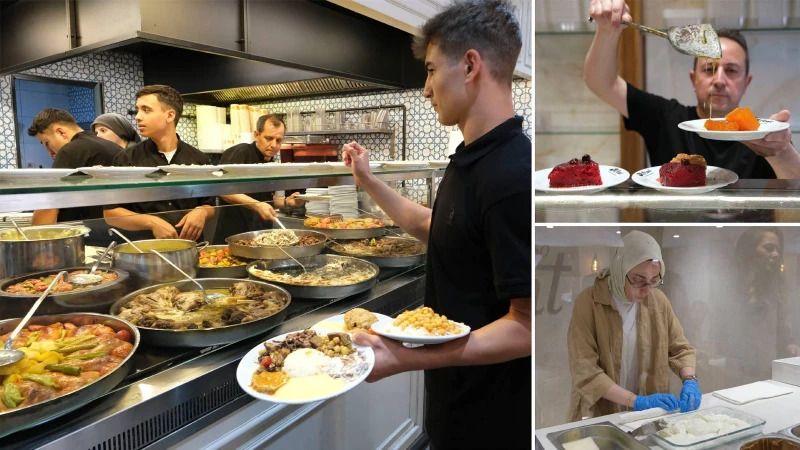
The third edition of the "Türkiye's Gastrodiplomacy Model: Table and Heritage" program, organized by the Presidency's Directorate of Communications, was held in the city of Afyonkarahisar. The event highlighted the cuisine of Afyonkarahisar—one of Türkiye's gastronomic stars within the UNESCO Creative Cities Network—not only for its flavors but also for its cultural memory, traditional production methods, and potential for international promotion.
When gastronomy is discussed in Türkiye, the first question that often comes to mind is, "What can you eat there?" Yet the program in Afyonkarahisar sought to explore a deeper issue: How can a city's culinary heritage be communicated to the world? Are geographical indication products merely labels, or are they powerful cultural narratives that carry the story of a city?
Afyonkarahisar offers a compelling answer to these questions. Renowned for its clotted cream, sausages, Turkish delight, sour cherries, bread pudding, poppy seed delicacies, and meat and oven-cooked dishes, the city possesses a deeply rooted culinary tradition. In fact, even the order in which dishes are served is considered a distinct cultural code.
According to Associate Professor Asuman Pekyaman of the Gastronomy and Culinary Arts Department at the Tourism Faculty of Afyon Kocatepe University, meals in Afyonkarahisar are not presented randomly but follow a specific sequence. Bread pudding traditionally appears toward the end of the meal, while okra is served as a closing dish believed to aid digestion.
This detail demonstrates why Afyonkarahisar's cuisine should be considered part of the city's cultural heritage. The essence lies not merely in the food on the plate, but in when, how, to whom, and in what order it is served. The dining table acts as a vessel carrying the city's collective memory, and adapting these traditions to modern life is considered invaluable.
One of the central themes of the program was the proper presentation of products protected by geographical indications. Ayşe Safkurşun, owner of Musakka Restaurant and head of the Afyon Local Cuisine Gastronomy Culture and Tourism Association, emphasized that geographical indication status should not be granted lightly.
According to Safkurşun, the certification process must remain rigorous, product standards must be preserved, and visitors should clearly understand the nature and significance of the dishes they are consuming.
Her observations underscore an important reality. A flavor that is deeply familiar to local residents often requires explanation for first-time visitors. The people of Afyonkarahisar inherently understand the significance of clotted cream, sour cherries, and bread pudding within their culinary culture. However, when the story behind these dishes is not told, they remain merely "delicious desserts" to outsiders.
Yet when sour cherries, bread pudding, and clotted cream come together in a single dessert, the result is more than just a sweet delicacy—it becomes a concise representation of Afyonkarahisar's production culture and culinary identity.
One of the most striking remarks during the panel came from İsmail Sözer, deputy chairman of the Afyonkarahisar branch of the All Food Enterprises Association.
"We need to turn geographical indication products into stories," he said.
Indeed, gastronomy tourism today is no longer driven solely by good food. Visitors increasingly want to know where their food comes from, who produces it, in which season it is prepared, and what kind of labor brings it to the table.
In an era dominated by fleeting social media content, preserving these stories requires a different form of storytelling—one that comes from master chefs, recipe keepers, and local figures who know these products intimately and can enrich their narratives with memories and personal experiences.
Ahmet Akkent, chairman of the Afyonkarahisar City Council, also stressed the importance of experience.
According to Akkent, visitors should not simply eat a meal; they should leave with the knowledge gained from workshops, the flavors they tasted, and the experiences they lived through.
To achieve this, venues must be properly labeled, local products made more visible, and promotional efforts significantly strengthened.
This is, in fact, the central challenge facing Afyonkarahisar today.
The city already possesses a rich culinary heritage, geographical indication products, historic production techniques, traditional recipes, and a distinctive dining culture. However, telling the world merely that "we have great food" is no longer sufficient.
The stories behind the recipes, the products, the producers, and the dining traditions must be communicated together.
For this reason, the "Table and Heritage" program should be viewed not simply as a gastronomic event but as part of Türkiye's broader effort to introduce its culinary culture to the world.
The supervision of geographical indications, the accurate transmission of recipes, the labeling of local products, the transformation of workshops into immersive experiences, and the storytelling surrounding these flavors are all essential components of this mission.
Afyonkarahisar's cuisine is already rich. The challenge now is to take that richness beyond the plate and transform it into memory, destination, and narrative.
Here we are to serve you with news right now. It does not cost much, but worth your attention.
Choose to support open, independent, quality journalism and subscribe on a monthly basis.
By subscribing to our online newspaper, you can have full digital access to all news, analysis, and much more.
You can also follow AzerNEWS on Twitter @AzerNewsAz or Facebook @AzerNewsNewspaper
Thank you!