
How photography art transforms Azerbaijan's visual history

Laman Ismayilova
Read moreAugust 19 is celebrated around the world as World Photography Day, a day dedicated to an art form that has fundamentally changed the way people document history, preserve memories and see the world around them. The observance was initiated by Australian photographer Korske Ara in 2009 and was first celebrated internationally in 2010.
The date has a direct connection to one of the most important milestones in the history of photography. On August 19, 1839, the French government publicly announced the details of Louis Daguerre's daguerreotype process after acquiring the rights to the invention and making it available to the public. The invention was presented as a "gift to the world" and helped photography move from an experimental technique toward a technology accessible to a much wider audience.
Daguerre was not, however, the first person to create a permanent photographic image. French inventor Joseph Nicéphore Niépce had produced one of the earliest surviving permanent photographs in the 1820s. His experiments laid the groundwork for later developments, while Daguerre's work helped make the process more practical.
The daguerreotype used a silver-coated copper plate to create an exceptionally detailed image. Each photograph was a unique object rather than a negative that could easily be used to produce multiple copies. Despite this limitation, the technique represented a major breakthrough and played a crucial role in the early history of photography.
Photography continued to develop rapidly throughout the 19th and 20th centuries. Scientists and inventors experimented with new materials, lenses, chemicals and exposure techniques, gradually making cameras more practical and photographs easier to produce. In 1861, Scottish physicist James Clerk Maxwell demonstrated an early method of producing a color photograph, marking another important step in the development of the medium.
Another major transformation came with electronic and digital technology. The development of electronic still cameras in the late 20th century eventually paved the way for digital photography, eliminating the need for photographic film and chemical processing. With the arrival of smartphones, photography became part of everyday life, allowing almost anyone to capture and share images within seconds.
Despite the dominance of digital technology, film photography remains popular among many professional and artistic photographers. Some continue to value film for its distinctive texture, colors and grain, as well as for the more deliberate process involved in taking and developing photographs.
Azerbaijan has its own long and fascinating photographic history. Photography in the country dates back to 1861, when panoramic views of Baku Bay were photographed from the sea. Taken by Captain-Lieutenant Alexander (Aleksey) Ulsky, these images are regarded as the earliest known photographs made in present-day Azerbaijan and are considered the first known photographic views of Baku. They are also seen as an important starting point in the development of the country's photographic tradition.
Photography developed rapidly in Azerbaijan during the second half of the 19th century, particularly as Baku was transformed by the oil boom and emerged as one of the world's major oil-producing centres. The city's growing international importance attracted photographers from across Europe and the Russian Empire, whose cameras documented Baku's expanding streets, architecture, oil fields, industrial facilities, coastline and everyday life. Their work created an invaluable visual record of a city undergoing profound economic and social change.
The emergence of photographic studios further contributed to the popularity of the new medium. By the late 19th and early 20th centuries, photography had become an important part of life in Baku, serving both as a commercial service and as a form of artistic expression. Portrait studios preserved images of people from different social backgrounds, while photographers also focused on landscapes, architecture, industry and daily life.
One of the notable figures of early photography in Baku was Alexander Mishon, a French-born photographer who worked in the city and produced numerous images documenting its rapid transformation. His photographs provide a valuable glimpse of Baku at a time when oil wealth was reshaping its architecture, economy and society.
Azerbaijani photographers gradually established their own presence as the profession developed. Among the pioneers was Azizbala Hajiyev, whose work is regarded as an important part of the country's early professional photographic tradition. His photographic equipment is preserved at the National Museum of History of Azerbaijan, offering a tangible connection to the early development of photography in the country.
Over the decades, photography became an important means of preserving Azerbaijan's cultural heritage and documenting major historical events. Photographers captured changing cities and villages, traditional customs, prominent personalities, industrial development and important moments in the country's modern history. During the 20th century, photography also became increasingly important in journalism, documentary work and the visual arts.
Photography has never been limited to art or personal memories. It plays an important role in journalism, science, education, architecture, advertising and historical research. A photograph can record an event, preserve a disappearing tradition or show how a city has changed over generations. In Azerbaijan, historical photographs are particularly valuable because they provide a visual record of the country's transformation from the oil boom of the 19th century through the dramatic events of the 20th century and into the modern era.
Many early photographs of Azerbaijan are now preserved in museums, archives and private collections. They show how Baku and other parts of the country looked, how people lived and dressed, and how society changed over time. In this sense, the history of photography in Azerbaijan is also a visual history of the country itself.
Perhaps that is what makes photography so enduring. A photograph can be artistic, documentary, personal or historical, sometimes all at once. It can preserve a face, a building, a landscape or a fleeting moment long after the original scene has disappeared.
World Photography Day is therefore more than a celebration of cameras and photographers. It is a reminder of the power of an image to preserve memory and tell a story. Whether taken with a professional camera, an old film camera or a smartphone, a photograph captured today may one day become part of the history of our time.
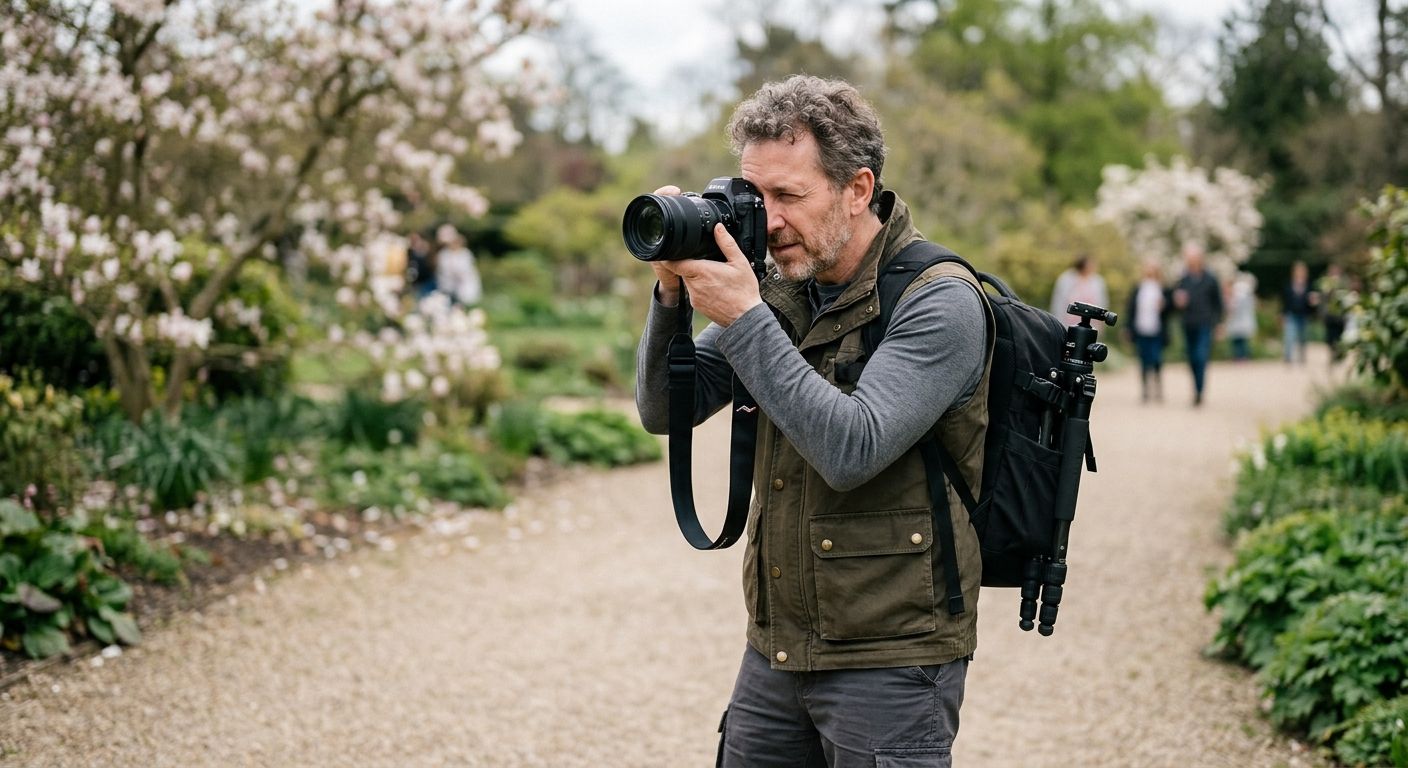
*AI-generated image
Here we are to serve you with news right now. It does not cost much, but worth your attention.
Choose to support open, independent, quality journalism and subscribe on a monthly basis.
By subscribing to our online newspaper, you can have full digital access to all news, analysis, and much more.
You can also follow AzerNEWS on Twitter @AzerNewsAz or Facebook @AzerNewsNewspaper
Thank you!