
Ukraine’s strikes exposing deeper Russian vulnerability

Qabil Ashirov
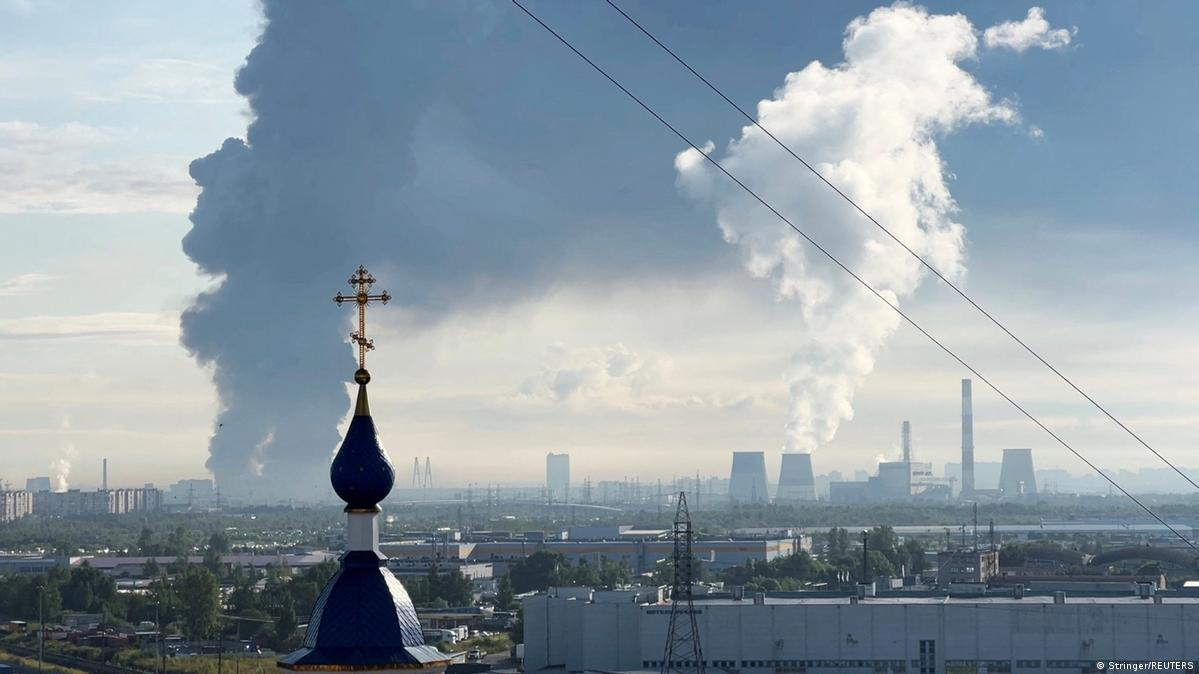
Read moreUkraine’s use of long-range drones to strike targets deep inside Russia has raised questions that go far beyond the immediate military consequences. Oil refineries and industrial facilities were among the most obvious targets. But when Ukraine began striking warehouses belonging to Russia’s largest online marketplace, the rationale became less clear to many observers.
Kyiv has officially sought to justify the attacks by alleging that the platform is involved in supplying military and dual-use goods. For me, however, this is not a particularly strong explanation for the scale of the campaign. The platform is not a conventional defence contractor selling artillery shells, fighter-jet ammunition or other major weapons systems. At most, it may provide military personnel with items such as uniforms, helmets, body armour or other equipment that can also be obtained through many other channels. That does not necessarily explain why such a large part of its logistics network has become a target.
A different explanation has circulated unofficially. The company is one of the largest businesses in Russia, has substantial financial obligations and is connected to hundreds of thousands of sellers and suppliers. If such a platform were to collapse, the consequences would not necessarily stop with the company itself. Sellers could lose access to their inventories and revenues, suppliers could face payment problems, and creditors could suffer losses. In a financially strained economy, such a failure could create additional pressure throughout the financial system. This explanation is, in my view, more convincing. If the threat were genuinely of that magnitude, however, it would be difficult to imagine the Russian state simply allowing such a strategically important company to fail.
Yet the state may not need to rescue it from Ukraine if the company itself is creating a different kind of problem.
More precisely, Ukrainian strikes have reportedly hit seven of the company’s ten major logistics hubs, while international media outlets have estimated that more than 20% of the company’s total warehouse capacity has been destroyed. The damage has naturally caused enormous problems for sellers whose goods were stored in the affected facilities. Compensation disputes are inevitable in such circumstances, particularly because insurance coverage can be complicated when losses result from acts of war.
But the more disturbing issue is what some sellers say happened afterwards. Sellers have complained on social media that they want to retrieve products from warehouses but are unable to do so. The complaints have continued as the disruption has spread. The result is an uncomfortable situation: a seller can see that the goods belong to him, can see them recorded in the company's system, yet cannot necessarily take physical possession of them.
That may sound like a commercial dispute. In Russia, however, it can resonate much more deeply.
The country has a long and painful history with private property and economic security. After the Bolsheviks seized power, private property was nationalised in the name of the people. Land, factories, mines, ships, banks and other major assets were taken from their previous owners. Millions of well-off people subsequently suffered dispossession, repression, exile, imprisonment and death. For decades, Soviet citizens were told that the resulting property belonged to the people.
Then the Soviet system collapsed.
During the chaotic transition of the 1990s, much of the enormous state-owned economic base was privatised. Some of the most valuable assets became concentrated in the hands of a relatively small number of politically connected businessmen and financial groups. The World Bank has described the loans-for-shares programme as a process that helped create the oligarchs who came to dominate major assets.
George Orwell captured the absurdity of such a transformation in one of the most famous lines in Animal Farm: “All animals are equal, but some animals are more equal than others.”
The problem did not end with ownership. Ordinary Russians also experienced the destruction of their savings through the economic turmoil and extreme inflation of the early post-Soviet years. For a population that had already experienced the confiscation of property, the collapse of the Soviet system and the redistribution of enormous national wealth, the destruction of savings added another layer of trauma: money and property could disappear even when they are legally yours.
This history matters because trust in institutions is not created by legislation alone. It is created when people believe that the state, banks and companies will honour their promises when circumstances become difficult.
Russia had spent decades rebuilding that trust when the war in Ukraine began. At first, the authorities presented the invasion as a limited “special military operation”, rather than a long war. People who publicly called it a war faced punishment. But the conflict did not end quickly. It entered its fifth year. Partial mobilisation was announced. Sanctions disrupted the economy. And Ukrainian drones have increasingly reached deep inside Russia, including the Moscow region.
According to the latest figures, Russians have withdrawn more than $24.7 billion from banks since the beginning of 2026, while more than $9 billion flowed out of Russia in the second quarter alone. These figures are particularly striking because a similar panic occurred at the beginning of the war. In the first two weeks of the invasion, more than $23 billion was reportedly withdrawn from Russia, before government intervention helped stop the trend. At the time, many foreign companies were also leaving the country.
This is where the story of Russia’s largest e-commerce platform becomes economically significant. It would be wrong to claim that the company’s policy caused Russians to withdraw billions of dollars from banks. The current outflow has many causes, including the war, fears of sanctions and restrictions, inflation and uncertainty about the future.
The e-commerce platform’s actions may deepen this problem. If producers cannot retrieve goods that legally belong to them, the issue becomes more than a commercial dispute. Imagine producing goods for months, seeing them in your company account, but being unable to take physical possession of them because an ordinary private company prevents you from doing so.
It would be dishonest to claim that this policy caused the $24.7 billion withdrawal. But it is reasonable to argue that, in a country with a painful history of confiscation, privatisation, inflation and destroyed savings, such incidents can revive old fears about property security.
And this is where Ukraine may benefit. A Russian depositor can see his savings in a banking application and know they legally belong to him. But after seeing producers struggle to recover their own property, he may ask: if a company can prevent me from accessing what is mine today, can I be certain that my bank will let me withdraw my money tomorrow?
Once people begin asking that question, withdrawing money is no longer simply a financial decision. It becomes a decision about trust.
Here we are to serve you with news right now. It does not cost much, but worth your attention.
Choose to support open, independent, quality journalism and subscribe on a monthly basis.
By subscribing to our online newspaper, you can have full digital access to all news, analysis, and much more.
You can also follow AzerNEWS on Twitter @AzerNewsAz or Facebook @AzerNewsNewspaper
Thank you!