
Caspian Sea water level decline could challenge Middle Corridor

Qabil Ashirov
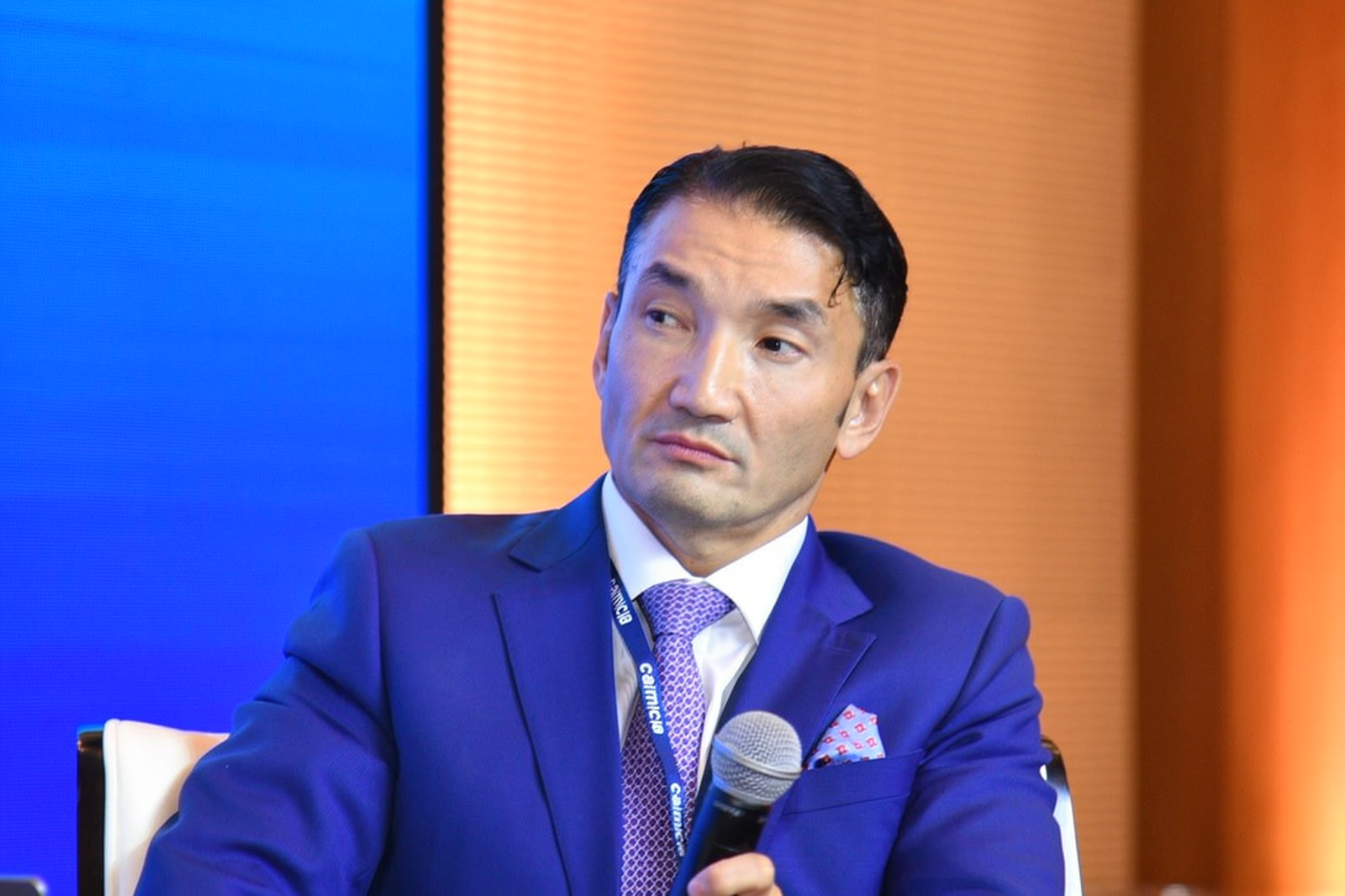
Read moreThe declining water level and increasing shallowness of the Caspian Sea could pose a serious challenge to the future sustainability of the Middle Corridor and increase transportation costs for Azerbaijan and other countries in the region, Director of the TALAP Center for Applied Research and Kazakhstan representative of the CAMCA Network Rahim Oshakbayev said.
Speaking at the CAMCA Regional Forum on Friday, Oshakbayev said the condition of the Caspian Sea was one of the issues requiring particular attention within cooperation between Azerbaijan and Kazakhstan on the development of the Middle Corridor.
“One of the main issues we are currently discussing with Azerbaijan is the challenge related to the Caspian Sea. Over the past 20 years, since 2001, the coastline in the northern part of the Caspian Sea has retreated by up to 56 kilometers. Over the past five years, the process of shallowing has accelerated, reaching approximately 30 centimeters per year,” Oshakbayev said.
According to the expert, continued declines in the Caspian Sea water level could become one of the factors directly affecting the operation of the Middle Corridor.
“If this process continues, the sustainability of the Middle Corridor and its operating costs could become a major challenge for countries in the region. Therefore, the condition of the Caspian Sea is an important factor that must be taken into account in the long-term development of the Middle Corridor,” he said.
Oshakbayev also highlighted the significant progress made by the Middle Corridor in recent years.
“This is a favorable period for the Middle Corridor. Over the past two years, the volume of cargo transportation along this route has increased by more than 2.3 times. This is a major achievement. Kazakhstan is also experiencing very rapid growth in its freight transportation and logistics sector,” he said.
At the same time, the expert noted that the Middle Corridor still has considerable potential within the global freight transportation system.
According to Oshakbayev, around 88% of overland cargo transportation between China and Europe still passes through the route connecting Russia, Belarus and Poland.
“For Kazakhstan, the Middle Corridor is important for diversifying transportation routes. At the same time, ensuring the long-term sustainability of this route is essential,” he added.
Oshakbayev also said that economic growth across the CAMCA region had been strong in recent years, although part of the growth had been driven by new opportunities created by global and regional crises.
“The average rate of economic growth in the region is more than twice the average growth rate of the global economy. Countries such as Kyrgyzstan and Armenia have recorded growth of more than 12%. In Kazakhstan, average growth is above 6%. At the same time, high oil prices have also affected economic indicators,” he said.
Oshakbayev noted that one of the key challenges for countries in the region is to use the opportunities that have emerged to ensure long-term and sustainable economic development.
Here we are to serve you with news right now. It does not cost much, but worth your attention.
Choose to support open, independent, quality journalism and subscribe on a monthly basis.
By subscribing to our online newspaper, you can have full digital access to all news, analysis, and much more.
You can also follow AzerNEWS on Twitter @AzerNewsAz or Facebook @AzerNewsNewspaper
Thank you!