
Louvre tightens security as stolen crown jewels remain missing

Laman Ismayilova
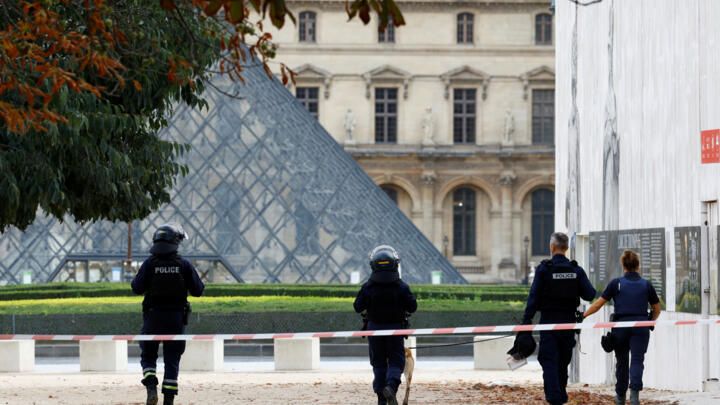
Read moreThe Louvre is strengthening its security following last year's theft of French crown jewels, with the museum's new director, Christophe Leribault, seeking to establish what he describes as a new "culture of security" across the institution.
Leribault, who was appointed president-director of the Louvre in February 2026, outlined the museum's security efforts in an interview with the Financial Times. The measures form part of the museum's response to the October 2025 robbery and its wider modernization programme.
On October 19, 2025, two burglars broke into the Galerie d'Apollon and stole eight 19th-century jewels from the French Crown Jewels collection. The stolen pieces included jewellery associated with Queen Marie-Amelie and Queen Hortense, Queen Marie-Louise and Empress Eugenie. The Louvre estimated the value of the stolen jewellery at €88 million. The jewels have not been recovered.
The robbery exposed weaknesses in the Louvre's security infrastructure. An administrative investigation by France's Ministry of Culture found a long-term underestimation of the structural risk of theft and intrusion, as well as insufficient security equipment, particularly for external surveillance. It also called for changes to security governance, procedures, equipment and staff training. At the same time, the ministry said the procedures and protocols had been followed by the museum staff present during the robbery and that the alarms had functioned.
The museum had also received a security warning shortly before the robbery. A confidential report dated August 29, 2025 identified security weaknesses, according to reporting by Le Monde. The report was issued about six weeks before the theft.
The Louvre has since accelerated security work. Measures include additional surveillance, perimeter protection, improvements to access points and stronger security coordination. The museum's security master plan is estimated by the Louvre at €80 million. The plan includes the modernization of security control posts, expanded perimeter protection and other technical measures, with implementation continuing through 2026 and beyond.
The scale of previous security investment has also come under scrutiny. A parliamentary record citing findings by the French Court of Auditors states that the Louvre had spent €105.5 million on acquiring artworks between 2018 and 2024, while €3 million had been committed to the €83 million security master plan at the time of the audit. The same record said that only 39% of the museum's rooms were equipped with video surveillance. The €83 million figure reflects the amount cited in the audit, while the Louvre subsequently describes the security master plan as an €80 million programme.
The security measures are being implemented alongside the Louvre's much larger modernization project, "Louvre - Nouvelle Renaissance". The programme, estimated at €1.1 billion, includes major infrastructure work, a new entrance and an expanded space for Leonardo da Vinci's Mona Lisa. Leribault has said the modernization will also address security, visitor flows, climate-related risks and ageing infrastructure.
The Galerie d'Apollon reopened to visitors on July 22, 2026, nine months after the robbery. The Louvre said the collection of precious objects previously held there had been removed, allowing visitors to focus on the gallery's painted and sculpted decoration. The space has returned to its original ceremonial function.
The robbery also comes amid wider concerns about security at European cultural institutions. Leribault told the Financial Times that the nature of threats facing museums is changing, with criminal groups increasingly using aggressive methods. The Louvre is therefore carrying out its security programme while continuing with its broader transformation.
Nearly a year after the robbery, the stolen jewels remain missing. The Louvre is now continuing its security upgrades while moving forward with a major modernization programme intended to reshape one of the world's most visited museums.
Here we are to serve you with news right now. It does not cost much, but worth your attention.
Choose to support open, independent, quality journalism and subscribe on a monthly basis.
By subscribing to our online newspaper, you can have full digital access to all news, analysis, and much more.
You can also follow AzerNEWS on Twitter @AzerNewsAz or Facebook @AzerNewsNewspaper
Thank you!