
HAVELSAN eyes Azerbaijan partnership built around autonomous warfare [EXCLUSIVE]
![HAVELSAN eyes Azerbaijan partnership built around autonomous warfare [EXCLUSIVE]](https://www.azernews.az/media/2026/09/30/img_1352.jpg)
Akbar Novruz
Read moreTürkiye and Azerbaijan could enter a deeper phase of defense technology cooperation centered on autonomous systems, command and control, software, multi-domain operations and cybersecurity, with technology transfer also under discussion.
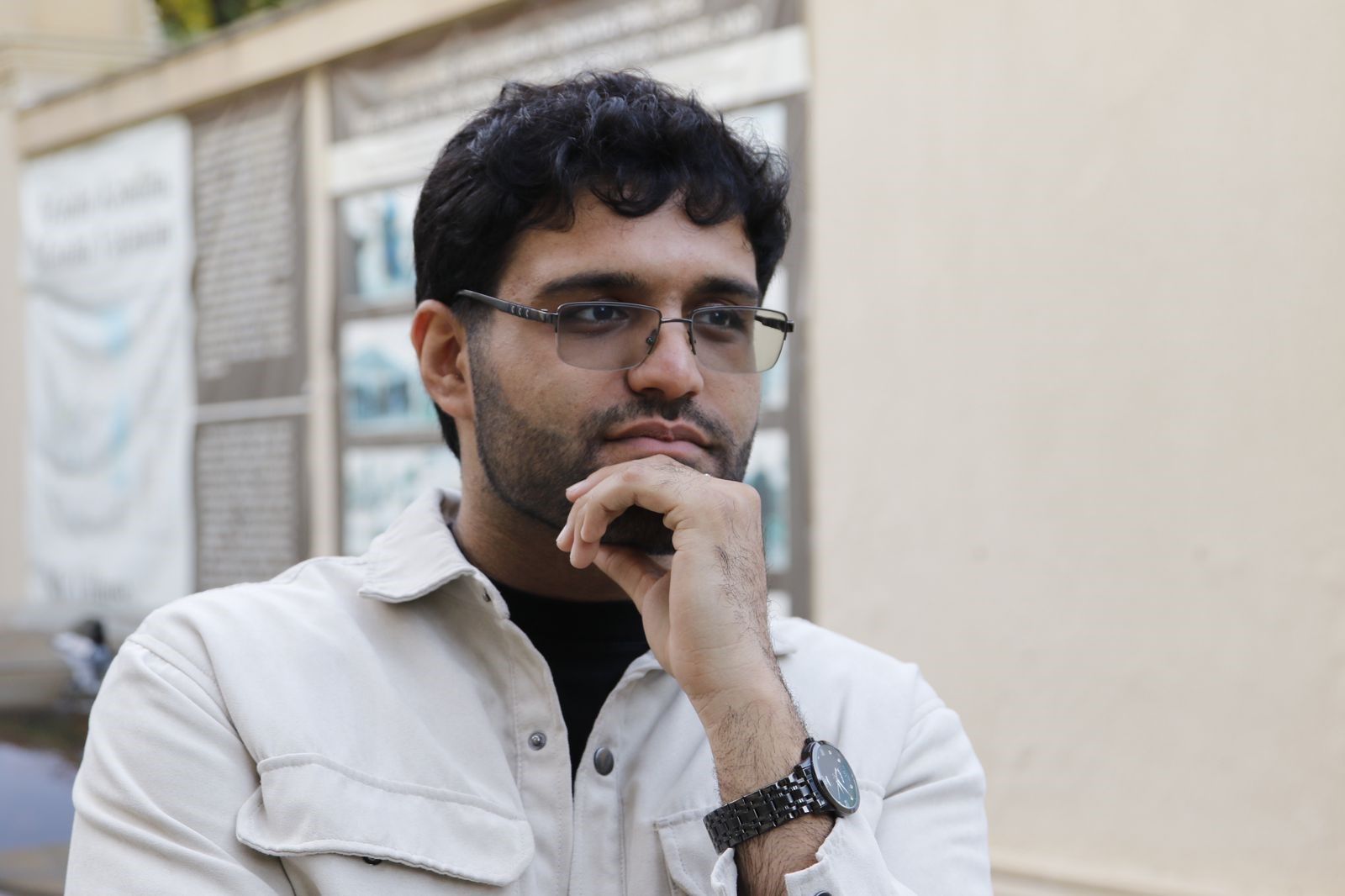
Speaking to AzerNEWS, HAVELSAN Vice President Şevket Ünal outlined the Turkish defense technology company’s vision for the next stage of cooperation with Azerbaijan, emphasizing that the relationship has developed considerably since HAVELSAN began operating in the country in 2020.
Asked whether concrete steps toward joint production and technology transfer could be expected and how Azerbaijan fits into HAVELSAN’s regional strategy, Ünal said years of cooperation have allowed the two sides to develop a better understanding of each other’s requirements and working methods.
“HAVELSAN has been operating in Azerbaijan since 2020. During this period, we have worked together on various projects. Therefore, today we are at a point where we understand each other, the requirements and the way we work much better. In the coming period, we are looking at the areas in which we can take this cooperation further,” Ünal told AzerNews.
Autonomous systems emerge as key area
HAVELSAN has spent approximately seven years working on unmanned ground, aerial and maritime vehicles. According to Ünal, the importance of this work extends beyond the platforms themselves and encompasses the engineering expertise and research and development capabilities accumulated during that period.
“Autonomous systems are among the leading areas. HAVELSAN has been working on unmanned ground, aerial and maritime vehicles for approximately seven years. Here, we are talking not only about the platforms that have emerged, but also about the substantial engineering and R&D expertise accumulated over the years,” he said.
HAVELSAN is now discussing how some of this expertise could be shared with Azerbaijan, particularly in the fields of unmanned ground and aerial vehicles.
“We are now discussing how we can share this expertise with Azerbaijan, particularly in unmanned ground and aerial vehicles. Technology transfer to Azerbaijan is also among the issues we are discussing,” Ünal said.
He stressed, however, that these discussions have not yet resulted in a finalized agreement.
“There is no finalized agreement yet; our discussions are continuing. What is important for us is to develop an approach that responds to Azerbaijan’s needs and has practical value in the field,” he said.
Ünal explained that HAVELSAN does not favor simply taking an existing model and reproducing it unchanged in another country. Instead, the company believes cooperation should be designed jointly around the requirements of the partner country.
“Our existing experience tells us that, rather than transferring a ready-made model to another country exactly as it is, the best results come from jointly evaluating with our counterparts in Azerbaijan what kind of structure should be established, which areas should be prioritized and how the work should proceed,” he said.
Beyond autonomous platforms, HAVELSAN sees considerable scope for expanding cooperation in command-and-control and simulation technologies.
“We have many years of experience in command and control, autonomous systems and simulation. Our work and contacts with Azerbaijan in these areas are also continuing. We believe that in the coming period we can add new areas of cooperation on top of what already exists,” Ünal said.
From individual platforms to connected warfare
Asked which areas of Türkiye-Azerbaijan defense industry cooperation are likely to deepen over the coming years, Ünal again identified autonomous systems as a major field, but stressed that the concept is rapidly evolving beyond individual unmanned platforms.
According to him, modern autonomous warfare is increasingly dependent on the software that allows unmanned systems to perceive their environment, interpret battlefield conditions, carry out missions and cooperate with other platforms.
“I think autonomous systems will be one of the important areas. However, we are no longer talking only about an unmanned ground, aerial or maritime vehicle. These platforms need to perceive their surroundings, understand the situation in the field, perform their missions and, when necessary, operate together with other systems. A significant part of what makes this possible is software,” he said.
This is where HAVELSAN believes its broader technological portfolio becomes particularly relevant.
“HAVELSAN’s experience in this area is not limited to autonomous vehicles. We have also been working in command and control and software for many years. Therefore, for us, the main issue is not so much what an individual platform can do on its own, but what it can accomplish together with other elements in the field,” Ünal explained.
That transition from individual platforms toward interconnected systems is expected to become increasingly important for modern armed forces.
Ünal said possessing capable systems across the air, land and maritime domains remains important, but is no longer sufficient by itself.
“I believe the main transformation in the coming period will take place here. Having individually powerful systems in the air, on land and at sea is important, but it is no longer sufficient on its own. These systems need to see one another, share information and operate as part of the same mission. This is precisely the direction in which what we call Multi-Domain Operations is developing,” he said.
Azerbaijan and multi-domain operations
HAVELSAN considers this emerging multi-domain environment another potential area for deeper cooperation with Azerbaijan.
“We believe this is one of the areas in which we can work together with Azerbaijan. HAVELSAN is ready to share the experience it has accumulated in command and control and software,” Ünal said.
The objective, he explained, is not simply to establish technical connections between different military platforms.
Instead, interconnected systems must be capable of combining information gathered from across the battlefield into a common operational picture, allowing different elements to coordinate their actions within the same operation.
“The aim here is not simply to connect different systems to one another. It is about using information coming from the field to create a common operational picture and enabling the operation to be conducted jointly,” Ünal said.
Such integration would allow information collected by different sensors and platforms across air, land and maritime domains to contribute to a shared understanding of the operational environment.
Cybersecurity becomes inseparable from modern defense
As military platforms become more interconnected and increasingly dependent on software, cybersecurity is also becoming a fundamental component of defense technology.
Ünal said cybersecurity can no longer be considered separately from autonomous systems, command-and-control networks and multi-domain operations.
“Cybersecurity cannot be considered separately from all of this. As systems become increasingly interconnected and software plays a greater role in the field, security becomes even more critical,” he said.
“We see it as an integral part of the system, both in unmanned vehicles and in command-and-control systems.”
The growing importance of software consequently changes not only how military systems operate but also how they must be protected. The more information and operational functions that move between interconnected platforms, the more important the resilience of the underlying digital architecture becomes.
For HAVELSAN, these developments point toward several areas in which the Türkiye-Azerbaijan defense relationship could expand.
“Therefore, in the coming period, I believe there are more areas in autonomous systems, command and control, multi-domain operations and cybersecurity where we can work together with Azerbaijan,” Ünal said.
“From our perspective, what is important is to share our existing experience and to be able to take it further together.”
The potential next phase of cooperation would therefore go beyond the acquisition of individual defense platforms. HAVELSAN’s vision centers increasingly on the technological architecture behind them: the software, command-and-control networks, autonomous capabilities and cybersecurity infrastructure that allow different systems to function together.
While discussions on technology transfer have yet to produce a finalized agreement, Ünal’s remarks indicate that both the transfer of technological expertise and the development of solutions tailored specifically to Azerbaijan’s requirements are now part of the conversation.
For HAVELSAN, Azerbaijan is consequently not simply a market for established technologies, but a partner with which the company sees scope to develop a deeper technological relationship as modern defense moves toward autonomous and increasingly interconnected operations.
Here we are to serve you with news right now. It does not cost much, but worth your attention.
Choose to support open, independent, quality journalism and subscribe on a monthly basis.
By subscribing to our online newspaper, you can have full digital access to all news, analysis, and much more.
You can also follow AzerNEWS on Twitter @AzerNewsAz or Facebook @AzerNewsNewspaper
Thank you!