
IOC launches Trustworthy AI Framework for Olympic Movement

Laman Ismayilova
Read moreTechnology is playing an increasingly prominent role across the sports sector, from training and performance assessment to broadcasting and fan engagement.
The International Olympic Committee is now seeking to establish a clear approach to its use, with particular attention to accountability, data protection and the safeguards needed across the Olympic Movement.
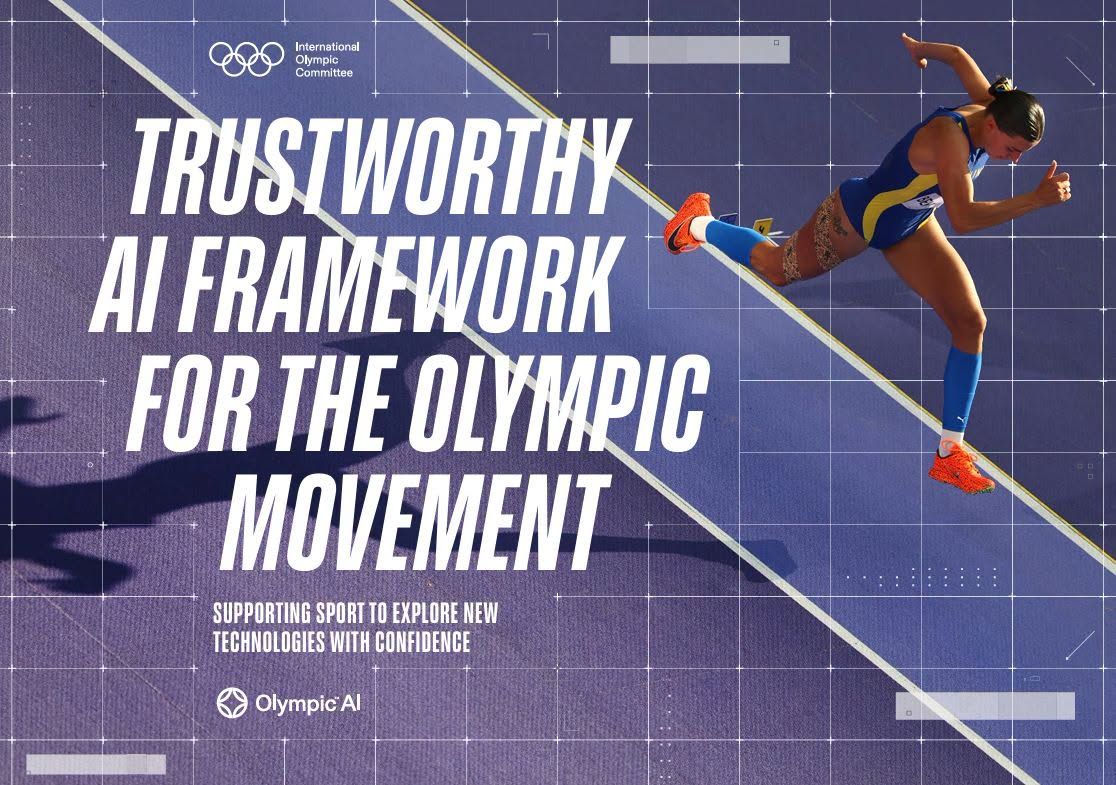
The IOC has launched its first Trustworthy AI Framework for the Olympic Movement, setting out seven principles for the use of AI in sport. The principles cover safety and security, personal data protection, reliability, transparency, accountability, fairness and sustainability.
The framework is intended to help organizations assess AI systems before and during their use, from procurement and development to implementation and further operation. The IOC has also published a Trustworthy AI Checklist, which organizations can use to identify potential risks and consider what measures are needed.
Protecting Athlete data
Data is one of the main areas affected by the growing use of AI in sport. Athletes already provide information through training equipment, wearable devices and performance-monitoring systems. AI can process this information on a much larger scale, making questions about access, storage and use more important.
The IOC's framework calls for personal data to be protected and for organizations to have clear responsibilities when AI systems are introduced.
Transparency is another point addressed by the framework. When AI is involved in a decision or process, organizations should be able to explain its role and identify who is responsible for the outcome.
Seven Principles for Sports Organizations
The IOC's seven principles are designed to cover different stages of an AI system's use.
They call for AI systems to be safe and secure, reliable and transparent. They also address accountability, fairness, data protection and sustainability.
The principles are not limited to a particular sport or type of technology. This allows international federations, National Olympic Committees, event organizers and other members of the Olympic Movement to apply them to their own circumstances.
The IOC says the framework is intended both for organizations that are considering their first AI applications and those that are already using the technology.
Three-Step Approach to AI Assessment
The Trustworthy AI Checklist is intended to turn the framework's principles into a practical assessment.
According to the IOC, the checklist has three stages. Organizations can first examine the risks connected with an AI system, then assess how the framework's principles are addressed and finally identify possible measures and resources for improvement.
The approach is relevant to an Olympic Movement that includes organizations with very different levels of technological development. The way AI is used by a broadcaster, for example, can be very different from its use by a sports federation or an athlete support programme.
AI's Expanding Role in Olympic Sport
The IOC's decision comes as AI is finding more applications in high-performance sport.
For athletes, the technology can be used to analyze training and performance data. For organisers and broadcasters, it can support production and other services. For fans, it can provide new ways of accessing information and following competitions.
At the same time, the use of AI can raise questions about the accuracy of information, the protection of personal data and the role of human decision-makers.
The IOC's Head of Artificial Intelligence, Alejandro Merino-Madrid, said the technology could have an impact on areas including athlete preparation, sports delivery and fan experiences, while highlighting the need to protect athlete data, maintain fair competition and ensure transparency.
Olympic Stakeholders Contribute to AI Framework
The framework was developed with the support of the IOC's Digital Transformation Consulting Partner Deloitte. More than 200 people from across the Olympic Movement took part in the process, including athletes and experts in sport, technology and governance.
The involvement of different groups reflects the range of situations in which AI can now be used in sport. The framework is intended to provide the same basic principles while allowing individual organizations to decide how they should be applied.
Turning AI Principles into Practice
The launch of the framework is only the first step. Its importance will depend on how the principles are applied by sports organizations in their actual use of AI.
The IOC has provided guidance and a checklist, but decisions about individual systems will remain with the organizations using them. This includes decisions about data, procurement, oversight and the role of people in AI-supported processes.
The wider use of AI in sport gives Olympic organizations a framework to guide decisions about its application.
The IOC says its aim is to encourage the use of AI while maintaining the principles of athlete protection, fair competition and transparency.
Source: Olympics.com
Here we are to serve you with news right now. It does not cost much, but worth your attention.
Choose to support open, independent, quality journalism and subscribe on a monthly basis.
By subscribing to our online newspaper, you can have full digital access to all news, analysis, and much more.
You can also follow AzerNEWS on Twitter @AzerNewsAz or Facebook @AzerNewsNewspaper
Thank you!