
Iran nuclear crisis is raising questions Washington would rather avoid

Elnur Enveroglu
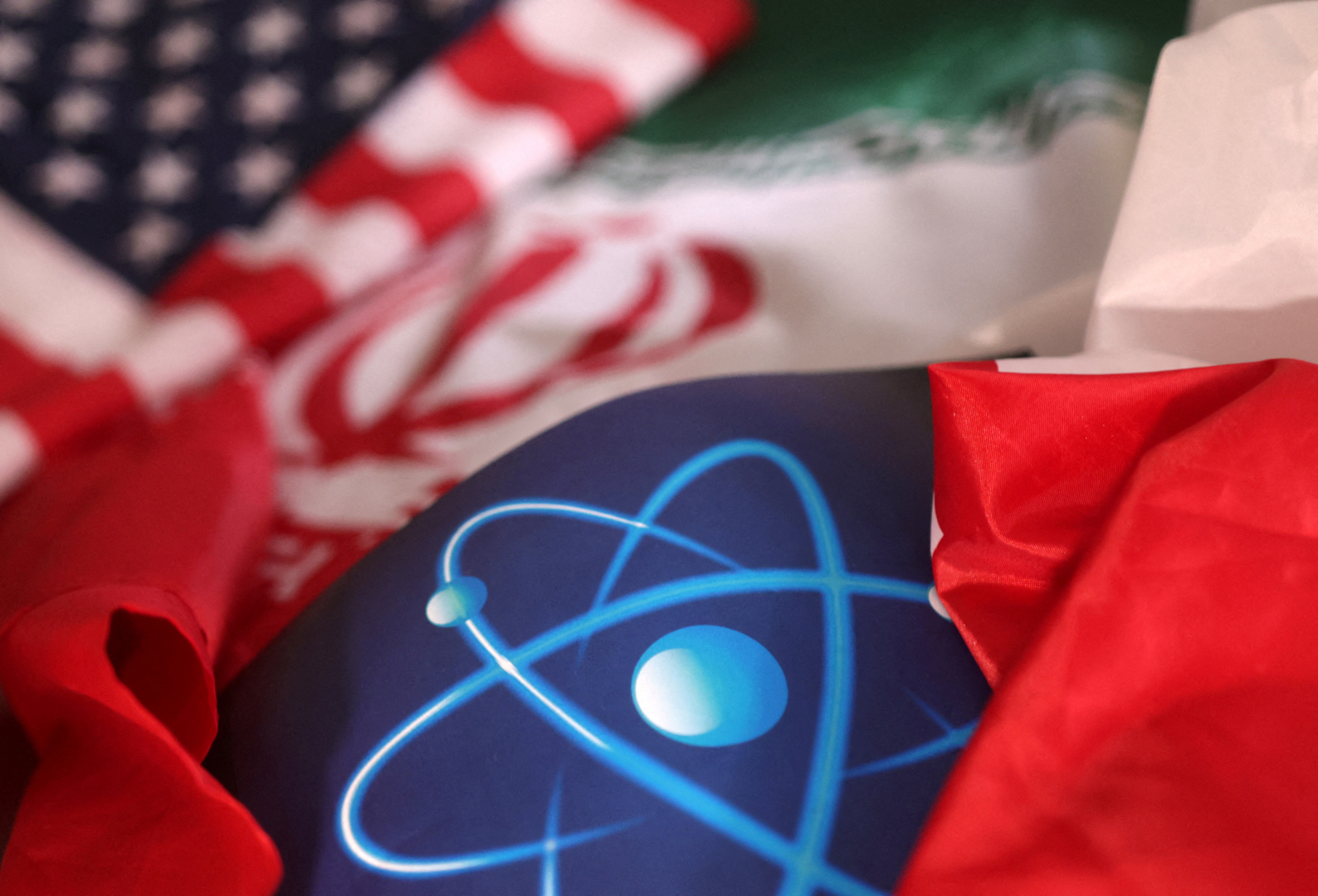
Read moreThe prospect of a nuclear confrontation between the United States and Iran has increasingly occupied the international agenda in recent weeks. What was once largely a debate about uranium enrichment, sanctions and regional deterrence is now generating a much more disturbing question: could the crisis eventually create an existential threat not only to the Middle East but also to countries far beyond its immediate borders?
At first glance, the current tensions between Washington and Tehran may not yet suggest that a full-scale war is imminent. However, developments unfolding behind the diplomatic rhetoric and military posturing are creating an atmosphere of growing uncertainty. The familiar expression that the calm before the storm can be more unsettling than the storm itself seems increasingly relevant.
Some analysts believe that Israel could be preparing another, potentially decisive military move against Iran, particularly as the prospect of a Democratic-controlled US Congress taking a more sceptical position on further military involvement could complicate Washington's calculations. This has fuelled speculation that Donald Trump might seek to make a consequential move before the end of the year, one that could be relatively discreet in its preparation but explosive in its geopolitical consequences.
For years, Iran has resisted American demands and sanctions, maintaining its ambitions to exercise regional influence despite sustained pressure from Washington. Its leverage has extended beyond its nuclear programme, encompassing the strategic importance of the Strait of Hormuz and the growing influence of the Houthis around the Bab el-Mandeb Strait. These maritime chokepoints have become important instruments of geopolitical pressure, with implications for international trade and energy security.
Trump's attempt to compel Tehran to accept Washington's terms initially appeared to rest on a relatively straightforward combination of economic coercion and military intimidation. Nevertheless, the strategy has exposed the limits of American leverage, where sanctions and economic pressure have failed to produce the political concessions Washington sought, while military operations targeting senior Iranian commanders and the country's supreme leadership have not necessarily translated into the strategic outcome the US administration wanted.
There is, however, another dimension to this confrontation. Trump's political timetable, the future of American congressional support for military action and Israel's determination to weaken or potentially overthrow Iran's existing political establishment do not necessarily point in the same direction. Nor is it clear that a change of political balance in Washington would automatically translate into the removal of Iran's leadership. If the existing strategy cannot deliver its intended objectives, the temptation to consider more consequential and riskier measures could grow.
History, however, offers a warning about the consequences of such calculations.
It may appear somewhat conspiratorial to draw parallels between today's nuclear confrontation and the events of the Second World War. But history should not be dismissed simply because its lessons are uncomfortable. Nuclear debates surrounding Iran tend to place Tehran at the centre of international scrutiny, with much of the discussion focused on its enrichment activities and alleged ambitions to develop nuclear weapons. Recent calls within Iran to reconsider its position under the international nuclear non-proliferation framework have further intensified these concerns.
However, an equally important question deserves attention: does Iran actually possess a nuclear weapon capable of triggering the catastrophe that some scenarios anticipate? Or is the nuclear threat increasingly being used to justify a potentially pre-emptive military operation against Tehran?
Let's be clearer. Iran's possession of enriched uranium, its potential capacity to produce weapons-grade material and the actual possession of an operational nuclear arsenal are three different things. Treating them as interchangeable risks turning an unresolved proliferation concern into a justification for military escalation.
To understand why this distinction matters, it is worth revisiting one of the darkest episodes in modern history.
As is known in history, on 6 August 1945, the United States dropped an atomic bomb on Hiroshima. Three days later, on 9 August, a second atomic bomb struck Nagasaki. These remain the only instances in which nuclear weapons have been used in warfare.
This historical comparison is not intended to express hostility towards the United States or to disregard the circumstances of the Second World War. Rather, it is a reminder that nuclear weapons have previously been used against a country that did not possess them, with consequences that extended far beyond the immediate military objectives.
The Potsdam Declaration, issued by the Allied powers on 26 July 1945, demanded Japan's unconditional surrender and warned of 'prompt and utter destruction' if it refused. Tokyo did not accept the ultimatum.
On 6 August, the American B-29 bomber Enola Gay dropped a uranium-235 fission bomb, known as Little Boy, on Hiroshima. Tens of thousands of people died immediately or in the days that followed, with the death toll estimated at approximately 140,000 by the end of 1945.
The destruction did not end there. On 9 August, a plutonium-based implosion bomb, Fat Man, was detonated over Nagasaki, killing an estimated 74,000 people by the end of that year.
Consequently, Japan announced its surrender on 15 August 1945, with the formal instrument signed on 2 September. The atomic bombings played a major role in the decision, although the Soviet Union's entry into the war against Japan was also a crucial factor in bringing the conflict to an end.
The historical lesson is not simply that nuclear weapons can force a country into submission. It is that decisions made by powerful states under the pressure of war can produce consequences that are irreversible, extending across generations and borders.
Today, Iran and the wider Middle East face a different but potentially dangerous set of circumstances. Tehran does not possess a publicly verified nuclear arsenal, though the growing confrontation surrounding its nuclear programme raises the possibility that military pressure could push the country towards a fundamentally different security doctrine.
And the consequences would not necessarily stop at Iran's borders.
Countries sharing borders with Iran, as well as those situated across the Caspian basin and the Persian Gulf, could face serious security, environmental and economic repercussions in the event of a nuclear incident. Türkiye, Azerbaijan, Turkmenistan and the Gulf states would all have reasons to be concerned. The scale of any radioactive contamination would depend on the location of an incident, its nature and prevailing atmospheric conditions, but the possibility alone underlines the regional stakes.
This is why the nuclear confrontation cannot be treated as an exclusively American-Iranian dispute. Its consequences could reshape the security calculations of the entire region, undermine international non-proliferation efforts and expose neighbouring countries to risks over which they have little control.
The question, therefore, is whether the international community intends to intervene diplomatically before the crisis reaches a point at which military calculations take precedence over political judgement. Is it not time to draw a line before another nuclear catastrophe becomes a possibility? Or will the world simply leave the outcome to the unpredictable course of events, waiting for the next geopolitical surprise as though it were a New Year's gift from Santa Claus? The Middle East cannot afford to gamble on that possibility.
Photo credit: Reuters
Here we are to serve you with news right now. It does not cost much, but worth your attention.
Choose to support open, independent, quality journalism and subscribe on a monthly basis.
By subscribing to our online newspaper, you can have full digital access to all news, analysis, and much more.
You can also follow AzerNEWS on Twitter @AzerNewsAz or Facebook @AzerNewsNewspaper
Thank you!