
Iran’s energy needs are turning Azerbaijan into a strategic lifeline
Akbar Novruz
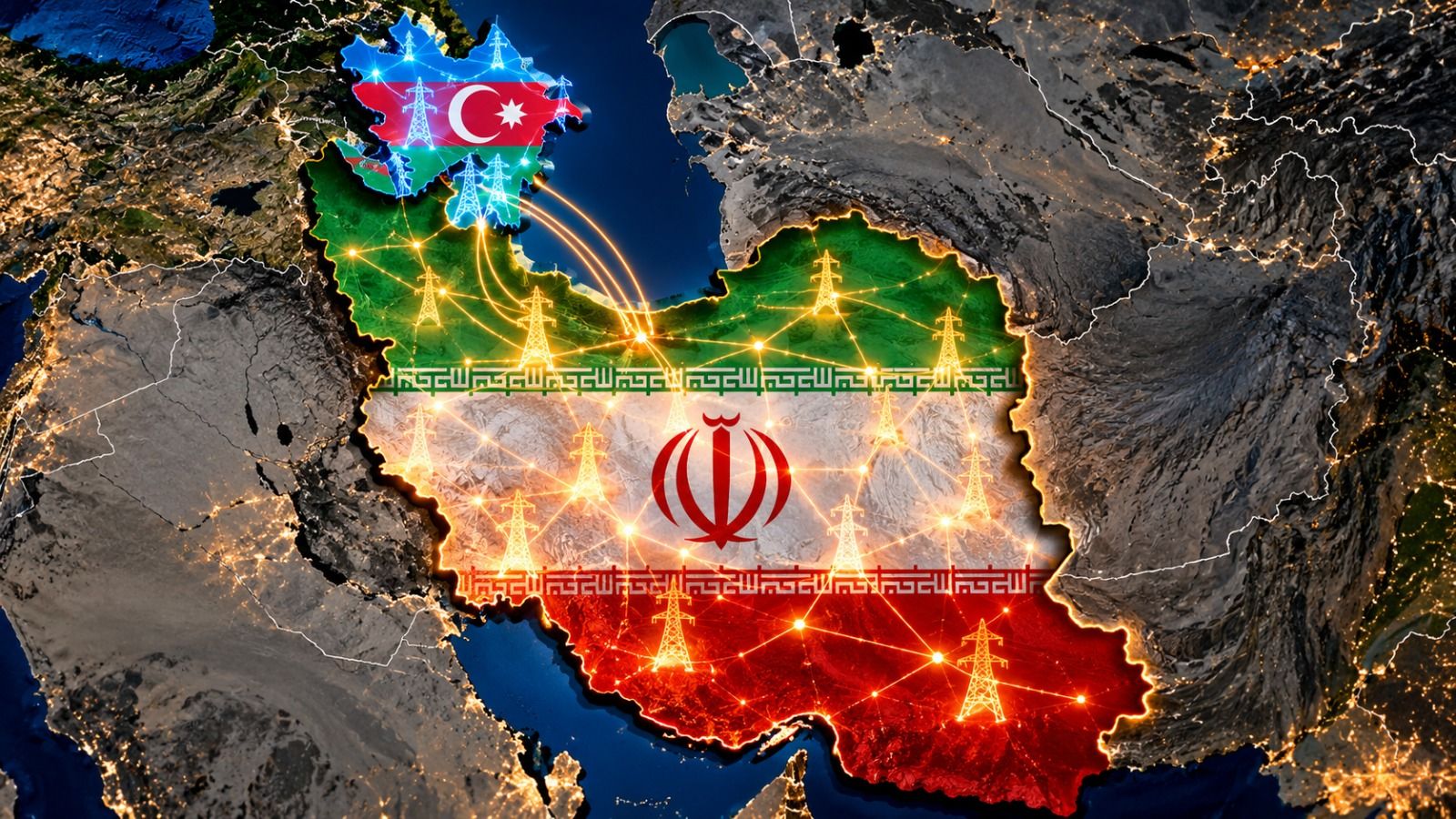
Read moreThere is a specific kind of dependency that forms between neighbours who have no choice regarding their geography, and the growing Iran-Azerbaijan relationship falls in that category. On September 28th in Tehran, the head of Iran's state power utility TAVANIR, Mohammad Allahdad, met Azerbaijan's deputy energy minister Elnur Soltanov, and he stated that Iran needed more electricity from Azerbaijan, and it needed it immediately before winter. "Cooperation has been established between them in the electricity sector," Allahdad said with an obvious note of dependency, which could only be found in a diplomatic statement of someone who really needs something.
The figures speak for themselves. Azerbaijan supplied 72.2m kWh of electricity in January and February, with Iran being its main buyer, and it was expected to achieve the highest figures ever seen in bilateral transfers during summer 2026. And how neat the complementarity is: while Azerbaijani generation of hydro and thermal electricity goes steadily throughout all the seasons of the year, Iranian peak usage comes during summers in the cooling period and, in a different way, during winter in the heating period – the kind of dependency that Allahdad's appeal for increased imports in the cold season attempts to solve. For Baku, the trade carries a second, quieter benefit, perhaps. Every kilowatt-hour of electricity substituted for gas-fired domestic generation frees up gas for the considerably more lucrative European market via the Southern Gas Corridor, where Azerbaijan is contracted to nearly double exports by 2027.
Now, from the looks of it, the point of discussion is more than mere volume of exports. According to Mohammad Allahdad, there are three parallel issues: first, electricity imports; second, development and modernization of joint hydro-electric power stations; third, swap deals for the delivery of electricity for gas. Such deals enable Iran to trade gas deliveries against electricity deliveries through a kind of deal that does not carry any diplomatic complications associated with payment for the latter, especially for Iran, which is dealing with the problem of sanctions applied to most of its banks. There already is some grid cooperation in various places along the common border, including Nakhchivan, while another cooperation agreement signed in February addresses the project of synchronization of Iran, Azerbaijan, and Russian power grids. This trilateral initiative will be unique for Baku – the switchboard between two sanctioned and isolated countries and the rest of the world.
In the same window, Azerbaijan's deputy prime minister, Shahin Mustafayev, met Iran's transport minister, Farzaneh Sadegh, to push forward the International North-South Transport Corridor, the 7,200km multimodal route linking Russia, the Caspian states and India to the Persian Gulf. The numbers here are considerably larger than the electricity trade. Mustafayev has stated that INSTC capacity is being expanded in phases toward 15m tonnes annually, with an interim target of 5m tonnes from January 2028 under agreements reached with Russia. Container shipments along the corridor's western route through Astara rose 58.3% in the first ten months of the most recent reporting year, and Iran and Azerbaijan's bilateral trade has reached roughly $650m over the past two years on an upward trend, according to Sadegh's own figures.
In the case of the physical constriction, it continues to be the Rasht-Astara railway in Iran, known as the "missing link" in Sadegh's own words, which cannot allow the corridor to operate at its full potential. The project has finally seen progress, which is expected to kick off right after the Novruz holiday, while the Astara terminal facility constructed by Azerbaijan Railways is scheduled to be completed during the first quarter of 2026. Moreover, along with this, the Kalaleh-Aghband road bridge, the Astara Bridge, and the Kalaleh-Jolfa road widening are among the infrastructure projects that have been promised to be expedited.
Both energy and transport corridors have their roots in a ten-sector cooperation agreement made in Baku in February, when the seventeenth meeting of the Iran-Azerbaijan Joint Economic Committee took place. This is an important framework, since Baku-Tehran ties have traditionally been vulnerable to occasional political disputes. That would be disputes about Israel, about Armenia, about religion, the sort of disputes that have in the past caused disruptions to cross-border cooperation in short order. By establishing regular meetings of commissions, technical working groups examining grid connections, and long-term infrastructure projects in electricity and freight, the two governments are creating a framework that will make it difficult for disputes to reach their pipelines and power lines.
However, indispensability, as stated above, does not imply agreement. First of all, the energy security of Iran is limited by the simple fact that the current internal consumption of Iran already accounts for no less than 94% of the total energy production in the country, implying that Tehran cannot make much use of the situation without additional energy supplies or transport arteries – and sanctions have considerably reduced the number of willing and capable neighbours of Iran in this respect. Azerbaijan, which has both additional hydroelectric and thermal power potential, as well as the grid interconnection and one of the few open transit paths between Russia and the Persian Gulf, becomes one of the few remaining solutions to the problem.
Here we are to serve you with news right now. It does not cost much, but worth your attention.
Choose to support open, independent, quality journalism and subscribe on a monthly basis.
By subscribing to our online newspaper, you can have full digital access to all news, analysis, and much more.
You can also follow AzerNEWS on Twitter @AzerNewsAz or Facebook @AzerNewsNewspaper
Thank you!