
Azerbaijan’s energy giant gets closer to Italy’s consumers
Akbar Novruz
Read moreSOCAR is implementing a cap on petrol and diesel prices at stations within the Italiana Petroli (IP) network. The Azerbaijani state energy company, which took control of the Italian group last May, has decided to address the rising fuel costs by imposing a limit on the prices charged by filling stations.
The mechanism will be rolled out gradually, starting with the IP-branded network.
For further notice, SOCAR has not yet specified what the maximum price at the pump will be. In a statement released on Sunday, it explained that the level of the cap will be determined by considering various needs and the economic sustainability of the supply chain.
On its face, it is a pricing decision by a fuel retailer responding to high costs. In practice, it hands Giorgia Meloni's government a politically convenient way out of imposing a windfall tax that energy companies have spent months lobbying against.
Diesel at Italian highways approaches €2.50 per liter; the self-service fuel price averages were €2.377 for diesel and €2.159 for gasoline on September 27th, and €2.459 for diesel and €2.254 for gasoline on the highways, according to the Fuel Prices Observatory of the Ministry for Business and Made in Italy. It was Eni, Italy’s major energy company, which launched the price cap first. The Minister for Foreign Affairs Antonio Tajani had called on companies to make this move at the beginning of September. This price cap comes as the second, and in some sense more important, domino piece to fall, important because SOCAR is no longer just a foreign oil supplier for Italy, but since May, the owner of one of the biggest Italian fuel distribution networks.
SOCAR acquired 99.82% of Italiana Petroli from API Holding on May 8th for an estimated €3bn (reports claim the enterprise valuation to be closer to $3.27bn), thereby acquiring an asset that was established 90 years ago, comprising some 4,500-4,600 filling stations, two refining facilities with a combined capacity of about 10 million tonnes per year, and a total of 8.5m tonnes of retail and 7.3m tonnes of wholesale fuel sales, as mentioned by Fitch Ratings with Italiana Petroli's adjusted EBITDA being estimated at €616m. SOCAR triumphed over Switzerland-based Gunvor and UAE-based Bin Butti Group for this asset, with assistance from Intesa Sanpaolo, and the deal received clearance from the European Commission in February, after being deemed non-problematic in terms of competition within the European Economic Area.
Now, this is truly a move that reflects a strategic change in direction. SOCAR has been known to be active in the supply sector for the past two decades, supplying crude oil through the Baku-Tbilisi-Ceyhan pipeline as well as natural gas through the Trans-Adriatic Pipeline, the last stage of the Southern Gas Corridor project. In both capacities, SOCAR has always left the potentially more profitable segment of the supply chain, such as the refining and retail segments, with Western firms. With this acquisition, however, this is going to change drastically. Azerbaijani state oil company is now not only a supplier to the Italian energy infrastructure but also a stakeholder in the prices that Italian consumers pay at the fuel station.
Soft power at the pump and on the pitch
In the bigger scheme of things, the voluntary price cap, aligned with Eni’s parallel initiative, serves as a vital political lifeline for Prime Minister Giorgia Meloni’s government by easing public frustration over skyrocketing fuel costs. There has been mounting political pressure on Meloni’s coalition to implement what is colloquially known as a *tassa sugli extraprofitti* (windfall tax) on energy producers taking advantage of high prices, a measure that enjoys popular support amidst rising inflation while being unpopular in the same industry that Rome does not want to antagonize before the next elections. Voluntary price capping by Eni and now by SOCAR lets the government take the credit for cheaper gas at the pump without allocating a single euro of tax revenue, while avoiding antagonizing two of Italy's largest energy firms. The exact price cap level has not been announced yet by SOCAR, which stated that it would take into account "different needs and the economic sustainability of the supply chain."
This logic of profit-making goes hand in hand with a strategy of soft power, which is no less tangible but certainly harder to measure. As it was stated by the company on the same day when it was announced that there will be a price cap, SOCAR has become the global energy partner for both the men's and women's national football teams of Italy for the period between January 2027 and December 2030, with an extension period of two years. Combining a benefit for the consumer with the support of the national team is not a coincidence, but rather a very deliberate move to increase SOCAR's visibility in Italy.
This, of course, comes with its risks for Baku. There is hardly anything to hide when selling through a pipeline in crude terms, but much more is revealed when selling through retail networks and a shirt-sponsorship contract. Every price increase, staff problem and outage at IP in the coming years will come with an Azerbaijani flag on top of the story in Italian media outlets which was not the case with BTC crude supplies. It seems like SOCAR has estimated the reputational benefits - being liked by Tajani, being credited for alleviating the cost-of-living pressure and becoming a part of Italy's most popular sport - as more than making up for this risk. Whether or not it will provide any meaningful savings or just slow down the price increases using better rhetoric will only be seen when SOCAR finally releases its number. But in any case, its announcement has served its purpose politically – it has given Giorgia Meloni one less justification for imposing a windfall tax and it has given SOCAR one more chance to be perceived as part of the solution not as a part of the problem by Italians who were unaware of its existence four months.
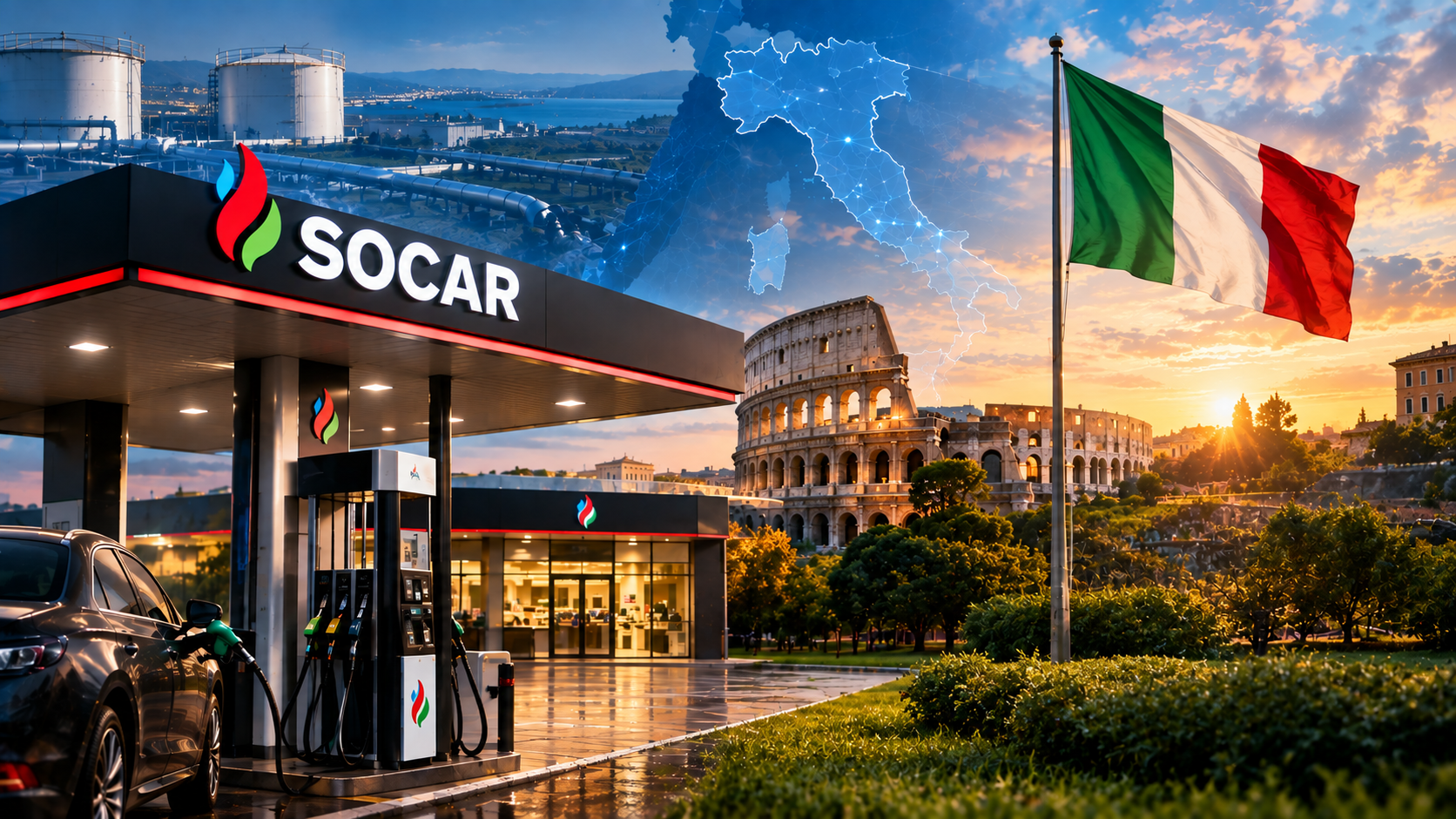
*the cover image has been generated by AI
Here we are to serve you with news right now. It does not cost much, but worth your attention.
Choose to support open, independent, quality journalism and subscribe on a monthly basis.
By subscribing to our online newspaper, you can have full digital access to all news, analysis, and much more.
You can also follow AzerNEWS on Twitter @AzerNewsAz or Facebook @AzerNewsNewspaper
Thank you!