
UN leadership race exposes growing West-Global South divide
Ulviyya Poladova
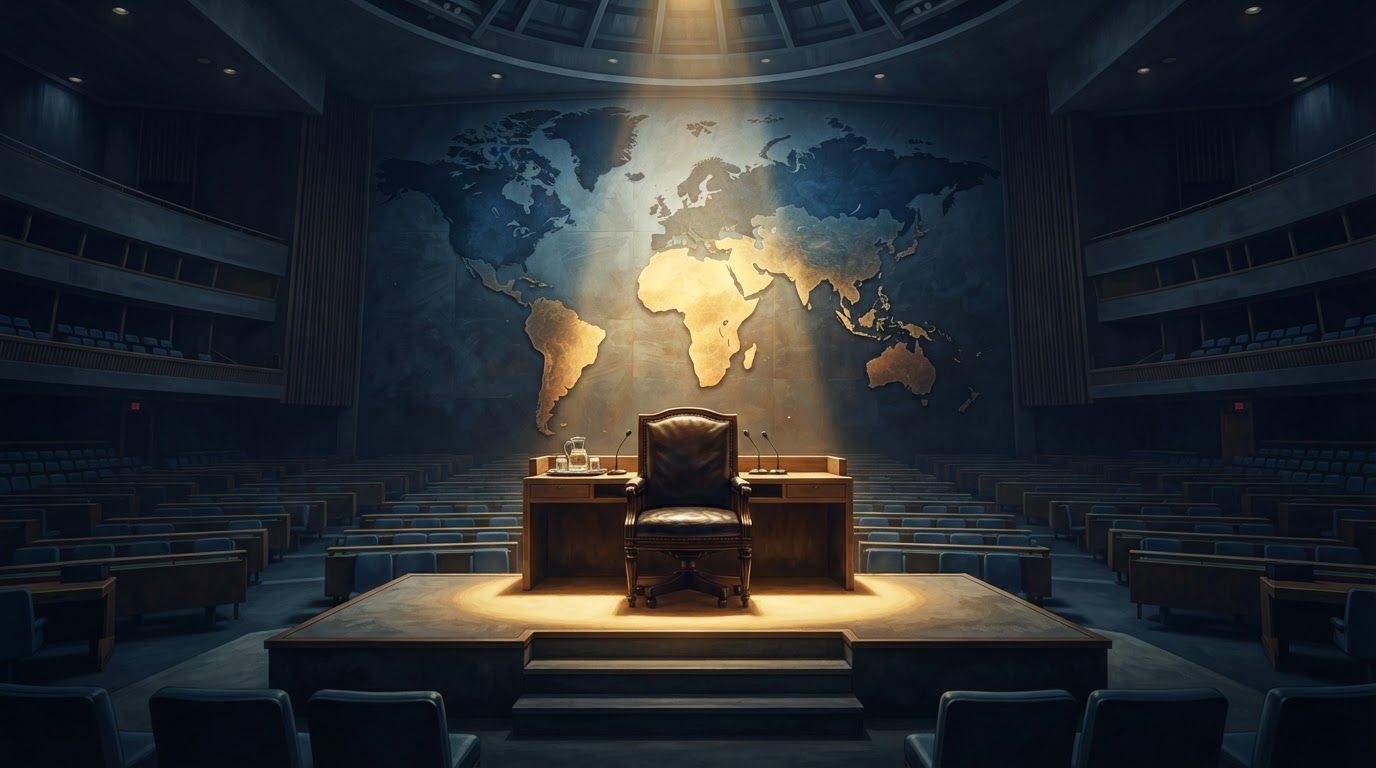
Read moreWhile the world keeps its eyes on wars, tariffs, and oil prices, a story is quietly unfolding in the corridors of the UN headquarters in New York, one that will largely shape the face of the organization for the decade to come. On December 31, 2026, António Guterres steps down as Secretary-General after serving two terms, and as early as January 1, 2027, his seat will be taken by the tenth head of the UN. Seven candidates are officially in the race, four of them women. Whoever ends up the winner, difficult tasks await, because the significance, the influence, and the financial capacity of the UN are all under ever closer scrutiny from the global public.
According to the UN Charter, the Secretary-General is "equal parts diplomat and advocate, civil servant and CEO." The person holding this post oversees several key UN bodies, among them the Security Council, which carries the responsibility of maintaining peace and security across the planet. The new Secretary-General will be elected by the UN General Assembly on the recommendation of the Security Council, whose permanent members are China, France, Russia, the United Kingdom, and the United States. That is why the pool of potential contenders is limited, and the process itself promises to be complicated and strewn with obstacles.
Seven candidates are officially in the race, four of them women. They are Latin Americans and Africans with solid diplomatic credentials behind them. The former president of Senegal and ex-chairman of the African Union, Macky Sall. The head of the IAEA, Rafael Grossi of Argentina, a man used to putting out the hottest nuclear crises. The economist Rebeca Grynspan of Costa Rica, who currently leads the UN Conference on Trade and Development. The former president of the General Assembly, María Fernanda Espinosa of Ecuador, and her compatriot, the diplomat Ivonne A-Baki. Guyana's permanent representative Carolyn Rodrigues-Birkett and the veteran of UN diplomacy from Uganda, Olara Otunnu. Until recently the list also included the former president of Chile, Michelle Bachelet, but she was the first to drop out of the running, having received only a single vote of support last week.
The heated arguments are already beginning. Yet behind this outwardly orderly process lies a genuine battle of meanings. And the main dividing line runs along the fault of West versus Global South.
There are two unwritten rules at the UN that this time work against the established order. The first is the principle of regional rotation. By long tradition the post is meant to pass from region to region, and now, by common consensus, it is Latin America and the Caribbean's turn. In the entire history of the UN there has been only one Secretary-General from there, the Peruvian Javier Pérez de Cuéllar, and even he served back in the eighties. In 2016 this tradition was already broken once, when, contrary to expectations, the Portuguese Guterres was chosen rather than a representative of Eastern Europe, which has never yet led the organization. Skipping the regional queue a second time in a row will be far harder. As the International Crisis Group expert Richard Gowan aptly noted, if Latin America's claim is disregarded again, it will come back to haunt everyone next time.
The second rule is even more sensitive. In eight decades the UN has never once been led by a woman. All nine previous Secretaries-General were men. In September 2025 a resolution appeared that directly calls on states to nominate women. And at the latest BRICS summit, which by now gathered 21 countries, the final communiqué sounded almost like a reproach aimed at the UN. It reminded everyone that a woman has never been elected to this post, that only one person came from Latin America and the Caribbean, and only two each from Africa and Asia.
The economic outlook is hardly encouraging either. Today there is stubborn inflation, which may be driven in large part by the surge in energy prices caused by the war in the Middle East as well as in Ukraine. This hits hardest those who already struggle with the high cost of living. Because of inflation, central banks are forced to raise rates at a time when debt levels are already very high. Under these conditions the UN has to operate in an even tougher situation. The Security Council can barely pass weighty decisions, and the withdrawal of the United States under the Trump administration has forced cuts to operations. Some institutions, such as the International Criminal Court, are under direct attack. The security architecture that was patiently built after the Second World War lies in ruins, and the chances of creating a new one are close to zero.
Between now and the end of the year, a candidate needs to gather at least nine votes out of fifteen, and at the same time none of the five permanent members may cast a veto. And that permanent five is the United States, China, Russia, the United Kingdom, and France, among whom lately there has been no agreement. That is precisely why three rounds of secret balloting have still failed to reveal a clear favorite.
But whoever is chosen in the end, the inheritance handed to them will be a heavy one. The Security Council, in Guterres's own words, is practically paralyzed by constant vetoes. The main donor, the United States, has slashed its funding, and hopes that the shortfall would be covered by China or Europe have so far come to nothing. What is more, experts admit that many states are, deep down, even glad that Trump is forcing a regime of austerity on the UN. The superpowers are no longer able to solve the world's problems on their own.
There is one more paradox here. People, on the whole, believe in the UN more than its own leaders do. According to a GeoPoll survey for the UN Foundation, six people out of ten trust the organization on the things that truly matter to them. Yet at the same time 85 percent admitted that they had heard almost nothing about how the new Secretary-General is being chosen.
So what is at stake? At first glance, just a single post, largely ceremonial and, as they say, "remarkably powerless." But behind the argument over the candidate hides a far more fundamental question. Who really sets the tone in the planet's main international institution. The answer we will learn by the end of this year.
Here we are to serve you with news right now. It does not cost much, but worth your attention.
Choose to support open, independent, quality journalism and subscribe on a monthly basis.
By subscribing to our online newspaper, you can have full digital access to all news, analysis, and much more.
You can also follow AzerNEWS on Twitter @AzerNewsAz or Facebook @AzerNewsNewspaper
Thank you!