
Erdoğan urges world leaders to turn climate pledges into action at COP31
By News Centre
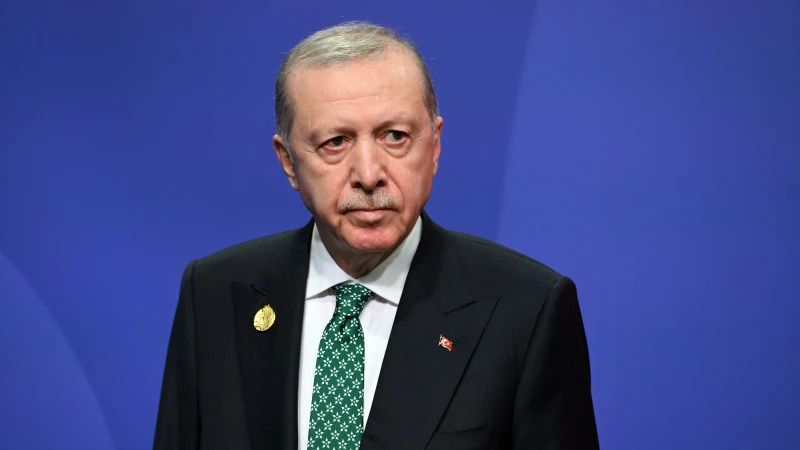
Turkish President Recep Tayyip Erdoğan has called on world leaders to move beyond rhetoric and take concrete action against the climate crisis, outlining Türkiye’s green development ambitions and its internationally recognised Zero Waste initiative.
In his address at the COP31 climate summit in Antalya, Erdoğan emphasised that humanity shares a single planet and must work collectively to protect it. However, one of the most striking moments of his speech came when he drew attention to the humanitarian and environmental catastrophe in Gaza, declaring that the territory had suffered both genocide and environmental destruction.
"Humanity has only one roof over its home, and that is the sky," Erdoğan said, stressing that the time had come to move from complaints to action in tackling climate change.
"Welcome to Antalya, where green meets blue. I hope the decisions taken within the framework of COP31 will benefit all humanity," he said.
At the beginning of his speech, Erdoğan thanked UN Secretary-General António Guterres for his support and expressed appreciation to Brazil and Azerbaijan for sharing their experience from previous COP presidencies.
He said Türkiye had designed COP31 to reflect the country's Anatolian heritage and had made considerable efforts to ensure the conference had the smallest possible environmental footprint.
Erdoğan expressed confidence that the summit would become an important milestone in the global fight against climate change, adding that Türkiye hoped to make it a conference focused on implementation and tangible results.
"Humanity has only one roof over its home, and that is the sky. Our home has only one garden, and that is the Earth. We have no other sky, no other Earth, no other seas or oceans," he said.
He warned that excessive consumption and the uncontrolled exploitation of natural resources were pushing humanity into increasingly serious crises, ranging from environmental degradation to threats to food security.
A burning forest or a polluted sea, he said, affects the entire planet, with no country or region immune to the consequences. Small island nations in the Pacific are particularly vulnerable to the effects of climate change.
Reflecting on the 31 years since the first COP conference, Erdoğan said the international community had made considerable progress. However, failure to achieve the targets established under the Paris Agreement would increase the risks facing the planet.
"We have two choices: either complain or take action. We assumed the COP31 presidency with precisely this understanding," he said, explaining that Türkiye wanted the summit to become an implementation-focused COP.
Erdoğan also highlighted the cultural and historical foundations of Türkiye's environmental approach, describing Antalya as a city where different civilisations and cultures have come together.
He said Turkish traditions placed great importance on protecting nature, citing the proverb "Cutting down a tree is like taking a life" to illustrate the country's longstanding respect for trees and natural resources.
He added that Turkish cultural values regarded even harming an ant as a violation of another living being's rights, while encouraging people to plant trees even if they knew the world would end the following day.
Turning to Türkiye's domestic climate agenda, Erdoğan said environmental considerations were being incorporated into development strategies and energy investments.
He outlined the country's ongoing green development programme, which includes efforts to decarbonise various sectors, expand renewable energy, improve energy efficiency and promote cleaner transportation solutions.
The president also pointed to Türkiye's climate law, describing it as an important step towards strengthening the country's institutional framework for climate action.
He said the government was working to protect water resources and had designated November 11 as National Afforestation Day, an initiative through which millions of saplings had been planted.
Erdoğan said Türkiye had identified 10 priority areas for achieving measurable progress, ranging from clean energy transition and zero waste to food security and industrial development.
Among the targets he highlighted were increasing the share of electricity use by 50% and cutting waste generation by half.
Particular emphasis was placed on the Zero Waste Movement, launched under the leadership of his wife, Emine Erdoğan, which he described as an initiative that had evolved into a global environmental campaign.
According to the president, approximately 90 million tonnes of waste have been recovered and brought back into the economy through the initiative.
He also described the United Nations General Assembly's decision to designate March 30 as International Day of Zero Waste as an important international achievement, pledging that Türkiye would continue its efforts until the zero-waste objective was achieved.
Erdoğan called for greater international support for countries that contribute relatively little to global emissions but bear some of the heaviest consequences of climate change.
He argued that small island developing states should have easier access to financing and technology, while countries that have historically consumed a larger share of the global carbon budget should assume greater responsibility for climate financing.
He also stressed the importance of supporting vulnerable economies and making the needs of Pacific nations more visible in international climate discussions, particularly those facing the consequences of rising sea levels.
" We cannot simply sit back with our hands tied," Erdoğan said, calling for stronger support for farmers and improved agricultural production capacity.
He further emphasised the need to accelerate the adoption of clean technologies, strengthen the competitiveness of industrial producers and invest in resilient urban infrastructure.
According to Erdoğan, local governments' access to financing will play a decisive role in delivering the green transition.
The Turkish president then turned to the humanitarian consequences of conflicts and global crises, arguing that wars, hunger and poverty were intensifying the pressure on both people and the natural environment.
"In Gaza, there has been not only genocide but also environmental destruction," he said.
Erdoğan described the destruction of Gaza's centuries-old olive trees, the contamination of soil and water, and the devastation of urban infrastructure as part of a wider environmental catastrophe.
He noted that while centuries-old olive trees had been destroyed in Gaza, an olive tree had been planted during the summit in Antalya.
The president also drew attention to the dire living conditions facing displaced Palestinians, many of whom have been forced to survive in tents surrounded by mud and debris.
"We want to send container shelters to these people, but we are not being allowed to do so," he said.
Referring to reports emerging over the preceding days, Erdoğan said temporary shelters in Gaza had been flooded, leaving hundreds of thousands of Palestinians, including children, struggling to survive harsh winter conditions.
He expressed particular concern for children who had been left without their parents and were facing the winter amid the destruction and humanitarian crisis.
Erdoğan concluded his remarks with an appeal for a stronger collective international response to both the climate emergency and the humanitarian challenges confronting vulnerable populations.
Here we are to serve you with news right now. It does not cost much, but worth your attention.
Choose to support open, independent, quality journalism and subscribe on a monthly basis.
By subscribing to our online newspaper, you can have full digital access to all news, analysis, and much more.
You can also follow AzerNEWS on Twitter @AzerNewsAz or Facebook @AzerNewsNewspaper
Thank you!