
From Karabakh to Antalya: How Azerbaijan and Türkiye turn political unity into regional influence
Elnur Enveroglu
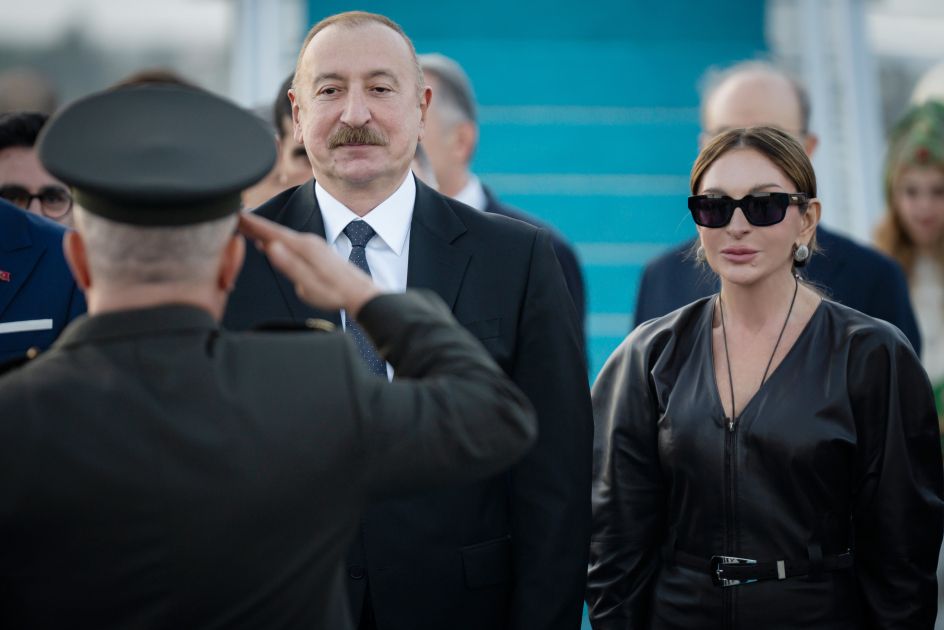
Read moreLast week, Azerbaijan attracted considerable attention with two major events: Victory Day and, on this symbolic occasion, the arrival of Türkiye's President, Recep Tayyip Erdoğan, in Karabakh at the invitation of Azerbaijani President Ilham Aliyev. Together, these events sent powerful messages extending well beyond the borders of the South Caucasus. Above all, the shared position of the two leaders was unmistakable: the brotherhood between Azerbaijan and Türkiye is indivisible, enduring and beyond the reach of external interference.
It was hardly surprising that relations between the two countries had attracted some tension in the media of both Türkiye and Azerbaijan in the preceding weeks. However, the most sensitive aspect was that those seeking to exploit the situation appeared to be positioning themselves at the centre of the controversy. At times, it seemed that those attempting to drive the two countries apart were more actively intervening in the debate than the countries themselves.
However, on 8 November, President Erdoğan's decision to celebrate Victory Day in Karabakh alongside his Azerbaijani counterpart and their families effectively silenced much of the speculation. It was as though a clear instruction had been issued to the wider political community: look at the centre of events. On that day, attention was firmly focused on Azerbaijan. The visit also attracted considerable attention in the Armenian media, where the symbolism of the two Turkish-speaking brother nations celebrating their shared victory was difficult to overlook.
On the same day, President Ilham Aliyev informed the Turkish media that he would attend the United Nations climate conference COP31 in Antalya. This announcement, made ahead of his visit, also carried a message for those in Türkiye who had allowed uncertainty to cloud their understanding of the relationship between the two countries.
The 8 November meeting conveyed three principal messages to the international community. First, Ankara's regional strategy takes into account Baku's interests. Second, third parties cannot undermine the relationship between Azerbaijan and Türkiye. Finally, Armenia cannot expect to secure the opening of its border with Türkiye by exploiting temporary disagreements or perceived differences between Baku and Ankara. In this political context, the continued closure of the Turkish-Armenian border remains closely linked to progress towards a peace agreement between Armenia and Azerbaijan.
Furthermore, President Aliyev's official visit to Antalya to attend COP31 subsequently provided another opportunity to demonstrate the depth of bilateral cooperation. One particularly significant development was the early launch of the Azerbaijani pavilion and, more broadly, the application of Azerbaijan's experience in hosting COP29 to support Türkiye's organisation of COP31. Azerbaijan has consistently stood alongside its brother country during major international events, and the close cooperation between the two sides in Antalya is another illustration of that commitment.
Meanwhile, the significance of the relationship cannot be measured solely through political declarations, symbolic visits or diplomatic gestures. Its real strength lies in the ability to translate strategic solidarity into tangible economic opportunities. This is where the next stage of Azerbaijan-Türkiye relations becomes particularly important.
Economic cooperation has already developed into one of the principal foundations of the bilateral partnership. According to Azerbaijan's Embassy in Türkiye, bilateral trade turnover reached $5.72 billion in 2025, while the two presidents have set an ambitious target of $15 billion. Achieving that objective will require more than an increase in the exchange of existing goods. It will depend on expanding industrial cooperation, diversifying production, strengthening private-sector partnerships and creating new opportunities for businesses on both sides.
Investment provides an even clearer illustration of the scale of mutual confidence. Azerbaijani direct investment in Türkiye reached $21.1 billion between 1995 and 2025, while Turkish investment in Azerbaijan amounted to $18.4 billion over the same period. SOCAR's $6.3 billion STAR refinery in İzmir remains one of the most prominent examples of Azerbaijan's long-term economic commitment to the Turkish market. These figures demonstrate that the partnership is not simply based on political affinity; it is supported by substantial capital, commercial interests and long-term economic calculations.
The energy sector will remain central to this relationship, but its future should not be confined to oil and natural gas. Azerbaijan's position as an energy supplier and Türkiye's importance as a regional transit and distribution hub create opportunities for deeper cooperation in electricity, renewable energy and emerging green technologies. Joint investment in solar and wind power, electricity transmission infrastructure and the export of renewable energy could gradually expand the partnership beyond its traditional hydrocarbon foundations.
Transport and connectivity represent another strategic dimension. Azerbaijan and Türkiye are essential links in the development of the Middle Corridor, connecting Central Asia and China with European markets through the Caspian Sea and the South Caucasus. The expansion of railway capacity, improvements to logistics infrastructure and more efficient customs procedures could increase the corridor's competitiveness and strengthen both countries' positions in international supply chains.
The reconstruction of Karabakh and Eastern Zangazur also offers opportunities for Turkish businesses, particularly in construction, engineering, agriculture, renewable energy and infrastructure development. Such projects can create employment, stimulate regional economic activity and establish new commercial connections between the two countries.
Ultimately, the partnership between Baku and Ankara is entering a phase in which political solidarity must increasingly be matched by economic integration. COP31 offers a visible example of how experience, institutional cooperation and mutual support can produce practical results. The same approach could shape future projects in energy, transport, technology and industry.
The message from Karabakh and Antalya is therefore broader than a declaration of brotherhood. Azerbaijan and Türkiye are demonstrating that their relationship has the political resilience and economic potential to remain a defining factor in the region's future. In a South Caucasus undergoing profound geopolitical change, the strength of this partnership will be measured not only by the challenges it withstands, but also by the opportunities it creates.
Here we are to serve you with news right now. It does not cost much, but worth your attention.
Choose to support open, independent, quality journalism and subscribe on a monthly basis.
By subscribing to our online newspaper, you can have full digital access to all news, analysis, and much more.
You can also follow AzerNEWS on Twitter @AzerNewsAz or Facebook @AzerNewsNewspaper
Thank you!