
Delhi’s two-track gamble in South Caucasus [OPINION]
Akbar Novruz
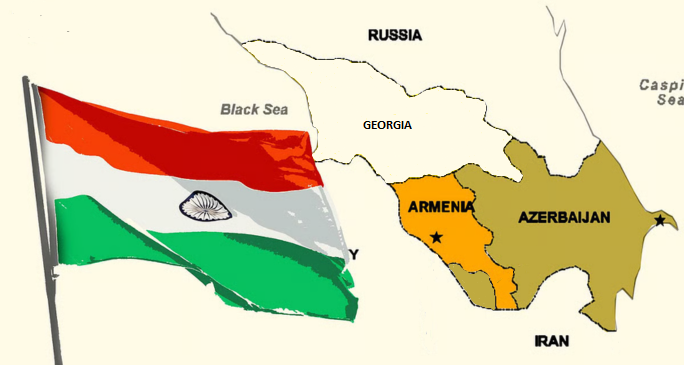
Read moreThere are two Indias in the South Caucasus. One sends guided rockets to Armenia. The other sends its foreign minister to Azerbaijan to talk about peace, energy and trade. Both are real, and both increasingly demand an explanation.
The defence minister of India, Rajnath Singh, set out the first batch of guided Pinaka rockets intended for Armenia from Nagpur on 18 January. This consignment, which has come back into the news cycle, is from a procurement arrangement that dates back to 2022. It has been reported that a more extensive weapons deal, consisting of Pinaka rocket launchers and other materials, is worth approximately ₹2,000 crore [$213 million USD].
Motives behind the missiles
For Yerevan, the logic is understandable, and of course Armenia has the right to maintain its defence capabilities, as does any other country in the region. But when two countries have experienced prolonged conflict, changes in military capabilities are naturally politically sensitive. Yerevan explains this as diversification away from Russia. After the Second Karabakh War in 2020, and the erosion of confidence in Russian security guarantees [CSTO], Armenia sought suppliers beyond Moscow - even to this day Yerevan stands by that idea, to the point that its mandate is under discussion for dismissal. Now, Armenia has chosen a long-term military build-up, and it is doing so while the peace process is under way. India was close to nothing in Armenia’s arms imports a few years ago; by 2022–24, it was about 43% of them, according to SIPRI. And with that being said, Armenia cut defence spending by about 15% in 2026. Its draft 2027 budget raises it by about 9.5%, to around 616 billion drams.
For Delhi, the motive has other reasons behind it. Armenia is a customer for an expanding Indian defence industry and an established political partner. Pakistan’s long support for Azerbaijan has historically given the relationship an additional strategic edge. Yet this cannot explain everything: India has ambitions in Eurasian trade and energy that extend well beyond the familiar India–Pakistan rivalry.
Guided rocket artillery offers greater precision and an enhanced ability to engage targets at a distance compared with conventional unguided systems. But one delivery, however sophisticated, doesn't fundamentally transform the military balance overnight.
Iran question on the Caspian
And the above is one dimension- a scenario per se; despite acquisition taking place in 2022, we need to consider the broader geopolitical environment, because the South Caucasus doesn't exist in isolation. Before America’s 3 November midterms, reports pointed to pressure for renewed US strikes on Iran. The elections then handed Democrats control of Congress amid public unease over the costs of the war. President Donald Trump faces competing arguments for escalation, continued economic pressure and negotiation.
It is not some far-off crisis of the Middle East that concerns the South Caucasus. Iran is a neighbor of both Azerbaijan and Armenia, giving Armenia vital southward access for trade and being part of India’s North-South transport plans. Any renewed conflict will disrupt supply lines and energy flows and discourage investments into the region. Even the mere prospect of a diplomatic deadlock will increase uncertainties in transport infrastructure.
The US itself is following a seemingly conflicting policy of its own. As it looks into the feasibility of military action against Tehran, it is working with the governments of Baku and Yerevan in designing a peace dividend through establishing technical groups for the Trump Route for International Peace and Prosperity on 6 November, starting with the establishment of transport and electricity connections. Even though planned before the announcement came right after re-emerging anxious voices from Tehran over the project.
Delhi corrects course
Interestingly enough, Delhi is actually correcting its course in relation with Baku. Amid the brief but strong extended 'dispute' between Baku and Delhi, India's FM Jaishankar decided to visit Baku on 23 October to revise the relationship. It was the first stand-alone visit by an Indian foreign minister to Baku in about eight years. He welcomed the Armenia–Azerbaijan peace agreement and talked about energy, trade and the transport corridor. I wrote about this as a step toward normalisation after the Second Karabakh war. It is also an acknowledgement that Azerbaijan is the regional power with energy, transit and growing diplomatic weight, and you cannot build a Caucasus policy around only one side of it. India and Azerbaijan traded $401m in 2025; India’s ONGC Videsh has invested more than $1.2bn in Azerbaijani energy assets.
A Caucasus strategy constructed around Armenia alone would neglect hard commercial interests in Baku. Delhi’s rapprochement with Baku is another sign that the region is outgrowing some inherited diplomatic divides, even as its arms contracts continue to reflect them. Delhi should take the next step, if it wants a real place in the region, and deepen the Baku track at the same pace as the Yerevan one.
Three futures, one test
Constructive scenario: India fulfills its military contracts to date and works with both governments, while TRIPP progressively makes border politics about business. Military cooperation and diplomacy can go hand in hand as long as there is prudence and transparency.
Uncomfortable balance: armaments continue arriving, but the process of negotiations goes in a non-linear fashion and each new weapon reminds about the war. Connectivity grows, but mistrust undermines it.
Dangerous outcome: increased tension between the US and Israel against Iran undermines the regional commerce and diplomatic process, increasing the price of Armenia’s southward orientation and complicating the position of Azerbaijan as a Eurasian bridgehead.
India need not cut off its defense cooperation with Armenia in order to repair its relations with Azerbaijan. However, India cannot sell weapons to one country and say that it has nothing to do with peace. A real regional policy would be conscious of the implications of its weapon sales, embrace the peace process, and build bridges that work for both its neighbors. The challenge for India now lies in whether it can help the South Caucasus transcend the whole process of taking sides.
Here we are to serve you with news right now. It does not cost much, but worth your attention.
Choose to support open, independent, quality journalism and subscribe on a monthly basis.
By subscribing to our online newspaper, you can have full digital access to all news, analysis, and much more.
You can also follow AzerNEWS on Twitter @AzerNewsAz or Facebook @AzerNewsNewspaper
Thank you!