
Why Baku matters in the struggle for influence across Eurasia
By Muhammed Kamaloglu
Baku is no longer simply the capital of an energy-producing country on the western shore of the Caspian Sea. Despite having been recognised by the smell of its oil and rigs on the Caspian shores over many years, now, it has become an increasingly important geopolitical centre where the strategic interests of Europe, Central Asia, the Middle East and the South Caucasus intersect. Its significance derives not only from its natural resources, but also from its geographical position, developing military capabilities and growing role in international transport networks, all of which have enabled Azerbaijan to exercise influence beyond what its economic and demographic size might otherwise suggest.
The expected visit of Turkish President Recep Tayyip Erdoğan to Baku on 8 November, to participate in Azerbaijan's Victory Day celebrations, should therefore be understood against a much broader geopolitical background. Although the historical and cultural ties between the two nations remain central to their relationship, the strategic partnership between Ankara and Baku has acquired an increasingly important international dimension, particularly as competition over energy security, regional connectivity and political influence intensifies across Eurasia.
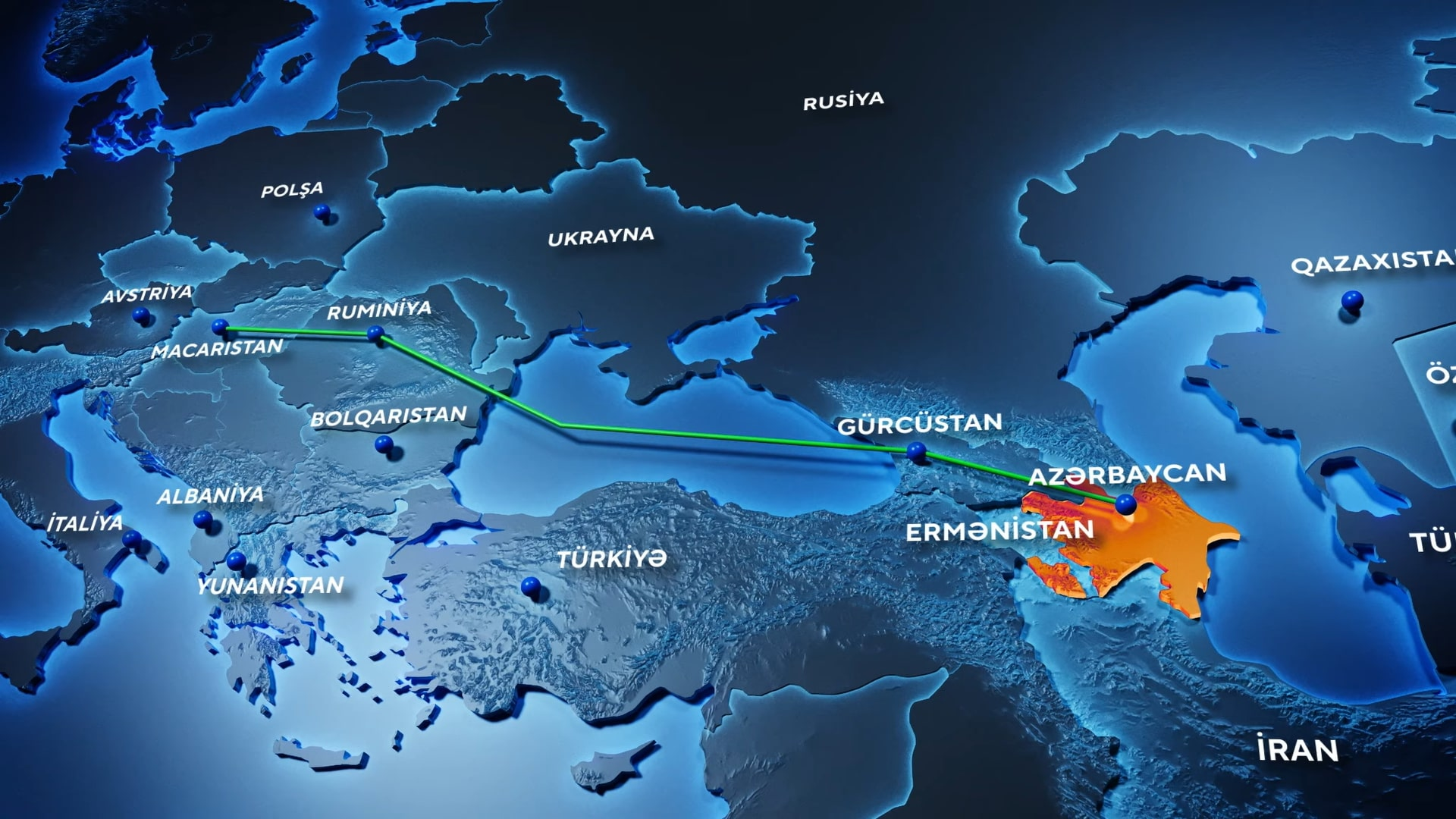
Azerbaijan's geographical position represents one of its greatest strategic advantages, as the country connects Central Asia through the Caspian Sea with Europe through Georgia and Türkiye, while maintaining direct geographical proximity to Russia, Iran and the wider Middle East. Over the past two decades, Baku has translated this geographical advantage into tangible infrastructure projects, including the Baku–Tbilisi–Ceyhan oil pipeline, the Southern Gas Corridor, TANAP and the Baku–Tbilisi–Kars railway, which have established Azerbaijan as an important participant in international energy and logistics networks. For European countries seeking to diversify their energy supplies following Russia's invasion of Ukraine, Azerbaijani natural gas has become a valuable additional source, although its capacity should not be confused with the ability to replace Russia's former contribution to European energy markets.
Türkiye considerably extends Azerbaijan's regional and international reach, while Ankara benefits from its partnership with Baku by strengthening its access to the Caspian basin and Central Asia. As a NATO member with substantial military capabilities, an expanding defence industry and diplomatic relationships extending from Europe to the Middle East, Türkiye occupies a distinctive position within the international security architecture. Its cooperation with Azerbaijan, particularly in military training, defence technologies and security coordination, has demonstrated how bilateral relations can develop into a wider regional partnership. The Shusha Declaration, signed in 2021, provided an institutional foundation for this alliance, reflecting the strategic importance both governments attach to maintaining close cooperation amid changing regional circumstances.
The Second Karabakh War in 2020 fundamentally transformed the balance of power in the South Caucasus, strengthening Azerbaijan's political position and demonstrating the importance of military modernisation, technological investment and strategic partnerships. Türkiye's political and military support contributed to this transformation, while Azerbaijan's subsequent restoration of control over its internationally recognised territories created new political and economic responsibilities. The challenge facing Baku now extends beyond consolidating its military achievements, since lasting regional influence will increasingly depend on its ability to establish sustainable peace, accelerate reconstruction and create economic opportunities capable of transforming the post-conflict environment.
Energy cooperation remains another essential pillar of the Ankara–Baku relationship, although its scope is gradually expanding beyond traditional oil and natural gas exports. TANAP and the Baku–Tbilisi–Ceyhan pipeline have strengthened Türkiye's position as a transit country connecting Caspian resources with international markets, while the proposed agreement envisaging the delivery of 33 billion cubic metres of Azerbaijani natural gas to Türkiye over 15 years, beginning in 2029, underlines the long-term nature of their energy partnership. Increasing attention to renewable energy, electricity interconnections and green energy corridors also demonstrates that both countries recognise the need to adapt their cooperation to the changing structure of international energy markets.
Transport connectivity could prove equally consequential for their future geopolitical influence. The Middle Corridor, connecting China and Central Asia with European markets through the Caspian Sea, Azerbaijan, Georgia and Türkiye, has gained importance as businesses and governments seek alternatives to traditional northern routes affected by the Russia–Ukraine war. Meanwhile, the proposed Zangezur connection between mainland Azerbaijan and Nakhchivan through Armenian territory could create additional opportunities for trade and strengthen transport links between Türkiye and the Caspian region. Nevertheless, the commercial success of these projects will depend on practical infrastructure improvements, simplified customs procedures and political arrangements that respect national sovereignty, particularly given the sensitivity surrounding Armenia's position and Iran's opposition to changes that could undermine existing regional arrangements.
Azerbaijan's foreign policy calculations are further complicated by its relationships with Iran, Russia and Israel, whose competing interests frequently intersect in the South Caucasus. Baku's defence and energy cooperation with Israel has strengthened its security capabilities, although it remains a source of concern for Tehran, while relations with Moscow require careful management as Russia seeks to preserve its historical influence amid the growing presence of Türkiye and Western actors. Azerbaijan's ability to maintain independent decision-making while avoiding excessive dependence on any major power is therefore essential to preserving its diplomatic flexibility.
Despite their strategic closeness, Ankara and Baku also face differences arising from their respective foreign policy priorities, particularly regarding Israel, regional competition and certain domestic political issues. Türkiye's increasingly confrontational position towards the Israeli government contrasts with Azerbaijan's decision to preserve its strategic relationship with Tel Aviv, illustrating that the principle of 'two states, one nation' does not eliminate the independent national interests of either country. Economic challenges also remain significant, as Türkiye must address financial stability and investment requirements, while Azerbaijan continues to pursue diversification away from dependence on hydrocarbon revenues.
Against this background, Erdoğan's presence in Baku on Victory Day carries significance beyond ceremonial diplomacy, reaffirming Türkiye's commitment to its strategic alliance with Azerbaijan and signalling Ankara's intention to remain actively involved in shaping the South Caucasus. Direct engagement between Erdoğan and President Ilham Aliyev also provides an opportunity to strengthen mutual confidence, coordinate regional priorities and manage differences that could otherwise complicate bilateral cooperation. Ultimately, however, the success of the partnership will be determined less by political declarations than by its ability to deliver sustainable economic projects, strengthen regional security and contribute to lasting peace.
What makes Baku increasingly important is its ability to connect geographical advantages, energy resources and political relationships within a wider Eurasian framework. For Türkiye, Azerbaijan represents a strategic gateway to the Caspian basin and Central Asia; for Europe, it is an additional partner in energy diversification and regional connectivity; and for the wider international community, it is a country whose political choices increasingly influence the balance of power in the South Caucasus. The future of the Ankara–Baku partnership will therefore extend well beyond bilateral relations, influencing the development of trade routes, energy security and the prospects for regional stability across Eurasia.
--------
Muhammed Kamaloglu is a Turkish historian, researcher, and author who currently works within the TRT General Directorate (TRT Kurumu Genel Müdürlüğü) and is a guest columnist for AzerNEWS
Here we are to serve you with news right now. It does not cost much, but worth your attention.
Choose to support open, independent, quality journalism and subscribe on a monthly basis.
By subscribing to our online newspaper, you can have full digital access to all news, analysis, and much more.
You can also follow AzerNEWS on Twitter @AzerNewsAz or Facebook @AzerNewsNewspaper
Thank you!