
Why Azerbaijan's victory still matters six years after the 44-day war? [COMMENTARY]
Akbar Novruz
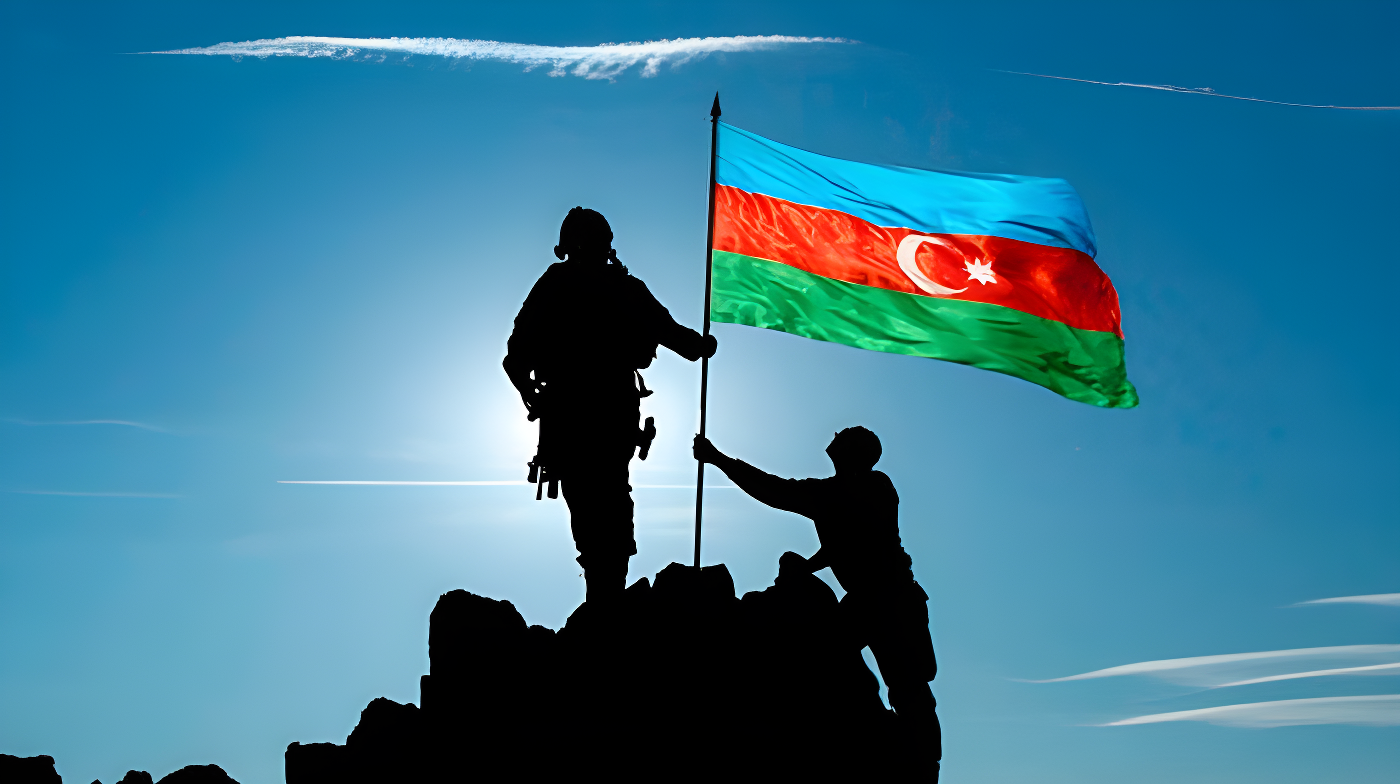
Read moreSome wars are remembered for their duration, others are remembered for how profoundly they alter the course of history. Azerbaijan's 44-day Patriotic War in 2020 belongs to the latter category. Six years after the liberation of Shusha and the country's historic victory on November 8, the conflict continues to offer important lessons about military strategy, technological innovation, geopolitical calculations and the determination of states to defend their territorial integrity.
For nearly three decades, Azerbaijan's internationally recognised territories remained under Armenian occupation, while successive diplomatic efforts failed to produce a lasting settlement. The military campaign launched on September 27, 2020, fundamentally changed that reality. Through a combination of modern military technologies, coordinated operations, long-term defence investments and strategic planning, Azerbaijan achieved a decisive victory that reshaped the balance of power in the South Caucasus.
Yet the significance of the 44-day war extends beyond Azerbaijan's borders. The growing use of unmanned aerial vehicles, precision-guided weapons and integrated intelligence systems anticipated developments that would become central to military operations elsewhere, particularly in Russia's war against Ukraine. At the same time, Azerbaijan's experience raised broader questions about the relationship between military preparedness, international alliances and the limitations of diplomatic mechanisms in resolving protracted territorial disputes.
As Azerbaijan commemorates the sixth anniversary of Victory Day, these lessons remain relevant in an international environment increasingly shaped by geopolitical competition and armed conflict.
Speaking to AzerNEWS, Ukrainian military expert Vadim Tryukhan examined the parallels and differences between Azerbaijan's and Ukraine's experiences, while the broader European security perspective highlights how the outcome of the 2020 war continues to inform discussions about modern warfare, strategic preparedness and territorial integrity.
When the full-scale aggression began, Ukraine had one goal: to remain an independent, sovereign state.
In the early stages of the war, Ukraine received no support from any partners. However, just a few months later—once Ukraine had demonstrated its resilience and driven the Russians out of several regions, including the Kyiv, Chernihiv, and Sumy regions—our partners became willing to help. They wanted to be part of this remarkable phenomenon: the failure of Russia—which had previously been considered the second-most powerful army in the world—to defeat Ukraine. Nevertheless, it quickly became clear that Ukraine could not rely solely on its partners and needed to develop its own technologies."
The expert particularly emphasised the importance of developing domestic military production capabilities, pointing to Ukraine's investment in drones and missile technologies as part of its effort to reduce dependence on foreign supplies.
"That is precisely why Ukraine prioritized the creation of a domestic drone and missile industry. Today, Ukraine is largely independent of its partners regarding the supply of drones and missiles, though it remains dependent on them for anti-ballistic missile systems—an area where challenges persist.
Furthermore, the tactics and strategies of warfare are evolving rapidly. Therefore, one cannot compare how Azerbaijan restored its territorial integrity with how Ukraine is countering the aggression of the Russian Federation; these are entirely different types of conflicts."
Turning to the broader question of what other countries could learn from Azerbaijan's experience in restoring its territorial integrity, Tryukhan highlighted the significance of long-term preparation, military modernisation, strategic timing and international partnerships.
"As for the third question: Azerbaijan’s experience is highly significant. First and foremost, it should be noted that Azerbaijan spent over 30 years preparing to restore its territorial integrity. It managed to identify the precise moment when this became achievable—with the assistance of its key ally, Turkey.
This occurred at a time when Russia—an ally of Azerbaijan’s adversary, Armenia—had absolutely no interest in becoming embroiled in a new conflict, especially since all its resources were committed to the Ukrainian front. Consequently, one could argue that the restoration of Azerbaijan’s territorial integrity reached a critical juncture precisely when Russia was unable to support its de facto partner in Armenia. Can other nations learn from Azerbaijan’s experience? Certainly."
Elaborating on those lessons, the Ukrainian expert stressed that restoring territorial integrity requires sustained preparation rather than reliance on favourable political circumstances alone.
"The key takeaway is the necessity of setting a clear objective—restoring territorial integrity—and preparing accordingly. This involves developing and modernizing one’s armed forces, waiting for the opportune historical moment, and securing the support of allies. Ultimately, one can only applaud Azerbaijan and tip one’s hat to the way it successfully accomplished its primary national security objective."
Tryukhan also drew parallels with the territorial challenges facing other countries, expressing hope that Azerbaijan's experience could offer encouragement to states seeking to regain control over territories internationally recognised as their own.
"One can also hope that other nations—such as Moldova and Georgia—might achieve the same. The same applies to Ukraine, which remains steadfast in its refusal to ever recognize the ongoing occupation of its territory by the Russian Federation."
While Ukrainian military expert emphasised the importance of strategic timing, military modernisation and international partnerships in restoring territorial integrity, German-based analyst Brendan Ziegler offered a broader European geopolitical perspective, examining Azerbaijan's 2020 victory through the lens of evolving military doctrines, the limitations of international diplomacy and the changing balance between military power and political influence:
"Azerbaijan's victory in the 44-day war offers a lesson that extends well beyond the South Caucasus: military success is rarely the product of battlefield technology alone. It is often the culmination of years of preparation, institutional adaptation and the ability to recognise when strategic circumstances have changed. For nearly three decades, Azerbaijan faced a conflict that international diplomatic mechanisms had been unable to resolve. During that period, Baku invested in modernising its armed forces, expanding its defence partnerships and developing the capabilities necessary to challenge the military balance on the ground. The decisive element of the 2020 campaign was not simply the deployment of drones, although their effectiveness attracted considerable international attention. Azerbaijan demonstrated the importance of integrating intelligence, surveillance, precision strikes and conventional ground operations into a coordinated military strategy. The technology mattered, but the way it was employed mattered just as much."
Analyst believes that this experience remains relevant to European defence discussions, particularly in light of Russia's war against Ukraine.
"However, the two conflicts should not be treated as interchangeable. Ukraine faces a larger adversary, a substantially different operational environment and the demands of a prolonged war of attrition. Nevertheless, both cases illustrate how technological adaptation and domestic military capabilities can influence the balance between opposing forces. There is also a wider geopolitical dimension. Azerbaijan's victory exposed the limitations of assuming that prolonged diplomatic engagement will necessarily produce a political settlement. International law provides the framework for territorial integrity, but enforcement and conflict resolution remain dependent on political circumstances and the willingness of states to act. This does not mean that military force should be regarded as a substitute for diplomacy. Rather, the Azerbaijani experience demonstrates why credible defence capabilities and effective diplomacy must be considered together. Six years after the liberation of Shusha, one of the most significant lessons is that strategic opportunities favour countries that have prepared for them. Azerbaijan's experience cannot provide a universal blueprint for other territorial conflicts, but it offers a case study in how sustained military development, international partnerships and changing geopolitical conditions can reshape a seemingly entrenched security situation. And looking beyond the conflict, now, the only thing that matters for both parties is to come to an understanding and make a peace deal that serves as an even stronger case."
Here we are to serve you with news right now. It does not cost much, but worth your attention.
Choose to support open, independent, quality journalism and subscribe on a monthly basis.
By subscribing to our online newspaper, you can have full digital access to all news, analysis, and much more.
You can also follow AzerNEWS on Twitter @AzerNewsAz or Facebook @AzerNewsNewspaper
Thank you!