
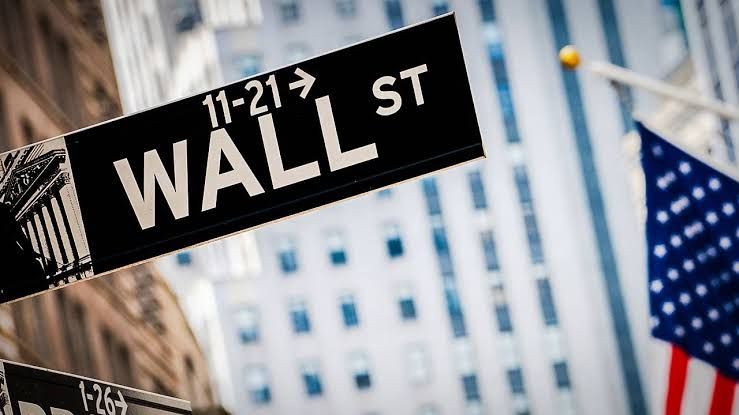
Wall Street reassesses oil, gold and interest rates after Democratic midterm sweep

Qabil Ashirov
Read moreThe Democratic victory in the 2026 US midterm elections has triggered a striking repricing across global markets. On November 4, the Dow Jones Industrial Average gained about 3%, the S&P 500 rose 1.6%, and the Nasdaq advanced 1.4%. Gold recovered above $4,000 an ounce, while crude oil fell nearly 9% in one session. The moves link political change with inflation, interest rates and energy security.
Democrats captured both chambers of Congress, creating divided government for the final two years of President Donald Trump’s term. The result changes calculations around fiscal policy, trade, regulation and the administration’s approach to the conflict with Iran. The removal of election uncertainty encouraged investors to return to risk assets, helping Wall Street stage a powerful relief rally.
The rally reflects several forces, including expectations of limits on the White House’s legislative agenda, tougher technology oversight and a more cautious approach to spending. Businesses connected with artificial intelligence and data-centre construction may face additional regulatory scrutiny. Major indexes therefore mask sharp sector differences.
Oil provides the clearest link between the election and the wider market reaction. Crude had carried a substantial geopolitical premium as the conflict involving the United States, Israel and Iran threatened regional energy infrastructure and shipping routes. Disruption there can affect millions of barrels of daily supply and lift international benchmarks.
The Democratic sweep has encouraged markets to consider a different political trajectory. Democratic control of Congress increases scrutiny of the administration’s war strategy and strengthens the incentive for Washington to seek a diplomatic outcome. Investors have consequently begun pricing a lower probability of prolonged escalation and a gradual reduction in crude’s geopolitical premium.
That shift carries major implications for inflation. Lower oil prices can reduce transport, production and heating costs, easing pressure on consumer prices and business margins. A sustained decline could give the Federal Reserve greater room to consider rate reductions, depending on employment, wages and core inflation. Lower Treasury yields and a softer dollar also improve gold’s relative appeal. As a non-yielding asset, gold benefits when the opportunity cost of holding it falls.
Gold’s rebound above $4,000 illustrates this relationship. A weaker dollar, lower bond yields and demand for protection support the metal. The election has reduced one source of political uncertainty while wider questions about US debt, global security and central-bank policy remain in view. Gold can rise alongside equities when investors combine confidence in near-term conditions with demand for portfolio insurance.
For the United States, cheaper energy offers a potential economic dividend. Households gain purchasing power as fuel costs ease, while businesses receive relief on logistics and operating expenses. Consumer-oriented sectors may benefit from stronger spending, and lower inflation pressure could support financial conditions. Energy producers face weaker revenue expectations, while companies tied to exploration and upstream investment may reassess capital plans.
For oil-exporting economies, the implications are more complicated. Azerbaijan, whose public finances and foreign-exchange earnings remain closely linked to hydrocarbons, has a direct interest in the durability of this price adjustment. A lower Brent benchmark can affect export receipts, State Oil Fund income and budget assumptions. A brief correction carries a different meaning from a sustained move toward lower prices.
The response reflects positioning. Traders entered the election period facing uncertainty about the Iran conflict and US policy. A decisive result gave investors a map and encouraged adjustments in markets. These moves reinforce one another: falling crude eases inflation fears, softer yields support gold, and stronger risk appetite lifts equities. The pattern’s durability depends on policy decisions and evidence.
The central question is whether markets are pricing a genuine diplomatic opening or moving too quickly on political expectations. A durable decline in oil requires progress on security arrangements, shipping confidence and regional diplomacy. Renewed escalation could restore the geopolitical premium rapidly. The rally also depends on earnings, inflation data, Federal Reserve decisions and fiscal negotiations.
The midterm result has acted as a catalyst rather than a complete explanation. Investors are recalibrating political risk, energy supply and US monetary policy. Rising shares and gold, alongside retreating crude, reflect positioning for lower geopolitical tension and softer inflation. Whether that outlook becomes reality will depend on decisions in Washington and developments across the Middle East in the coming weeks.
Here we are to serve you with news right now. It does not cost much, but worth your attention.
Choose to support open, independent, quality journalism and subscribe on a monthly basis.
By subscribing to our online newspaper, you can have full digital access to all news, analysis, and much more.
You can also follow AzerNEWS on Twitter @AzerNewsAz or Facebook @AzerNewsNewspaper
Thank you!