
'AI boomerang' sends companies back to human workers

Ulviyya Poladova
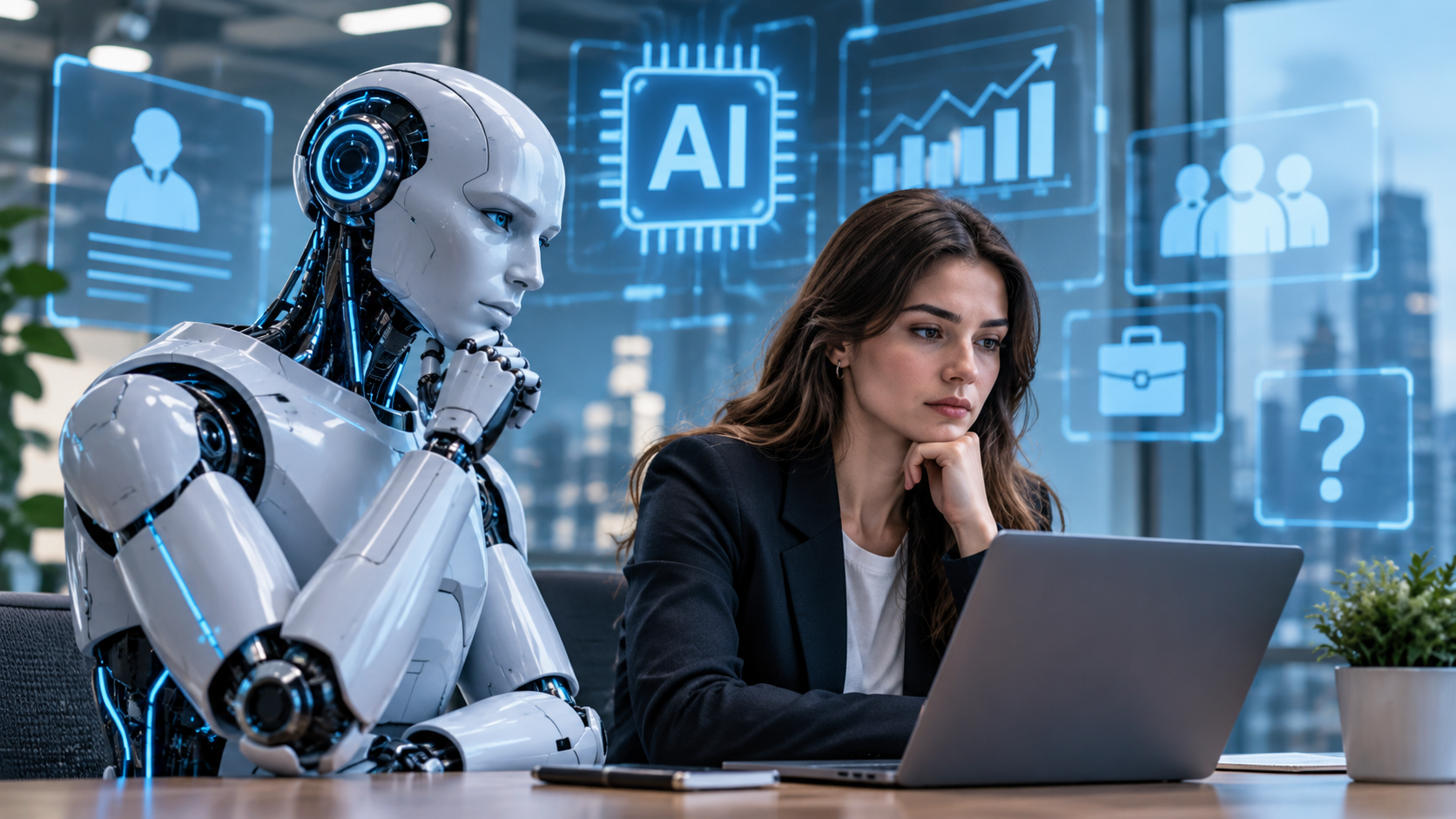
Read moreJust a few years ago, artificial intelligence (AI) seemed like something out of science fiction. Today, AI tools can hold lengthy conversations, generate images and videos, turn speech into text and vice versa, and analyse huge amounts of data to make predictions. Tasks that once took hours, weeks or even months can now be completed in a matter of minutes. As speak in people, everything has its price. After a certain amount of time, many companies have started to cut staff en masse, trying to replace them with artificial intelligence (AI) and automate processes. However, when faced with reality, the business faced the phenomenon of "AI boomerang", because neural networks could not cope with complex tasks, the loss of accumulated knowledge and the need for human control.
In late October, the Associated Press reported that some companies have started rehiring employees after unsuccessful attempts to replace them with artificial intelligence. The phenomenon has even been given a name: the "AI boomerang." And it's not just about individual corporations. According to the recruitment firm Robert Half, 32% of US hiring managers whose companies had eliminated jobs because of AI or automation said their employers later brought back the same or similar positions.
Some former employees who are now being asked to return are making it clear that things cannot simply go back to the way they were. They want higher salaries and assurances about how AI will affect their jobs in the future. They are also asking for better training, clear career development opportunities and greater job security. It is not difficult to understand why. Just imagine being laid off because your company daresay that it must embrace AI because "the future belongs to artificial intelligence." Months later, the same employer comes back, admitting that replacing you was not as easy as expected.
Data from Challenger, Gray & Christmas shows just how significant the trend has become. In May 2026, employers cited artificial intelligence as the reason for nearly 40% of announced job cuts in the United States. A separate study by Orgvue found that 32% of organisations that had reduced their workforce to introduce AI were subsequently forced to hire employees again. Among the companies that have reconsidered their decisions are Ford and Amazon. Experts say the shift reflects a growing recognition that technology cannot fully replace professional experience, an understanding of business processes or the ability to work effectively with other people.
Ford is a particularly striking example. In June 2026, the company said it had hired or promoted around 350 experienced engineers over the previous three years. The group included former Ford employees as well as engineers who had previously worked for its suppliers. Ford had been investing heavily in AI and automated vehicle quality-control systems, but the results fell short of expectations. The company's vice president of vehicle hardware engineering acknowledged that Ford had made a mistake by assuming it could achieve a high-quality product simply by feeding design requirements into AI systems. The company eventually had to bring experienced engineers back into the process. Their role now goes beyond traditional engineering work. They help identify potential defects before components enter production, mentor younger colleagues and improve the AI tools themselves.
Figures from Challenger, Gray & Christmas also highlight the scale of AI-related job cuts. In March and April 2026, artificial intelligence was identified as the leading reason for announced layoffs. A total of 49,135 workers were fired under this justification over the year, almost matching the number recorded throughout 2025.
For many large companies, the growing cost of technology is another factor behind workforce reductions. Businesses are directing substantial portions of their budgets towards building AI infrastructure, and cutting staff is sometimes seen as a way to free up the necessary funds. In other cases, however, AI may simply serve as a convenient explanation for layoffs that are actually driven by other business considerations.
What is becoming increasingly clear is that AI still has significant limitations when it comes to replacing people. It cannot fully replicate professional judgement, empathy, practical experience or the ability to make decisions in unfamiliar situations. Even company executives are beginning to acknowledge that AI lacks the critical thinking and creativity required for many complex tasks.
It's safe to say that the "AI boomerang" becomes a reminder that adopting new technology does not automatically mean that human workers are no longer needed. Companies that rushed to replace employees are now discovering the value of the very experience they once chose to let go. As a result, some are having to bring skilled professionals back, sometimes with better salaries and more favourable working conditions than before.
Here we are to serve you with news right now. It does not cost much, but worth your attention.
Choose to support open, independent, quality journalism and subscribe on a monthly basis.
By subscribing to our online newspaper, you can have full digital access to all news, analysis, and much more.
You can also follow AzerNEWS on Twitter @AzerNewsAz or Facebook @AzerNewsNewspaper
Thank you!