
Mecca joint defence agreement to be discussed in Turkish Parliament
By News Centre
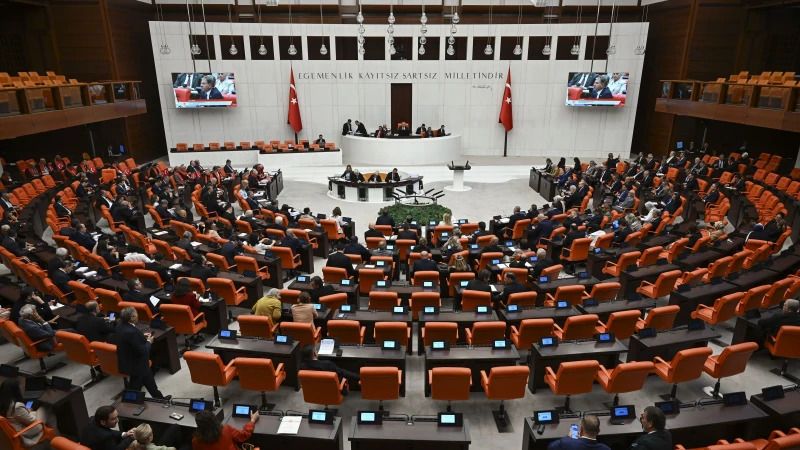
The Mecca Joint Defence Agreement is set to be brought before the Turkish Grand National Assembly (TBMM), with a legislative proposal concerning the agreement scheduled to be submitted to lawmakers for discussion today.
The agreement, which designates three countries as the “Core Parties,” envisages mutual defence obligations based on respect for sovereignty and territorial integrity.
The most significant provision of the agreement is set out in Article 2. Under this article, any externally originating armed attack or military aggression against one of the parties will be considered an attack against all the other signatories. Consequently, the three countries will assume mutual defence obligations.
The provision is based on the right to self-defence enshrined in Article 51 of the United Nations Charter. Accordingly, the country subjected to an attack will receive immediate assistance through all available means of mutual support, including military resources and capabilities.
However, this provision does not envisage “automatic” or “unconditional” assistance at the moment an attack occurs. The country under attack must first formally request assistance. Following an objective assessment by all three countries, the parties will determine the scope and nature of the support to be provided.
Decisions will require consensus, meaning that no action can be taken in the absence of unanimous agreement among the three parties. Any decision to deploy military forces will also have to comply with Article 92 of the Turkish Constitution, which regulates the authority to send Turkish armed forces abroad and allow foreign armed forces to be stationed in Turkey.
Beyond military cooperation, the agreement предусматри a comprehensive partnership in the defence industry. Under the established framework, the parties will undertake joint production in the defence sector, implement joint research and development (R&D) and innovation projects in technologically advanced fields, train qualified personnel through specialised experts operating in their respective territories, and support the development of their military industries.
The agreement also предусматри the establishment of a comprehensive logistical support mechanism covering the supply of ammunition, weapons, fuel and spare parts during peacetime, wartime and states of emergency.
A “Strategic Political and Defence Committee,” comprising the foreign ministers, defence ministers and chiefs of general staff of the three countries, will be established to provide the institutional backbone of the alliance.
The committee will convene at least twice a year, with meetings hosted by the member countries on a rotating basis. The leaders of the three countries may also hold meetings once a year whenever deemed necessary.
Saudi Arabia will host the permanent secretariat to be established under the agreement.
The secretariat will be headed by a rotating secretary-general serving a three-year term, with the first secretary-general to be a Pakistani national. The accession of additional countries to the alliance will be possible only with the consensus of all three “Core Parties.”
Articles 9 and 13 of the agreement regulate cooperation in counterterrorism and intelligence sharing. The parties will exchange information and intelligence through mutually agreed secure channels. Classified documents obtained through this cooperation will be protected under the “need-to-know” principle and will not be shared with third countries or private companies.
The agreement will enter into force once the instruments of ratification have been deposited with the secretariat and will remain valid indefinitely.
Under its provisions, none of the parties will be permitted to withdraw from the agreement during the first 10 years following its entry into force. After this initial period, any party wishing to withdraw will be entitled to do so by submitting written notification at least three months in advance.
Although the agreement remains open to other countries, membership will not be available automatically to every country wishing to join. The alliance must first complete its institutionalisation process and establish several organisational structures currently under consideration.
Furthermore, any country seeking membership will be required to respect fundamental principles of international law, including the independence, sovereignty and territorial integrity of the existing member states, as well as the principle of non-interference in their internal affairs. Prospective members must also demonstrate the capacity to assume the responsibilities associated with collective defence.
Through the Mecca Joint Defence Agreement, Turkey aims to expand its efforts in peace diplomacy, which it has so far pursued independently, by extending these initiatives to cooperation with the other participating countries. The proposed framework is expected to provide a broader institutional basis for political coordination, military cooperation, intelligence sharing and defence industry development among the signatories.
Here we are to serve you with news right now. It does not cost much, but worth your attention.
Choose to support open, independent, quality journalism and subscribe on a monthly basis.
By subscribing to our online newspaper, you can have full digital access to all news, analysis, and much more.
You can also follow AzerNEWS on Twitter @AzerNewsAz or Facebook @AzerNewsNewspaper
Thank you!