
Washington's Iran debate moves from renewed strikes to nuclear threshold [COMMENTARY]

Akbar Novruz
Read moreThe latest American strikes on Iranian territory have brought Washington's confrontation with Tehran back into focus just as the United States heads to the polls for its November 3 midterm elections. While President Donald Trump continues to signal an interest in diplomacy, Israeli Prime Minister Benjamin Netanyahu is reportedly pressing for renewed military action, exposing differences between the two allies over the timing and direction of the next phase of the conflict.
On November 2, US forces carried out limited strikes on Iran's Qeshm Island, strategically located near the Strait of Hormuz. American officials described the operation as defensive, saying it followed Iranian attempts to target US aircraft. Iranian state media reported explosions on the island, although the full extent of the damage remained unclear. Officials emphasised that the strikes did not constitute the resumption of a large-scale military campaign.
The incident unfolded amid diplomatic uncertainty. According to Axios, Netanyahu urged Trump during a recent telephone conversation to resume major strikes immediately after the midterm elections. Trump, however, has preferred to give negotiations more time, telling Axios on November 2 that he was in no rush to decide whether to resume fighting.
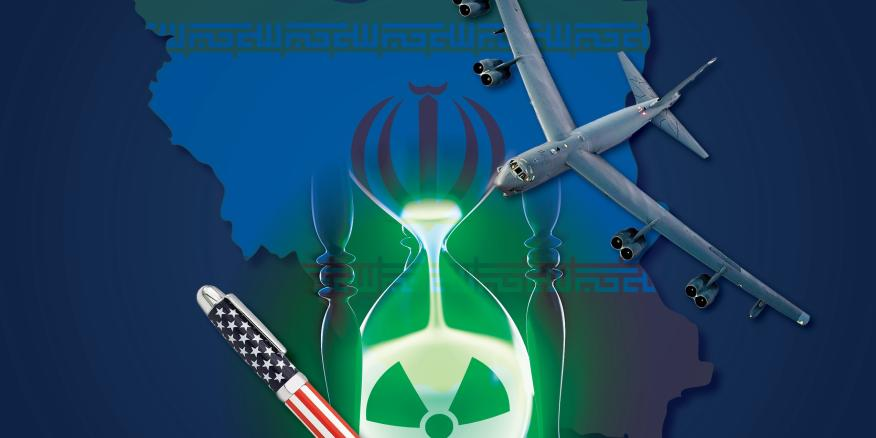
Adding to the tensions, American conservative commentator Tucker Carlson has alleged that Washington could be considering a nuclear attack against Iran's deeply buried Pickaxe Mountain facility. Carlson suggested that Netanyahu was pressing the administration towards such an operation, but provided no independently verifiable evidence that a nuclear strike was being prepared or authorised.
The competing reports raise two distinct questions: whether Israel can influence Washington's decision to return to major combat operations, and whether the increasingly public discussion of nuclear escalation poses a danger in itself.
Speaking to AzerNEWS, US-based political analyst Frank Musmar offered an assessment from a Republican perspective, arguing that the reported disagreements between Trump and Netanyahu do not necessarily indicate a deeper strategic rupture:
“They are real, but not a rupture. This is the classic Trump- Netanyahu pattern we have seen since 2017. According to Wall Street Journal reporting this past weekend, Netanyahu urged Trump in a Saturday phone call to authorize another round of major operations against Iran right after the November 3 midterms. Trump confirmed the call - "Just had a very good talk with him" - but did not commit to that timetable. The disagreement is about sequencing, not the objective. Sources familiar with the call described it as "tough" on the Israeli side and "direct" on the American side. Trump said in an interview ahead of their White House meeting: "I don't need Bibi to tell me that. Bibi's telling me that because he wants me to stay involved," adding "Why don't you just tell it to me? Why do you have to announce it to the world?
Netanyahu's position:
Iran is using any pause to disperse equipment, harden Pickaxe Mountain - a deeply fortified facility near Natanz - and rebuild enrichment capacity. From Jerusalem's view, delay = risk. He wants sustained military pressure.
Trump's position:
The stated U.S. goal is to destroy missiles/navy assets and stop a nuclear weapon, not necessarily immediate regime change. Trump has paused strikes to give diplomacy another chance, with the VP even sending a letter to Iran's Supreme National Security Council secretary to restart talks. Trump told reporters negotiations were "going fine", and he is "not in much of a hurry".
On the question of whether Israeli pressure could ultimately compel Washington to resume major military operations, the analyst argued that the American president retains the decisive authority.
“From a Republican viewpoint, Israel has influence but not control - and that is by design of Trump's America First approach.
Trump retains escalation dominance. He has repeatedly said the U.S. could take out Pickaxe Mountain "in 10 minutes" and has the plans. Admiral Brad Cooper (), Sec. of War and Chairman of Joint Chiefs Dan Caine briefed options at the White House last Thursday. The planning itself is leverage for diplomacy.
Political leverage is still with Trump. In October, Trump publicly endorsed Netanyahu ahead of Israel's Oct 27 election, but made clear it was unsolicited - "we never talked about it". He is not dependent on Netanyahu for his base. The GOP base in 2026 is split: traditional hawks who want Iran defanged, and a large non-interventionist MAGA wing that does not want another open-ended Middle East war. Trump is managing both.
The June precedent matters. Reports of a tense June call where Trump called Netanyahu "fu**ing crazy" for pushing to expand strikes into Lebanon show Trump has been willing to rein Israel in before.
In short, Republican strategists see this as transactional bargaining: Netanyahu is pushing for maximalist timing to prevent Iranian entrenchment, Trump is using that pressure as a stick while keeping the diplomatic door open to get a better deal without committing U.S. troops. Netanyahu cannot force Washington into war; only the President can.”
Nuclear strike allegations and the limits of military escalation
Turning to Carlson's allegations about a possible American nuclear strike on Iran, Musmar questioned the credibility of the scenario, arguing that the claims should be distinguished from the military options publicly discussed by the Trump administration.
He first outlined the allegations surrounding Pickaxe Mountain, a suspected underground nuclear facility near Natanz. What Carlson alleged: In a lengthy X post on Nov. 1-2, Carlson claimed the Trump administration "may be within days of launching a nuclear strike on Iran" under pressure from Netanyahu, with a decision potentially by Nov. 7, targeting Pickaxe Mountain, a tunnel complex where Israeli intelligence says Iran has resumed enrichment. He argued no conventional weapon can penetrate 300 feet of solid granite.
The posts have been flagged by every major outlet as unverified, with no public evidence that Washington has approved or formally prepared a nuclear strike.
How credible is this militarily and strategically from a Republican security perspective? Essentially zero.
Explaining his assessment, the analyst pointed to American nuclear doctrine, the availability of conventional military capabilities and the potential consequences of employing nuclear weapons against fortified underground facilities.
1. Doctrine and precedent: The U.S. has not considered nuclear first use against a non-nuclear state since 1945 for a counter-proliferation mission. Every Republican administration from Eisenhower to Trump 1.0 has kept nuclear weapons as a deterrent against existential nuclear attack, not as bunker-busters. Trump himself has publicly rejected the need for nuclear weapons, saying America has no need for them versus conventional bombs and economic pressure.
2. Conventional alternatives exist: The claim that only a nuke can do it ignores the U.S. arsenal. The GBU-57A/B Massive Ordnance Penetrator (30,000 lb), and its successor, can be dropped sequentially to "drill" deeper. In 2025 strikes on Fordow, Natanz and Isfahan, the U.S. used conventional MOPs, not nuclear weapons. Pickaxe Mountain is harder, but the answer in Republican defence circles would be repeated MOP strikes, sabotage, cyber, and cutting power/air, not crossing the nuclear threshold.
3. Military downsides of a nuclear bunker-buster: Even a low-yield B61-12 earth-penetrator would not cleanly vaporise 300 ft of granite. It would create massive fallout, collapse the mountain, vent radioactive debris across central Iran, kill any chance of verification, and ensure Iranian breakout. The B61-11 nuclear earth-penetrator was retired precisely because of those effects.
Musmar further argued that the consequences of nuclear first use would extend beyond the immediate confrontation with Iran, potentially affecting the international security environment and Washington's regional diplomatic relationships.
4. Strategic costs: This is why even Iran hawks in the GOP reject it.
- Breaks 80-year nuclear taboo: If a Republican president uses a
nuke first against Iran, it justifies Russia using tactical nukes
in Ukraine, and China sets a precedent for Taiwan
contingencies.
- Destroys the Abraham Accords project: Trump wants Saudi Arabia to
join. Riyadh will not sign normalisation if it means being downwind
of a U.S. nuclear strike.
- Domestic political suicide before midterms: Carlson himself has
been ejected from the MAGA inner circle over his criticism of the
Iran war, and his claim drew 53 million views precisely because it
is sensational.
Beyond the likelihood of an actual nuclear attack, the expert
addressed the possible implications of publicly discussing such an
option. In his assessment, even suggestions that Washington was
considering nuclear first use could carry substantial diplomatic
and strategic costs.
What would even considering it do?
From a conservative realist view: merely leaking that you are considering nuclear first-use would be more damaging than any military benefit. It would:
- De-legitimise Israel's legitimate self-defence argument by
framing it as pushing America to go nuclear - which the NY Post
noted was Carlson framing Trump officials as "puppets" for
Netanyahu
- Unite Russia, China and the EU against Washington
- Trigger global proliferation: if the U.S. says it needs nukes to
stop enrichment, Japan, South Korea, Saudi Arabia will logically
conclude they need their own
Concluding his assessment, Musmar suggested that Carlson's allegations should also be understood against the political divisions within the American conservative movement over military involvement in the Middle East.
That is why the Republican establishment - from Rubio and Ratcliffe mentioned in Carlson's post to Trump himself - has no incentive to go there. Carlson's warning functions more as populist anti-war signalling to the non-interventionist right than as a credible intelligence leak.
Meanwhile, Paul Goble, a former adviser to the US Secretary of State, American political analyst and Eurasia specialist, offered a similar assessment of Washington's decision-making, arguing that domestic political considerations would carry greater weight in Trump's approach to Iran than pressure from Israeli Prime Minister Benjamin Netanyahu.
"One, Trump can decide what he wants to do, but how he acts will be affected more by his reading of domestic American attitudes than pressure from Netanyahu. I think we are in for a long siege, with periods of talk about diplomacy interspersed with the use of force for a long time to come. And two. I can't imagine that Netanyahu would push for the use of nuclear weapons against Iran. Were that to happen, it is difficult to see how such use could be restricted. The risks all around are simply too great. It makes for a great news story until one looks at things more soberly, as I think both the Israeli and US leaders can be counted on to do when it comes to using nuclear weapons."
----
Photo credit: washingtoninstitute.org
Here we are to serve you with news right now. It does not cost much, but worth your attention.
Choose to support open, independent, quality journalism and subscribe on a monthly basis.
By subscribing to our online newspaper, you can have full digital access to all news, analysis, and much more.
You can also follow AzerNEWS on Twitter @AzerNewsAz or Facebook @AzerNewsNewspaper
Thank you!