
Armenia under Pashinyan: growing concerns over democracy
Elnur Enveroglu
Read morePolitical history has a habit of repeating itself, sometimes with striking similarities between leaders who emerge from revolutionary movements promising democratic renewal and those who eventually find themselves accused of undermining the very principles that brought them to power.
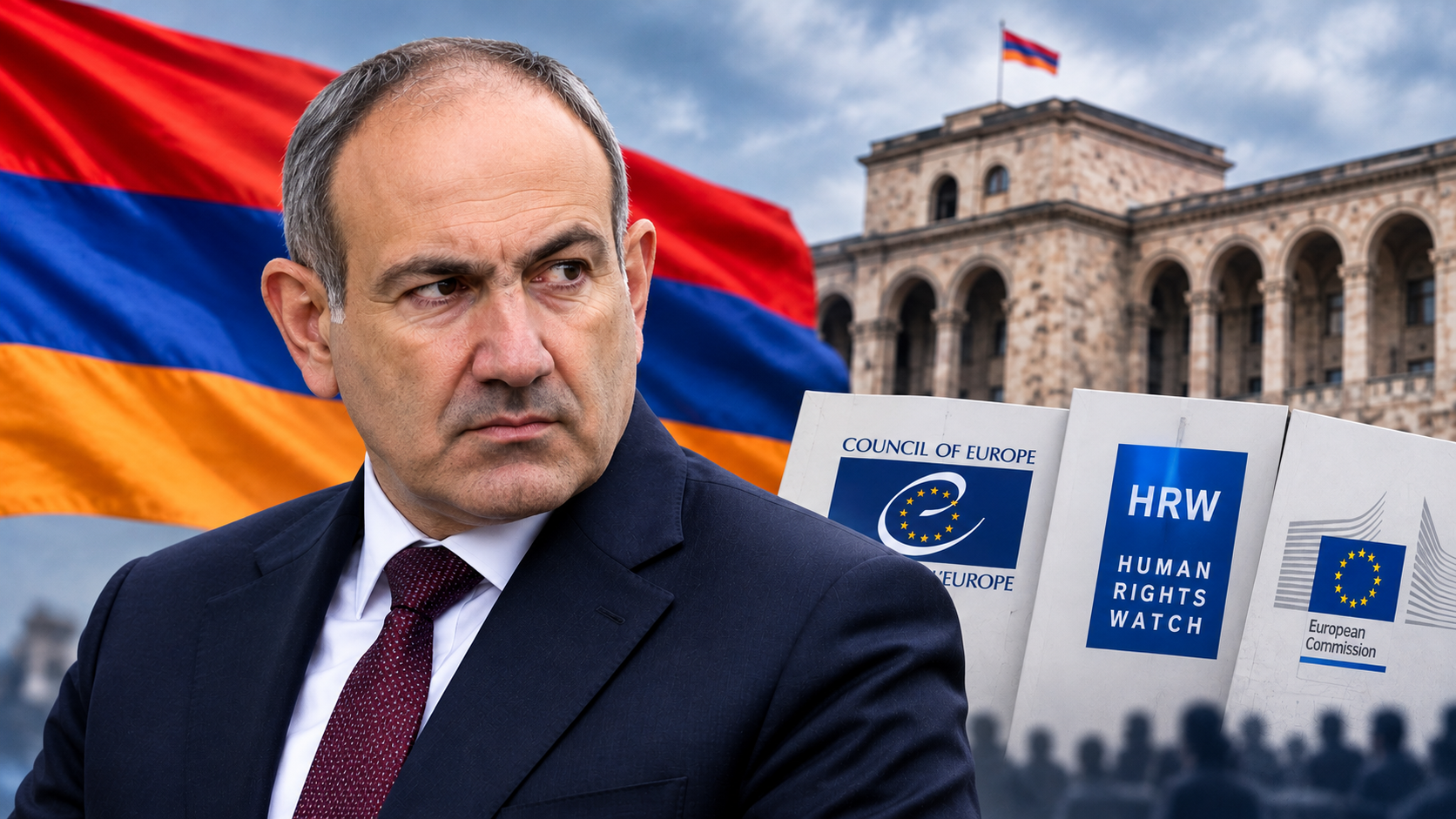
Nikol Pashinyan’s rise during Armenia’s 2018 Velvet Revolution was presented as a turning point in the country’s post-Soviet political development. His promises of democratic transformation, accountability and a break with entrenched political interests helped mobilise a society frustrated by corruption and the concentration of power. Yet, several years later, the image of Armenia as a democratic success story has become considerably more complicated. International monitoring organisations are increasingly drawing attention to weaknesses in its institutions, raising questions about the distance between Pashinyan’s original promises and the realities of his government.
There is an uncomfortable historical parallel with Maximilien Robespierre, one of the central figures of the French Revolution. The comparison is not intended to equate the two men or their political circumstances. Rather, it illustrates a recurring historical dilemma: movements that promise liberation and democratic renewal can find themselves accused of concentrating power and restricting political freedoms once they assume office.
In Armenia’s case, however, the debate requires a closer examination of the circumstances in which the government has come under criticism. The question is not simply whether Pashinyan has consolidated political authority or whether opposition figures and religious leaders have faced criminal proceedings. It is also necessary to establish why particular individuals have been arrested, what allegations have been brought against them, and whether the authorities have respected judicial independence and due process.
The distinction matters because Armenia is undergoing a difficult political transformation at a particularly sensitive moment in its regional history. Its government is attempting to normalise relations with Azerbaijan and Türkiye, advance a peace settlement, open regional communications and move towards a different security and economic architecture in the South Caucasus. These objectives have encountered resistance from political and other influential circles that oppose the direction of the peace process.
This does not mean that every government action against its opponents should be regarded as justified. Nor does the pursuit of regional peace give the authorities a licence to disregard fundamental rights. But neither should every prosecution involving a political or religious figure automatically be interpreted as evidence of authoritarianism without examining the allegations, evidence and judicial procedures involved.
International assessments nevertheless present a worrying picture of Armenia’s democratic institutions. The Bertelsmann Transformation Index 2026 identifies weaknesses in the country's system of checks and balances, pointing to the dominance of Pashinyan’s Civil Contract party in parliament, the limited capacity of opposition forces to scrutinise the executive and continuing concerns about judicial independence. The broader implication is that formal democratic institutions do not necessarily guarantee effective political accountability.
Human Rights Watch’s World Report 2026 also highlights problems with surveillance, media freedom, police accountability and pre-trial detention. Its account of developments in 2025 records four incidents of physical violence by law-enforcement officers against media representatives and 61 other incidents of pressure on media outlets during the first six months of that year. It also documents 29 defamation cases against media organisations, 15 of which were initiated by state bodies or serving and former officials. These figures raise legitimate questions about the environment in which independent journalism operates.
Minority rights present another challenge. A September 2025 assessment by the Council of Europe’s Committee of Experts acknowledged Armenia’s efforts to promote cultural and linguistic diversity but called for stronger legal safeguards and wider opportunities to teach minority languages. It also warned that administrative territorial reforms could weaken access to minority-language education. The European Commission against Racism and Intolerance has separately highlighted concerns affecting vulnerable ethnic communities, including Yezidi and Molokan children.
Taken together, these assessments suggest that Armenia’s democratic transformation remains incomplete. They also demonstrate why the government's performance should be judged not only by constitutional guarantees and legislative reforms but by whether citizens can exercise their rights in practice. Another dimension of this debate concerns the relationship between domestic political developments and the peace process with Azerbaijan.
For years, the Armenian political landscape has contained influential currents that have maintained territorial claims against Azerbaijan and opposed compromises necessary for a lasting settlement. The legacy of the conflict over Karabakh has shaped political discourse, institutional priorities and public attitudes. Consequently, the process of normalising relations with Baku is not simply a diplomatic undertaking; it also challenges political narratives and structures that have developed over decades.
Pashinyan has taken steps towards accepting a new regional reality, including engagement in border delimitation and demarcation and negotiations over the opening of transport links. His government's willingness to discuss constitutional changes in connection with the peace agreement has also become a central issue. Azerbaijan has argued that provisions and references in Armenia’s constitutional framework associated with territorial claims must be addressed to remove obstacles to a comprehensive settlement.
The domestic resistance to such changes illustrates the political difficulties facing the Armenian leadership. Those opposed to concessions have sought to portray the government's approach as a surrender of national interests, while supporters of normalisation argue that the continuation of historical claims risks keeping Armenia isolated and prolonging regional instability.
Western institutions have a legitimate interest in monitoring how the Armenian government handles these tensions. However, the wider debate would benefit from a clearer distinction between the suppression of peaceful political opposition and the prosecution of individuals accused of specific criminal conduct, including alleged attempts to overthrow the government or interfere with constitutional order.
The cases involving senior figures in the Armenian Apostolic Church illustrate the complexity. Authorities have brought criminal proceedings against prominent clergymen, including Archbishop Bagrat Galstanyan and Archbishop Mikael Ajapahyan. In the former case, investigators alleged involvement in a conspiracy to seize power; in the latter, the prosecution concerned public statements about the violent overthrow of the government. Church representatives and supporters have disputed the government's approach and argued that the proceedings are politically motivated.
These competing accounts cannot be resolved simply by invoking either religious freedom or national security. The allegations must be tested in independent courts, defendants must have access to effective legal representation, and the authorities must demonstrate that criminal proceedings are based on evidence rather than political considerations. At the same time, religious status cannot place individuals above the law if credible evidence of criminal conduct exists.
This is precisely where the distinction between democratic principles and regional political realities becomes important. A government seeking to dismantle the influence of entrenched political networks, prevent violence and advance a peace agreement may face resistance from actors with an interest in preserving the previous regional order. But the legitimacy of its response depends on the methods it employs, not merely on the political objectives it pursues.
The same standard should apply to Western assessments. Human-rights organisations are right to examine restrictions on media freedom, judicial shortcomings and allegations of politically motivated prosecutions. Their independence and critical scrutiny are essential to democratic accountability. Yet, an assessment of Armenia's political environment should also consider the country's post-conflict circumstances, the pressure surrounding the peace negotiations and the influence of actors who oppose normalisation with neighbouring states.
There is also a broader question of consistency. Western governments and institutions have repeatedly supported the principle that territorial integrity, peaceful settlement of disputes and regional connectivity are essential to stability. Those principles should inform their assessment of political developments in Armenia as well. The removal of obstacles to peace and the protection of democratic freedoms need not be competing objectives. Indeed, sustainable peace requires both.
Armenia’s democratic future will therefore depend on more than the political survival of Pashinyan or the success of his negotiations with Azerbaijan and Türkiye. Parliament must be able to scrutinise the executive, courts must operate independently, journalists must work without intimidation, and ethnic and religious communities must enjoy equal protection under the law. Equally, political and religious leaders must be held accountable through transparent legal procedures when credible allegations of criminal conduct arise.
The real test of the Velvet Revolution is whether it can produce institutions stronger than the political movement that brought it to power. Pashinyan came to office promising to break with Armenia’s authoritarian past. His legacy will ultimately be determined by whether he can deliver democratic accountability while leading the country towards a peaceful and more cooperative South Caucasus. Neither objective can credibly be achieved at the expense of the other.
Here we are to serve you with news right now. It does not cost much, but worth your attention.
Choose to support open, independent, quality journalism and subscribe on a monthly basis.
By subscribing to our online newspaper, you can have full digital access to all news, analysis, and much more.
You can also follow AzerNEWS on Twitter @AzerNewsAz or Facebook @AzerNewsNewspaper
Thank you!