
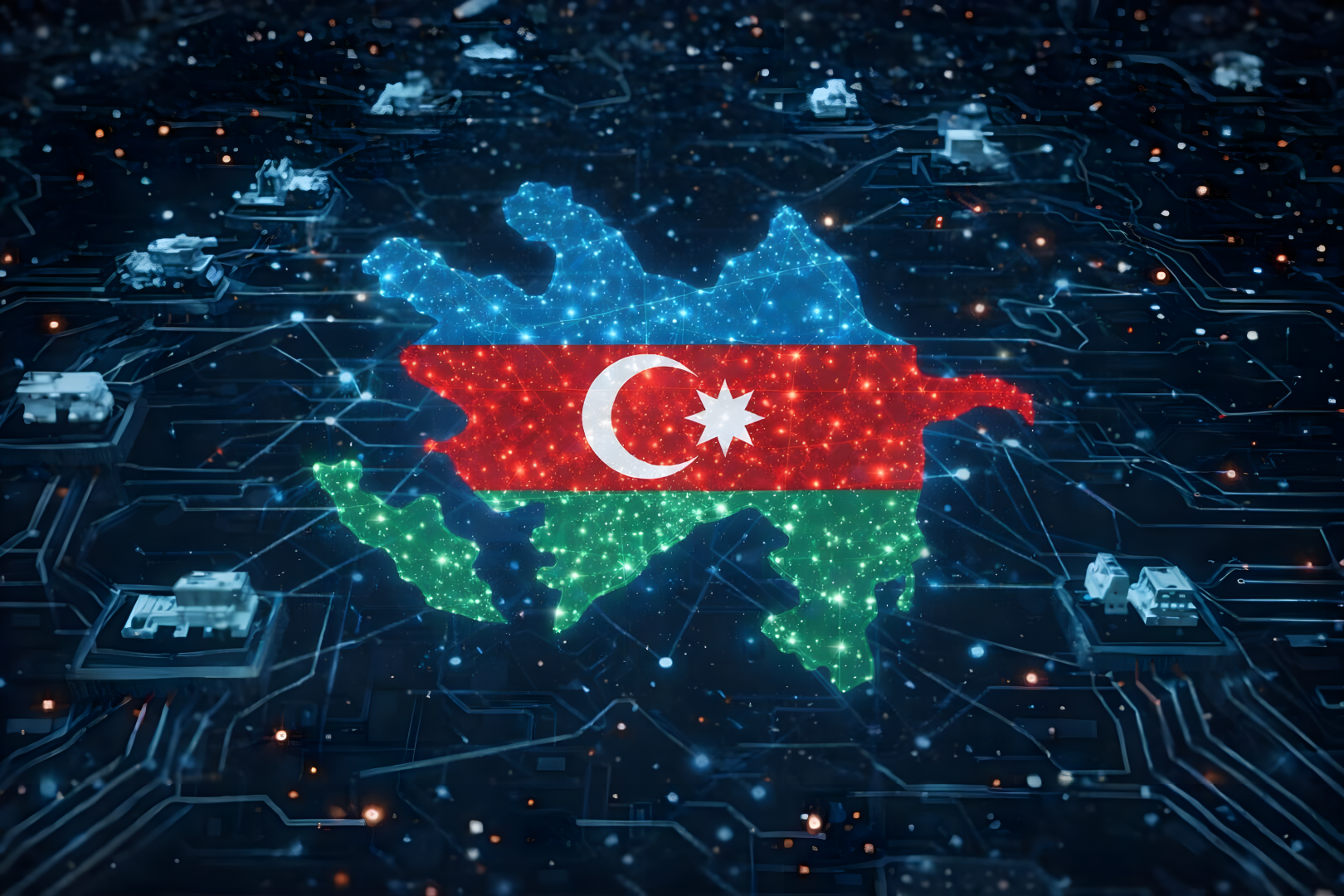
Can Azerbaijan convert its energy advantage into AI investment boom?
Akbar Novruz
Read moreLast August, in the town of Hrazdan, 45km from Yerevan, Armenia's prime minister attended the opening of the largest AI data centre in the former Soviet space. The "AI Factory" of Firebird is expected to house more than 70,000 units of Nvidia's Blackwell and Rubin chips and have 300 megawatts of capacity by the end of 2027. It will cost around $5 billion. One-fifth of the total computational capacity will be set aside for local uses, while the rest will cater to international clients, including Perplexity. Nvidia has announced that it plans to invest in the company. This is truly a remarkable feat for a nation of less than 3 million people without any past experience in running data centers. It was made possible thanks to a US export license issued during the time of relaxed export rules under the Trump presidency.
The symbolism felt somewhat painful in Baku, perhaps mainly in the public and media atmosphere. Azerbaijan, despite sitting at the same table in the White House, seemed to be on the outside looking in on the first major American AI venture in the South Caucasus. Now it wants to be back in.
The Pitch
Hikmet Hajiyev, Azerbaijan's Presidential aide who heads foreign policy, set out the argument last week. Exporting power is one thing, he says. Turning it into something more valuable is another. "One thing is to export a raw material, in this case, we can call it raw electrons and electricity," he explained. "Another thing is to transform it into semi-fabricates... data centers, of course. And turn it into bits and bytes."
The key elements, according to his explanation, are cheap electricity, good location and fewer regulations. "We have cheap electricity here," he said, "and we have less bureaucracy." The government expects a surge in renewable generation: "within just a few years, we will have an additional 2 GW of renewable energy capacity, followed by another 8 GW a couple of years later, all available for export." Those figures are large against a system with about 8.4GW of total installed capacity, and they would more than double it. ACWA Power of Saudi Arabia and Masdar of Abu Dhabi are building solar farms, and hydropower in the liberated territories adds to the mix. Hajiyev ended with an invitation: "I take this opportunity to welcome all AI companies in the world."
The second one is related to risk. An AI hub requires a constant supply of energy, stable connectivity, and political predictability, and the current war that has brought uncertainty to the Gulf has raised the same considerations for investors. Recent developments there, Hajiyev noted, show "how safety and security matters a lot", and in Azerbaijan, he said, "geopolitical safety and security has been provided". A valid statement indeed, since the risks associated with missile attacks and shipping problems in the Gulf are now raising new questions for investors, and a site on the Caspian Sea seems more attractive than ever. On October 26th, he reaffirmed this idea by stressing the availability of the electricity network in Azerbaijan to international partners.
The most detailed outline of the strategy was provided in an extensive interview with Jeffrey Sachs, the American economist, published this week in Baku. Sachs, who had embarked on his "Marco Polo – Drive of Peace" journey across the East-West corridor that Hajiyev commended in their meeting in July with an electric car, challenged him about the Caspian’s potential. He mentioned the fact that there are 800 GW of wind power in the region of the Caspian Sea or even 130GW of them if taking a more cautious approach.
Hajiyev then used the occasion to tie the technology agenda to the peace agenda. Green corridors reaching Europe's grid were a major topic during a recent visit by Ursula von der Leyen, he said, and Azerbaijan wants energy to be a pillar of the dividends of peace. "We are no longer constructing dividing lines or walls; instead, we are building peace and overcoming the fragmentation of our region," he said. On Armenia, he said that trade has begun, that "we are building links and developing connectivity", and that Yerevan is being offered the chance to join the regional network.
Link to peace matters the most
For data centers, one requires a stable energy supply as mentioned before, stable borders, and insurance companies willing to insure one. For the establishment of the Caspian energy and computing center, involving Armenia and Azerbaijan in the same energy system, one should have stable borders in an area where borders are militarized. Hajiyev's point here is that peace will fund itself because it provides the environment where investment becomes possible. The opposite also holds true. If investments come, then both countries will have an interest not to go back to conflict again.
And yet, the case still requires evidence. Azerbaijan [neither neighbouring country] might not be "Singapore or Asian version of Silicon Valley", but potential at upmost is visible and tangible. The offer by Azerbaijan currently consists of only intent: the strategic language in the February charter with Washington, the working group on connectivity, investment and security, and mentions of AI data centers without a specific investor, budget and timetable disclosed so far. The 10 GW of renewable energy capacity is a plan rather than production. And the core of the challenge is not the generation of electricity but chips, which require US export clearance and customers prepared to locate their hardware in a new market.
None of this detracts from the feasibility of the concept. It just means that the next twelve months will be critical. Should Baku secure an anchor tenant, license for its chips and demonstrate new capacity from solar and wind sources, "raw electrons" indeed will become more valuable. Otherwise, the gap between the two countries in the race will only widen.
Here we are to serve you with news right now. It does not cost much, but worth your attention.
Choose to support open, independent, quality journalism and subscribe on a monthly basis.
By subscribing to our online newspaper, you can have full digital access to all news, analysis, and much more.
You can also follow AzerNEWS on Twitter @AzerNewsAz or Facebook @AzerNewsNewspaper
Thank you!