
Iran sees new strategic threat in Trump’s South Caucasus project
Akbar Novruz
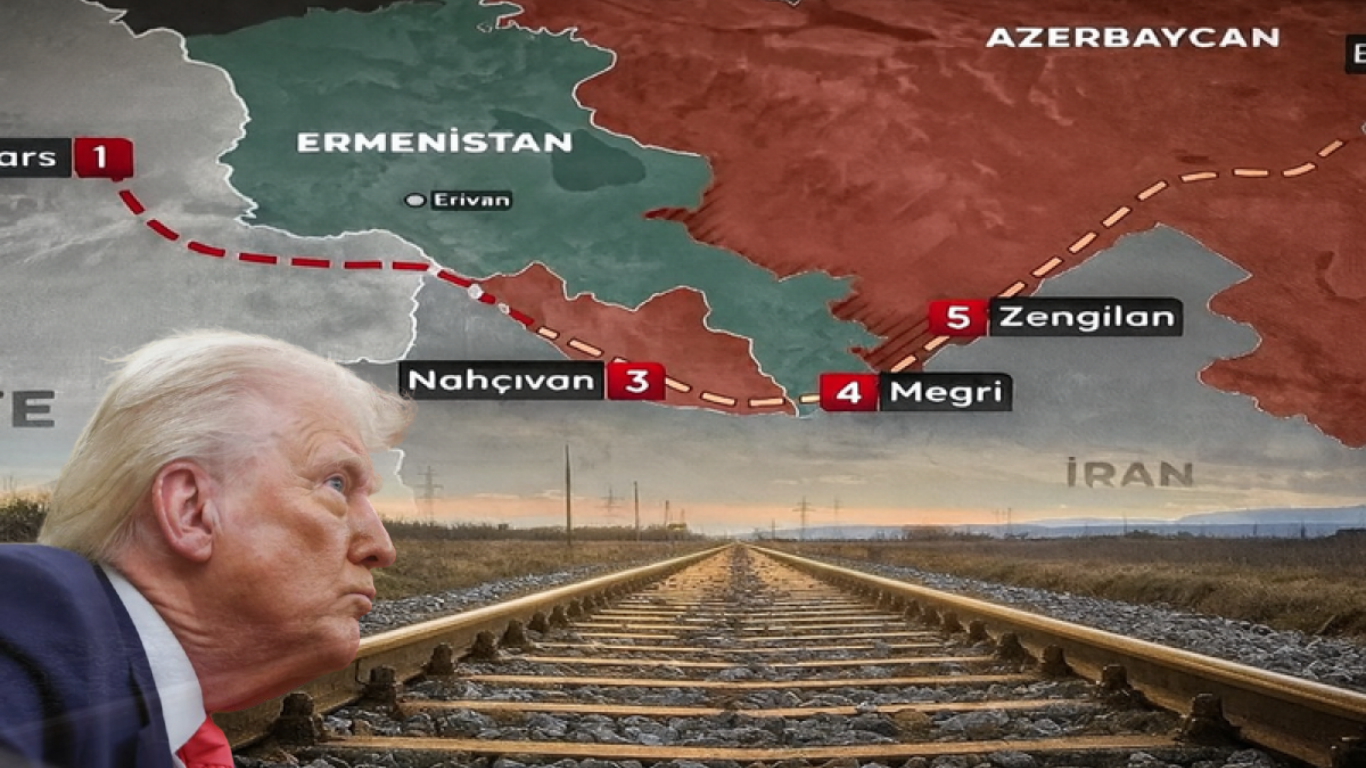
Read moreOn November 2nd, Armenia's prime minister, Nikol Pashinyan, told parliament that his government would soon start commissioning designs for the railway, highway and power lines of the Trump Route for International Peace and Prosperity, or TRIPP. Parliament had voted on the ratification days earlier. Deputy prime minister Mher Grigoryan went further: delimitation of the border in Syunik, the southern province the route will cross, might be carried out in an "extraordinary" fashion, ahead of the existing schedule, so that the infrastructure can proceed. Pashinyan's own framing was characteristically grand. We all recognize the project's effectiveness in ending a blockade that has lasted over 30 years.
But one neighbour was not celebrating the idea, as always. The ambassador of Iran in Yerevan, Khalil Shirgolami, said to the press that Tehran recognizes the sovereignty of Armenia but expects above all that there should not be any foreign military forces stationed on the Armenian-Iranian border, nor any threat of Iran coming out of it. Armenian authorities have assured him. However, Tehran seems to need more than assurances.
The shortest border, with the longest worry
The Armenia–Iran border spans just 44km, following the Aras River in the Syunik region. The border is the shortest land border of Iran, and as described by its strategists, is its lifeline to the north – the only direct passage to the South Caucasus, Russia, and further on to Europe. The goods pass across the border checkpoint of Agarak and Norduz, and there have been improvements made in their bridge capacities. Armenia and Iran traded approximately $104.8 million worth of goods in the first two months of 2026, an increase of 6% from the previous year.
It is clear for Tehran that this is more than an issue with lines in maps. TRIPP is a highway and railway that is going to pass close to the Iranian border and will be run by Americans in great numbers; the ambassador has cited plans according to which American companies are to have 74 percent share in management of the corridor. For Iranian strategists, this situation is nothing less than encirclement, despite all assurances of its non-military nature. It is all made worse by the war; the United States and Israel have launched attacks on Iran since February, and Mr Shirgolami has cited them while elaborating his point of view. Well in that point of view, it could easily be said that, perhaps, as tensions around the Strait of Hormuz continue, Iran views the South Caucasus as the next chokepoint.
This ambition appears to be more limited than obstruction. Iran is not interested in obstructing the route but in shaping it. He mentioned that technical details are being discussed and that the central issue is the modalities that can ensure that TRIPP is implemented in such a way that guarantees Armenian sovereignty, does not allow for any corridor outside Armenia, and excludes the use of foreign military. He even proposed a special format of negotiations with Yerevan that will make it possible to settle any dispute quickly. In September, he indicated that the best option to address US concerns was an institutional mechanism. According to President Masoud Pezeshkian, who reportedly spoke to Pashinyan in July, "extra-regional powers" should not meddle in Armenian-Iranian affairs.
The tone has varied. A hardline adviser to the Supreme Leader, Ali Akbar Velayati, said last year that the route would become a "graveyard" for Trump's "mercenaries". The ambassador's language is gentler, but the aim is the same: to extract, from Armenia, binding rules that outlast political promises. That is a sensible negotiating position. Iran cannot veto the project, and it cannot afford to alienate a government with a fresh electoral mandate. Its leverage lies in being the neighbour Armenia cannot ignore.
Lines and contest of the maps
Where Tehran's concerns seem to cross into overreach is on delimitation. As presented by Baku in Azerbaijani commentary, the reason delimiting the Armenian-Azerbaijani border is of no consequence for the Armenian-Iranian border. Delimitation is a legal exercise and an effort to delineate a pre-existing boundary between two states. The sequence of actions follows a north-south line and comes to a stop at the point of connection between the Armenian-Azerbaijani and Iranian borders. It involves no changes to land ownership and poses no threat to anyone. On the contrary, the exercise helps reduce uncertainty for all parties involved.
This explanation is valid, as far as it goes; however, it does not resolve the political concern raised by Mher Grigoryan. Linking the delimitation with the construction of TRIPP and increasing the pace at which it is conducted imbues this process with new political dimensions. First of all, the pipeline goes through the border area and, therefore, the regulatory mechanism behind it, including security measures, becomes important for many years to come. Baku can insist on the irrationality of the fear of delimitation by Tehran and still recognize the need to address the project next to it.
Every party has a reason to be wary. For Azerbaijan and Türkiye, it is the constant connection between the mainland and Nakhchivan, and through Anatolia. For Armenia, it is the chance to leave the isolation zone and receive additional routes for trade and transportation. For the US, it is the possibility of having a strong influence in the region it has long neglected. For Iran, its role as a transit gateway to the south in the region and its Aras corridor, which would also connect Azerbaijan with Nakhchivan, would become weaker.
Whether TRIPP brings peace or ignites fire in the South Caucasus depends on how these interests can be reconciled. But the way to achieve this is clear: adopt the rules for implementation of the project, make it impossible for foreign countries to deploy their military forces within the region by writing it down in the documents of the project, and establish the permanent consultation channel between Armenia and Iran that Tehran asks for. It is not a costly option; however, viewing Yerevan as a sort of tributary state or third-degree country will not resolve anything, as this anxiety persists. The alternative, a road built over an ally's objections, in a region where a larger war is already burning, costs a good deal more.
Here we are to serve you with news right now. It does not cost much, but worth your attention.
Choose to support open, independent, quality journalism and subscribe on a monthly basis.
By subscribing to our online newspaper, you can have full digital access to all news, analysis, and much more.
You can also follow AzerNEWS on Twitter @AzerNewsAz or Facebook @AzerNewsNewspaper
Thank you!