
Azerbaijan’s Karabakh victory offers lessons in the future of warfare
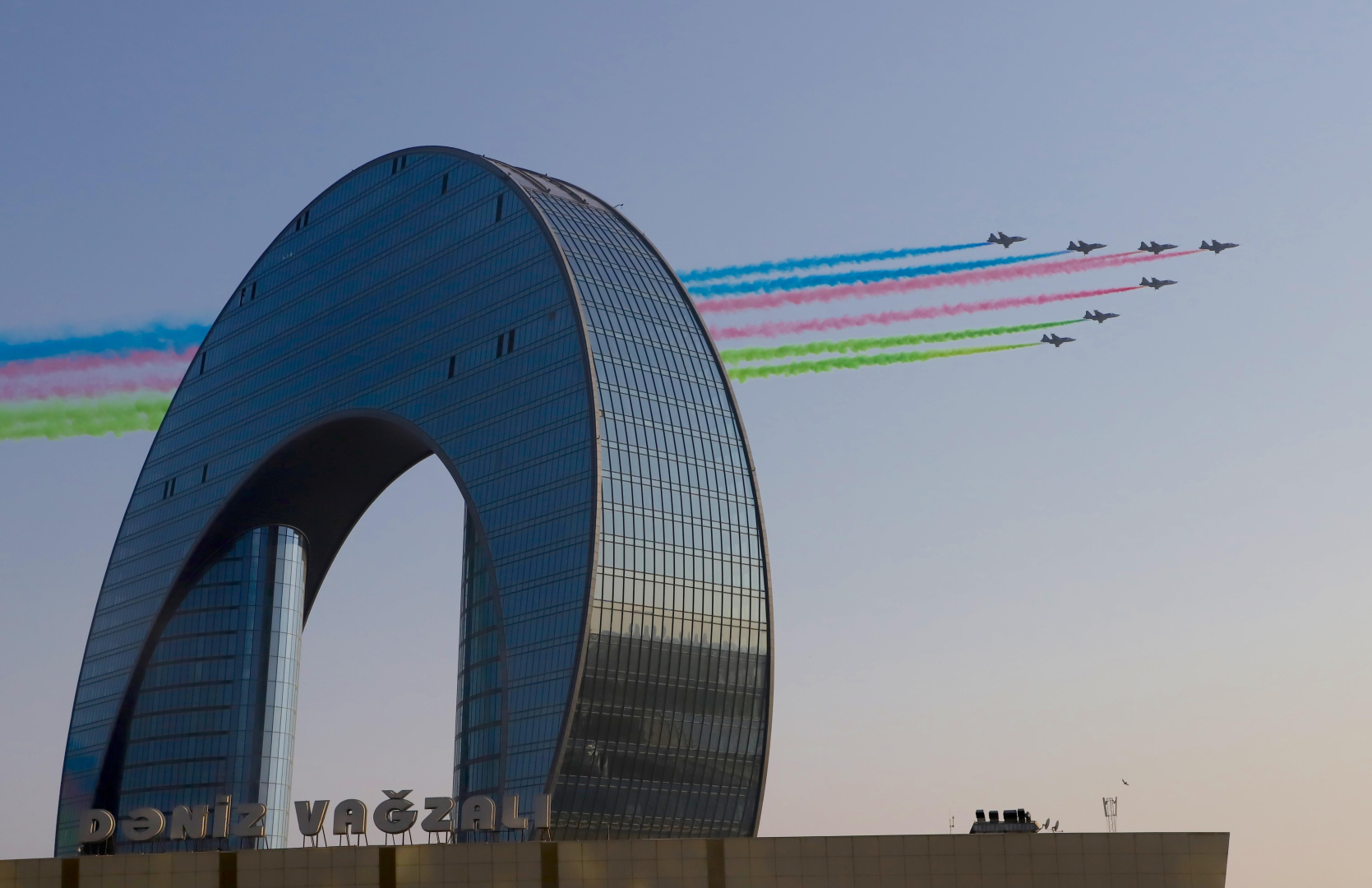

Ulviyya Poladova
Read more10 November 2020 was a date that would be written in golden letters in Azerbaijan's history. It marked the day when territories forcibly separated from Azerbaijan in the 1990s and kept under occupation for more than three decades were finally restored to its control. Yet the significance of that day extended beyond a military victory. It also demonstrated how advanced technology, military preparedness and evolving battlefield tactics could determine the outcome of a conflict.
Over the course of 44 days, Azerbaijani forces advanced through challenging terrain, covering kilometres of winding roads, steep slopes and mountainous landscapes. Their campaign culminated in the liberation of Jabrayil, Fuzuli, Zangilan, Gubadli and, finally, Shusha – a city whose return had become a long-awaited national aspiration.
The operation, codenamed Iron Fist, demonstrated the tactical capabilities, discipline and combat readiness of the Azerbaijani armed forces. On 10 November 2020, Armenia signed a trilateral statement bringing the fighting to an end and accepting the new military realities on the ground.
When hostilities erupted in September 2020, Azerbaijan's objective was clear: to restore control over territories lost during the First Karabakh War. Forty-four days later, Azerbaijani forces had fundamentally altered the territorial map and military balance of the South Caucasus.
Several factors contributed to Azerbaijan's success. Its armed forces made effective use of drones and other precision-guided weapons, weakening Armenia's military positions and exposing the limitations of conventional military tactics. The coordination of air power with ground operations, alongside the maintenance of reliable supply lines, also proved crucial. Equally important were years of investment in military modernisation, advanced weaponry and the development of the country's defence capabilities.
Much can be said about the course of the 44-day war, its military strategy and its wider consequences. But one point stands out: the conflict did not simply transform the geopolitical balance of the South Caucasus; it also resonated far beyond the region, attracting international attention and prompting wider discussion about sovereignty, territorial integrity and the changing nature of warfare.
It is no coincidence that Azerbaijan's experience has acquired particular relevance in the context of Ukraine's ongoing struggle to regain control over its territories. As the Ukrainian people continue their fight, Azerbaijan's historic victory in Karabakh has also served as an example and a source of motivation, reinforcing the belief that the restoration of territorial integrity remains an achievable objective, even after decades of conflict and difficult political circumstances.
In a comment for AzerNEWS, Ukrainian military expert Oleg Zhdanov noted that Azerbaijan’s military success in restoring control over its internationally recognised territories was the result of long-term strategic planning, patience and the gradual strengthening of its armed forces. Assessing Azerbaijan’s military strategy, Zhdanov said one of the most important decisions made by the country’s political and military leadership was to avoid rushing into action before the armed forces were sufficiently prepared.
"The most important decision taken by Azerbaijan’s leadership, first and foremost at the political level, was patience - patience in assessing the adversary and in evaluating the country’s own capabilities to achieve victory on the battlefield," he said.
According to the expert, Azerbaijan’s leadership recognised that a significant difference in military capabilities would be essential to securing success. This required a comprehensive process of modernisation, rearmament and investment in the armed forces, which could not be achieved overnight. Zhdanov stressed that strengthening military capabilities also depended on economic development, as a strong financial foundation was necessary to purchase modern weapons and equip the army with advanced systems.
Commenting on the relevance of Azerbaijan’s military experience in the context of the ongoing war in Ukraine, Zhdanov said the conflict had marked an important turning point in the evolution of warfare.
Zhdanov suggested that Azerbaijan’s experience could be viewed as a historical milestone in the transition towards a new model of warfare. In his opinion, the conflict may go down in history as one of the last wars fought predominantly according to the conventional military model of the 20th century.
According to him, the broader significance of Azerbaijan’s experience is for countries seeking to restore their territorial integrity. He said Azerbaijan’s example demonstrates that the passage of time and the complexity of political and military circumstances do not diminish the importance of sovereignty and internationally recognised borders.
"I believe this will serve as an example, including for our country. Regardless of how much time has passed and how difficult the decision to begin military operations may be, sovereignty and territorial integrity remain the most important principles for any state," he emphasised.
The expert described Azerbaijan’s achievement as a positive example for other countries, emphasising that the country had ultimately restored control over territories that had remained under occupation for nearly three decades.
------
Photo credit: Forbes
Here we are to serve you with news right now. It does not cost much, but worth your attention.
Choose to support open, independent, quality journalism and subscribe on a monthly basis.
By subscribing to our online newspaper, you can have full digital access to all news, analysis, and much more.
You can also follow AzerNEWS on Twitter @AzerNewsAz or Facebook @AzerNewsNewspaper
Thank you!