
Europe looks to Central Asia to break China's grip on critical minerals
Ulviyya Poladova
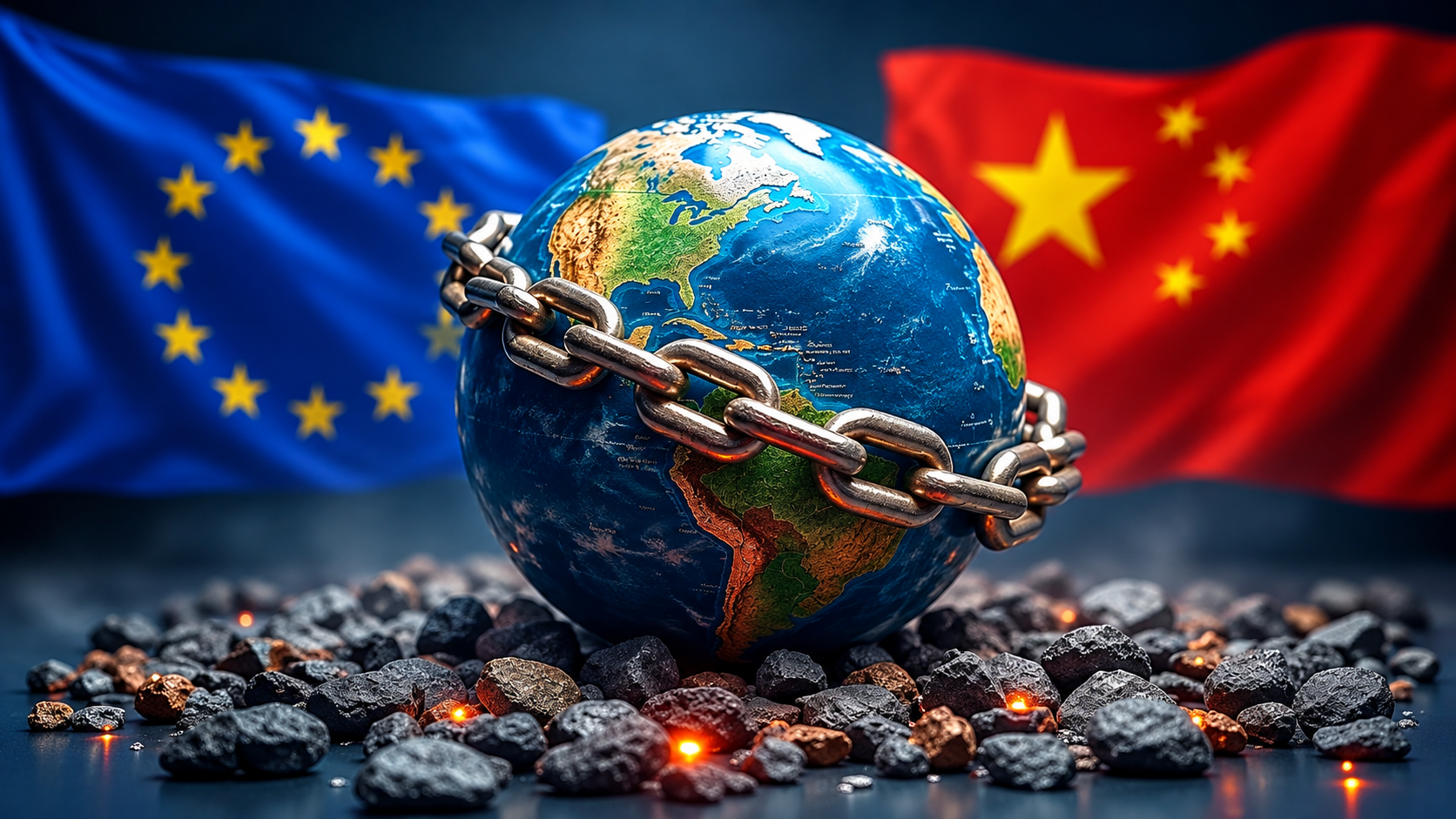
Read moreWhile Europe faces growing challenges in securing critical raw materials, the Central Asian region has become key to the European Union's strategy to diversify its supply chains and reduce dependence on China. For decades, China has dominated the global market for rare earths and other important minerals, creating vulnerabilities for European industry, especially in high-tech sectors such as microchip manufacturing and renewable energy technologies.
According to the European Electronics Manufacturers Association, in 2025, the European Union imported about 98% of its rare earths from China. This over-reliance poses significant risks to Europe's technological sovereignty and economic security. The situation came into the spotlight after China unexpectedly imposed new export restrictions on rare earths on October 9, 2025. These measures, which are still in effect as of the end of 2026, have exacerbated tensions in global supply markets and put Europe in a position where source diversification has become an urgent task.
Currently, Central Asia is becoming increasingly well-known as a promising alternative supplier of crucial minerals with significant reserves that could support Europe's quest for technological independence. The US Geological Survey's 2024 report estimates the reserves of rare earth metals in Central Asia at about 1.2 million tons. Countries such as Kazakhstan and Uzbekistan also have significant reserves of lithium, cobalt, nickel, copper and other minerals necessary for modern technologies and the transition to a "green economy".
According to a 2026 OECD report, the region holds 39% of global manganese ore reserves, 31% of chromium, 20% of lead, 13% of zinc, 9% of titanium, 5% of copper and 5% of cobalt reserves. Kazakhstan has an established mining industry and can potentially supply 21 of the 34 critical raw materials included on the EU's list. Uzbekistan, meanwhile, has the world's eleventh-largest copper reserves and is developing production of lithium and molybdenum.
It should be noted that critical minerals are essential to a wide range of industries, from electric vehicle manufacturing and renewable energy to electronics, aerospace and defence. Lithium, graphite, copper, tungsten and rare earth elements are among the materials needed to manufacture batteries, wind turbines, semiconductors and other advanced technologies.
Taken together, these factors help explain why European interest in the region is growing. Copper is indispensable to electricity networks, electric vehicles and renewable energy infrastructure. Lithium and cobalt are used in battery production, while nickel has applications in batteries and stainless steel. Chromium and manganese are important for steelmaking and other industrial processes. Rare earth elements, although a separate group of materials, are also relevant to the region's potential, including as possible by-products of existing polymetallic deposits.
Recognizing the strategic imperative, in October 2026, the European Commission announced the launch of 46 strategic projects aimed at the extraction and processing of critical raw materials, including lithium, cobalt, nickel and copper. This comprehensive program aims to increase the resilience of European supply chains, stimulate local value chains related to mining and processing, and reduce the bloc's exposure to supply shocks.
The EU's approach is not limited to immediate purchases, but extends to long-term partnerships and investments aimed to "stake a claim" to develop minerals in Central Asia. Such a strategy involves close cooperation with countries such as Kazakhstan and Uzbekistan, supporting their infrastructure and industrial potential for the extraction and processing of these minerals within the country, and not just for the export of unprocessed ore.
Strategic role of Azerbaijan as a logistic hub
Europe's plans are one side of the equation, but the question of how these critical raw materials will reach their destination is equally important. This is where Azerbaijan could play a role. Located at the crossroads of Europe and Asia, the country has the potential to serve as a key logistics and transit hub, facilitating the transportation of critical minerals from Central Asia to European markets. Earlier, Mikayil Jabbarov, Azerbaijan’s Minister of Economy, has emphasized the country’s natural role as an export gateway for the region’s energy and mineral resources, offering a western route for freight transit. This route is significant for Europe, providing a more secure and efficient supply chain alternative to routes dominated or influenced by less stable regions.
Here we are to serve you with news right now. It does not cost much, but worth your attention.
Choose to support open, independent, quality journalism and subscribe on a monthly basis.
By subscribing to our online newspaper, you can have full digital access to all news, analysis, and much more.
You can also follow AzerNEWS on Twitter @AzerNewsAz or Facebook @AzerNewsNewspaper
Thank you!