
Azerbaijan's flag tells story of independence, loss and national resilience

AzerNEWS Staff
Read moreEvery national flag tells a story, but some carry the weight of an entire nation's struggle for independence, survival and recognition. Azerbaijan's tricolour is one such symbol. Its blue, red and green stripes represent more than the identity of a modern state: they connect generations of Azerbaijanis to a history shaped by aspirations for freedom, the loss of sovereignty, the restoration of independence and the determination to protect national statehood.
Celebrated annually on 9 November, National Flag Day is a reminder of where Azerbaijan's modern statehood began, how its national identity endured through decades of political upheaval and why the flag continues to occupy such an important place in the country's collective consciousness.
The story of the Azerbaijani flag begins in 1918, when the Azerbaijan Democratic Republic (ADR) emerged as an independent state amid the collapse of the Russian Empire. On 9 November that year, the government officially adopted the tricolour as the national flag. The decision was a powerful declaration of political ambition at a time when the idea of an independent Azerbaijani state was still taking shape.
The three colours carried a clear ideological message. Blue represented the Turkic heritage of the Azerbaijani people, red symbolised modernisation and the development of democratic institutions, while green reflected the country's connection with Islamic civilisation. The white crescent and eight-pointed star completed a design that brought together national identity, cultural heritage and aspirations for a modern political future.
The flag became an important symbol of the Azerbaijan Democratic Republic, which established parliamentary institutions and introduced progressive political reforms. Among its historic achievements was granting women the right to vote in 1918, making Azerbaijan one of the first countries in the Muslim world to take such a step.
However, the republic's independence was short-lived. In April 1920, Soviet military intervention brought the ADR to an end, and the tricolour was lowered. For decades, the flag remained outside the official political life of Azerbaijan. Yet its historical significance did not disappear. It survived as a symbol of national aspirations and the unfinished story of independence.
The return of the tricolour became particularly significant as the Soviet Union approached its final years. On 17 November 1990, the Supreme Assembly of the Nakhchivan Autonomous Republic, under the leadership of Heydar Aliyev, restored the flag as the republic's official symbol. The decision also became an important political statement about Azerbaijan's future.
On 5 February 1991, the Supreme Council of Azerbaijan formally recognised the tricolour as the country's national flag. Later that year, following the restoration of state independence, it became one of the defining symbols of the newly independent republic.
The decision to establish National Flag Day in 2009 gave this historical journey a permanent place in the country's national calendar. President Ilham Aliyev signed the relevant order on 17 November, declaring 9 November a day dedicated to the state flag.
But the meaning of the Azerbaijani flag has continued to evolve. The country's modern history, particularly the conflict with Armenia over Karabakh, added another dimension to its symbolism. For Azerbaijanis, the flag became closely associated with territorial integrity, national unity and the determination to restore sovereignty over internationally recognised territories.
The events of 2020, when Azerbaijan regained control of territories following the 44-day Patriotic War, gave this symbolism renewed emotional significance. Images of the Azerbaijani flag being raised in liberated towns and villages became powerful representations of a historic turning point. The restoration of Azerbaijan's sovereignty across its internationally recognised territory in September 2023 further reinforced the political and emotional importance attached to the national flag.
Today, National Flag Day is marked across Azerbaijan through official ceremonies, public events, educational initiatives and displays of the national colours. State institutions, schools and public spaces become venues for commemorating the country's history and honouring its national symbols. Citizens also express their attachment to the occasion by displaying flags on buildings, sharing messages on social media and participating in celebrations.
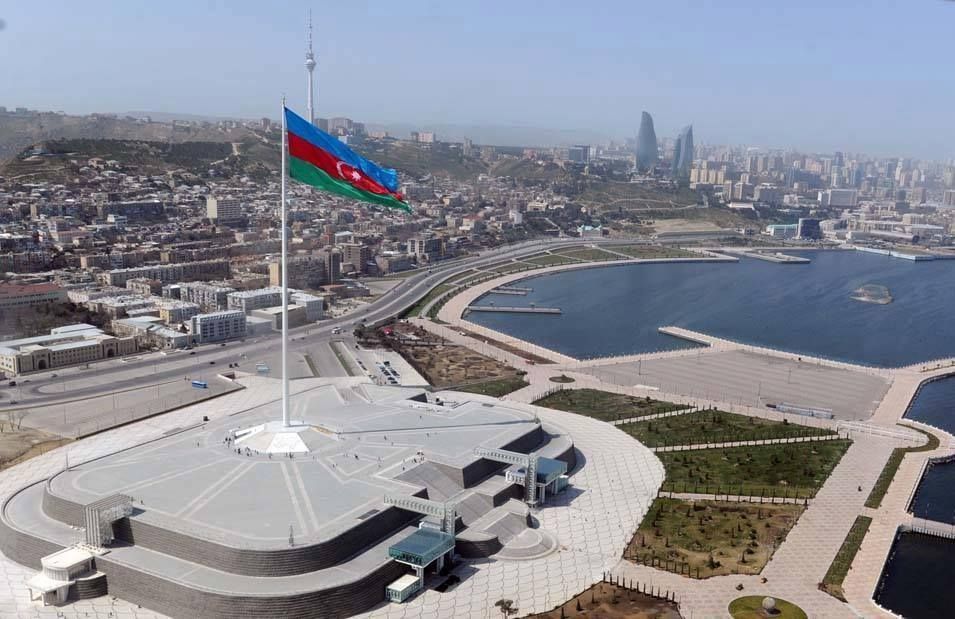
One of the most visible expressions of this national symbolism is Flag Square in Baku. Established as a landmark dedicated to the country's statehood, it reflects the special place the national flag occupies in Azerbaijan's public life. The flag is also prominently displayed during major state ceremonies, international sporting competitions and diplomatic events, where it represents the country beyond its borders.
Yet the significance of National Flag Day should not be measured simply by the number of flags displayed or the scale of official celebrations. Its deeper meaning lies in the historical continuity it represents.
For younger generations, the flag offers an opportunity to understand that independence was neither automatic nor inevitable. It emerged from the political determination of the generation that established the Azerbaijan Democratic Republic in 1918, survived as a national aspiration during the Soviet period and was restored through the political changes of the late twentieth century.
There is also a broader lesson in the three colours themselves. Blue, red and green represent different dimensions of Azerbaijani identity, but together they form a single national symbol. Their coexistence reflects a country whose historical experience has been shaped by its Turkic roots, Islamic heritage and aspirations for modernisation.
Ultimately, a national flag is not simply a piece of cloth raised above government buildings. It represents the relationship between a state and its citizens, between historical memory and contemporary responsibility. For Azerbaijan, 9 November is an opportunity to reflect on both the achievements of the past and the responsibilities of the present.
The tricolour has witnessed the birth of a republic, the loss of independence and the restoration of sovereignty. Its journey mirrors the difficult but remarkable history of modern Azerbaijan. That is why National Flag Day remains more than a celebration of national colours. It is a celebration of a nation's determination to preserve its identity, defend its independence and shape its own future.
Here we are to serve you with news right now. It does not cost much, but worth your attention.
Choose to support open, independent, quality journalism and subscribe on a monthly basis.
By subscribing to our online newspaper, you can have full digital access to all news, analysis, and much more.
You can also follow AzerNEWS on Twitter @AzerNewsAz or Facebook @AzerNewsNewspaper
Thank you!