
Azerbaijan eyes hydrogen market with blue production costs below EU green levels

Akbar Novruz
Read moreAzerbaijan plans to develop large-scale production of blue and green hydrogen as part of its efforts to decarbonise energy-intensive industries and economic sectors where direct electrification remains technically challenging.
The initiative is outlined in the country's Long-term Low-Carbon Development Strategy, which identifies hydrogen as a key component of the transition towards a low-carbon economy.
According to the strategy, hydrogen production will play a central role in reducing emissions from heavy industry and the energy sector, while creating opportunities for the export of low-carbon fuels.
Blue hydrogen emerges as the most cost-effective option
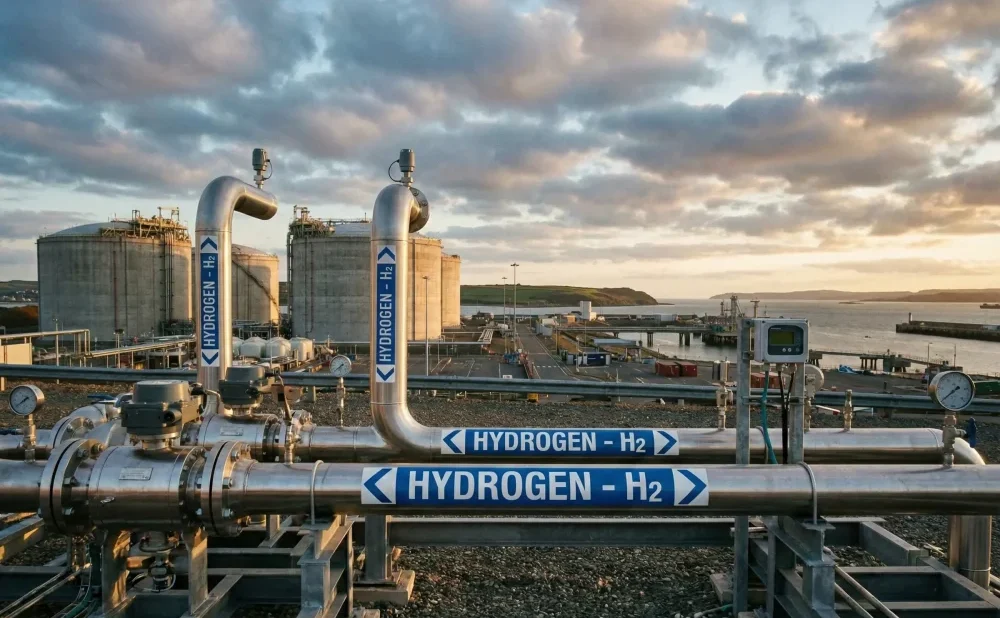
The strategy identifies blue hydrogen, produced from natural gas through steam methane reforming (SMR) combined with carbon capture, utilisation and storage (CCUS), as the most economically viable option during the initial stages of development.
Azerbaijan's existing natural gas transmission infrastructure is expected to provide an advantage in establishing production capacity.
The proposed technology could initially capture up to 85% of the carbon dioxide emissions generated during hydrogen production.
According to the National Hydrogen Strategy developed jointly by Azerbaijan's Ministry of Energy and the European Bank for Reconstruction and Development (EBRD), blue hydrogen production could cost approximately €2.87 per kilogram, provided carbon capture and storage technology proves commercially and technically viable.
The estimated cost includes €1.98 per kilogram for energy, €0.31 for capital expenditure and €0.59 for operating expenditure.
Meanwhile, green hydrogen production through electrolysis powered by renewable energy is expected to become another important component of Azerbaijan's hydrogen industry.
Surplus electricity generated from renewable sources would be used to produce hydrogen for domestic energy-intensive industries and potential export markets.
The estimated production cost of green hydrogen at a medium-sized facility stands at €4.02 per kilogram, comprising €2.52 in energy costs, €1.20 in capital expenditure and €0.30 in operating expenditure.
However, improvements in production efficiency could reduce the cost to approximately €3.60 per kilogram, with energy costs accounting for €2.55, capital expenditure €0.84 and operating costs €0.21.
For comparison, the average estimated cost of green hydrogen production in the European Union is €5.05 per kilogram, including €2.74 in energy expenditure, €1.85 in capital costs and €0.46 in operating expenditure.
These projections suggest that Azerbaijan could develop a competitive position in hydrogen production, particularly if renewable electricity costs decline and carbon capture technologies become commercially viable.
Renewable energy potential exceeds 290 GW
The strategy also highlights Azerbaijan's substantial renewable energy resources as a foundation for expanding hydrogen production and electrifying the wider economy.
The country's technical renewable energy potential exceeds 135 gigawatts (GW) onshore and 157 GW offshore, representing a combined potential of more than 292 GW.
However, the economically viable renewable energy potential is estimated at approximately 27 GW, including 23 GW of solar power, 3 GW of wind energy, 520 megawatts (MW) of hydropower from mountain rivers and 380 MW of bioenergy.
In 2022, the energy sector accounted for approximately 21% of Azerbaijan's total greenhouse gas emissions, equivalent to 14.4 million tonnes of CO₂.
The sector is expected to play a central role in the country's broader electrification strategy, with renewable electricity increasingly replacing fossil fuel consumption across different areas of the economy.
Grid modernisation and energy storage to support transition
Alongside hydrogen development, Azerbaijan plans to strengthen its electricity infrastructure to accommodate increasing renewable generation.
The strategy envisages the expansion of high-voltage transmission lines, construction of new substations and introduction of advanced digital management systems, including Supervisory Control and Data Acquisition (SCADA), Advanced Distribution Management Systems (ADMS) and Geographic Information Systems (GIS).
These measures are expected to reduce technical electricity losses in distribution networks by approximately 1–2%.
The development of long-duration energy storage systems (LDES) is also identified as an important measure for addressing fluctuations in solar and wind generation.
According to the information outlined in the strategy, AzerEnerji has already commissioned an energy storage system with a capacity of 250 MW.
Such infrastructure is intended to improve grid flexibility, maintain electricity supply stability and support the integration of additional renewable energy capacity.
Here we are to serve you with news right now. It does not cost much, but worth your attention.
Choose to support open, independent, quality journalism and subscribe on a monthly basis.
By subscribing to our online newspaper, you can have full digital access to all news, analysis, and much more.
You can also follow AzerNEWS on Twitter @AzerNewsAz or Facebook @AzerNewsNewspaper
Thank you!