
Baku, Delhi look beyond political rift to unlock trade potential
Akbar Novruz
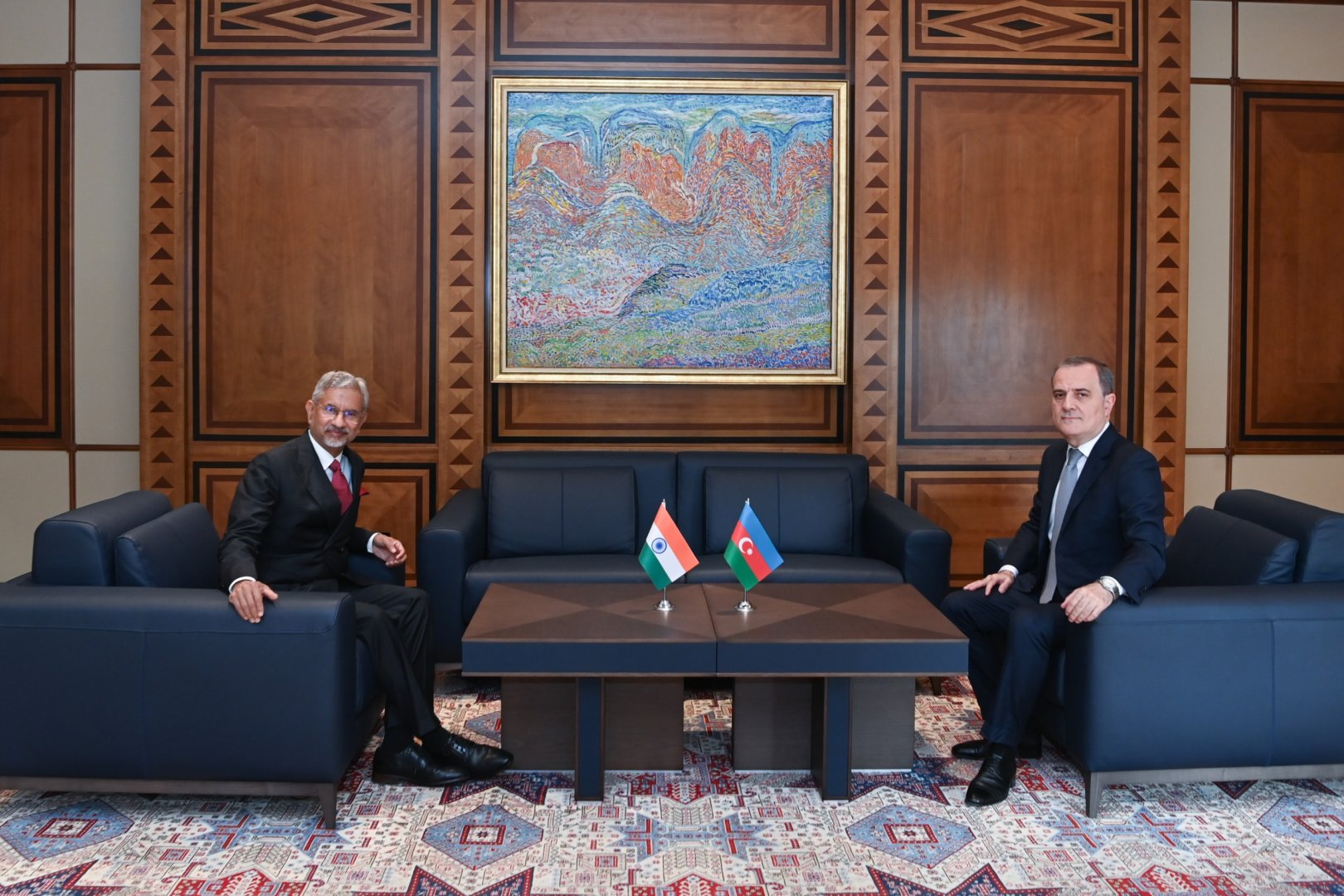
Read moreDiplomats prefer understatement, so Subrahmanyam Jaishankar's description of his visit to Baku on October 23rd as charting a "pathway" for relations deserves a second look. India's foreign minister had not come to Azerbaijan for eight years, nor did he arrive on a whim: he said Prime Minister Narendra Modi had sent him, following the first-ever meeting between Modi and President Ilham Aliyev on the sidelines of the Shanghai Cooperation Organisation summit in Bishkek on September 1st. After a year of strained ties, that is a significant reversal.
Historically speaking, over the past 20 years, the relationship between Delhi and Baku has fluctuated between hot and cold, with the cooling of relations having deeper roots.
Officially, New Delhi stayed neutral on Karabakh, calling for restraint and backing the OSCE Minsk Group, but as the years passed, its sympathies tilted more towards Yerevan. In 2008, India voted against an Azerbaijani-sponsored UN General Assembly resolution demanding the withdrawal of Armenian forces. Armenia also supported the Indian demand for a bilateral settlement of the Kashmir dispute and India’s application for permanent membership in the UN Security Council, while Azerbaijan’s close relations with Pakistan had always been considered irksome in Delhi.
The ties between Armenia and India assumed a military nature following the war of 2020. The Armenian government purchased four Swathi counter-battery radars worth $40 million and then signed an agreement worth approximately $210 million for Pinaka rocket launchers, anti-tank rockets, and ammo in 2022. Armenia was the first buyer of the Indian-made Akash air defence system, acquiring 15 pieces of this weapon for around $720 million. According to SIPRI, India accounted for 43% of the total volume of weapons imports by Armenia from 2022 to 2024, compared to 94% from Russia from 2011 to 2020. Baku criticized this cooperation. Indian officials insist on its commercial character.
The last occurrence regarding the relationship between the two countries saw a sharp decline in ties after the India-Pakistan conflict in May 2025. During this time, Baku criticized India's military operation and aligned itself with Pakistan’s position on Kashmir, a stance that ultimately cost it goodwill in New Delhi.
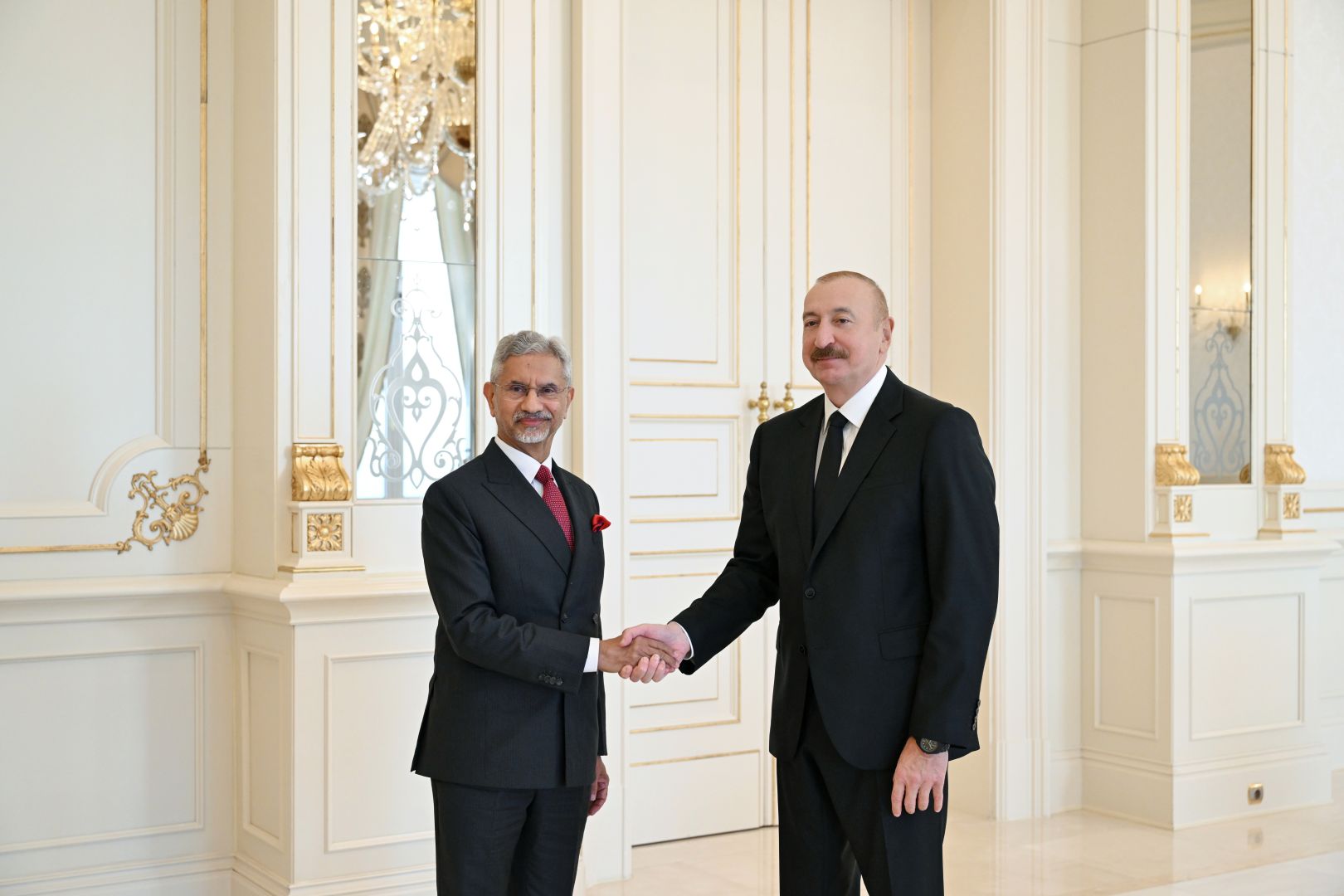
Now, both governments have reasons to move on. President Ilham Aliyev, who sees diversity in his foreign policy approach, was reaching out to every important power; India, with its billion-plus population, was the biggest one left. The meeting of Jaishankar with President Aliyev and the Foreign Minister, Jeyhun Bayramov, highlighted the shared ground between them. Both are from the Global South and share their stand on many issues on the international agenda; both decided to strengthen political ties through regular visits and exchanges of business delegations. The credentials of the new Indian ambassador to Azerbaijan, Abhay Kumar, had already been presented to President Aliyev a week earlier.
Economics of the relationship
The economics are clear, and the figures are compelling. The Indian GDP has increased from $2.08tn in 2015 to $3.91tn in 2025, registering an 88% nominal growth in ten years. According to the International Monetary Fund, India's economy will grow by around 7% annually in real terms in 2026 and 2027, more than double the 3.1% expected worldwide. In terms of a nation exporting hydrocarbons, a fast-growing and hungry consumer is practically a perfect match.
However, bilateral trade is declining. While the trade volume stood at $50m in 2005, it rose to $1.435bn in 2023, when India became the third-largest importer of Azerbaijani oil. Yet, in 2025, it fell 72% to $401m, out of which $175m were exports from Azerbaijan and $226m were imports into Azerbaijan from India. Oil accounts for the overwhelming share of Azerbaijani exports. Whether the decline stems from politics or the dynamics of the oil prices and shipping costs remains uncertain. What is evident from the pattern is the nature of the business relationship, which is promising in potential but limited in scope.
There are other valuable assets as well. The investment by ONGC Videsh of India in the Azeri-Chirag-Gunashli field and Baku-Tbilisi-Ceyhan pipeline is more than $1.2 billion, which means that India has a vested interest in the success of Azerbaijan’s upstream industry. Another area is tourism, which is an opportunity for India to engage more actively with Azerbaijan. According to data from 2025, 166,944 tourists from India visited Azerbaijan, making it the fourth-largest source market for Azerbaijan. Every visitor means income for airlines, hotels, restaurants, and shops - and they even have a tendency toward entrepreneurship in Azerbaijan.
The hydrocarbons themselves are geopolitically charged as well. India’s dependence on oil imports from the Gulf region is quite significant, and with the current disruption of the Strait of Hormuz, imports from non-Gulf sources are quite appealing. However, the Azerbaijani oil imports have to be loaded in Ceyhan, which is located on the Mediterranean, and then have to pass through either Suez or around Africa via the Red Sea, which is currently being attacked by the Houthis.
Corridor question
Now comes the project that officials on both sides always refer to – International North-South Transport Corridor. Azerbaijan entered the project back in 2005. The path connects India with the Gulf to Iran, Azerbaijan, and Russia, providing an alternative to Indian cargo transported through the Suez Canal. Azerbaijan shares land borders with both Iran and Russia, having rail and roads transportation network, which makes it a perfect transit state and, possibly, a source of logistics income for the country.
The profit seems to be rather good. It is claimed that the route will shorten transport time from 45-60 to 20-25 days. India supports the project via Chabahar port of Iran, signing a 10-year agreement worth $120m in investment and $250m in credit, aimed at opening Central Asian, Caucasian, and Russian markets.
However, on the ground, the corridor relies on the 167km railway from Rasht to Astara in Iran, which is yet to be built, and on an area where tensions between Iran and Israel, the conflict in Ukraine and Western sanctions make each transaction difficult. Azerbaijan is able to provide the Baku port, the Baku-Tbilisi-Kars railway, and the free economic zone of Alat, but it cannot bring peace between its neighbours.
The real reset needs...
The most valuable communiqué in the report is the last one, stating that both sides want to exchange business delegations, a recognition that while governments can open doors, businesses have to go through them. An achievable agenda would start small, with flights and tourism, with pharmaceuticals and technology and oil trade, and move toward corridor investments as the situation in the region stabilizes.
There are also certain limits that honesty imposes on such discussions. India’s relations with Armenia and its conflict with Pakistan exist along with Azerbaijan’s friendly relations with Pakistan and Türkiye, and none of those is going to change any time soon. None of them can demand anything of the other regarding friends. But two big growing countries in the Global South, one of which exports natural gas and oil, and another imports them, don’t have to be equally allied in order to trade. What they need is stable politics and some flights. For the first time in a year, Baku and New Delhi are speaking to each other as if they want both.
Here we are to serve you with news right now. It does not cost much, but worth your attention.
Choose to support open, independent, quality journalism and subscribe on a monthly basis.
By subscribing to our online newspaper, you can have full digital access to all news, analysis, and much more.
You can also follow AzerNEWS on Twitter @AzerNewsAz or Facebook @AzerNewsNewspaper
Thank you!