
Ukraine’s grain exports: why world needs Black Sea Corridor

Qabil Ashirov
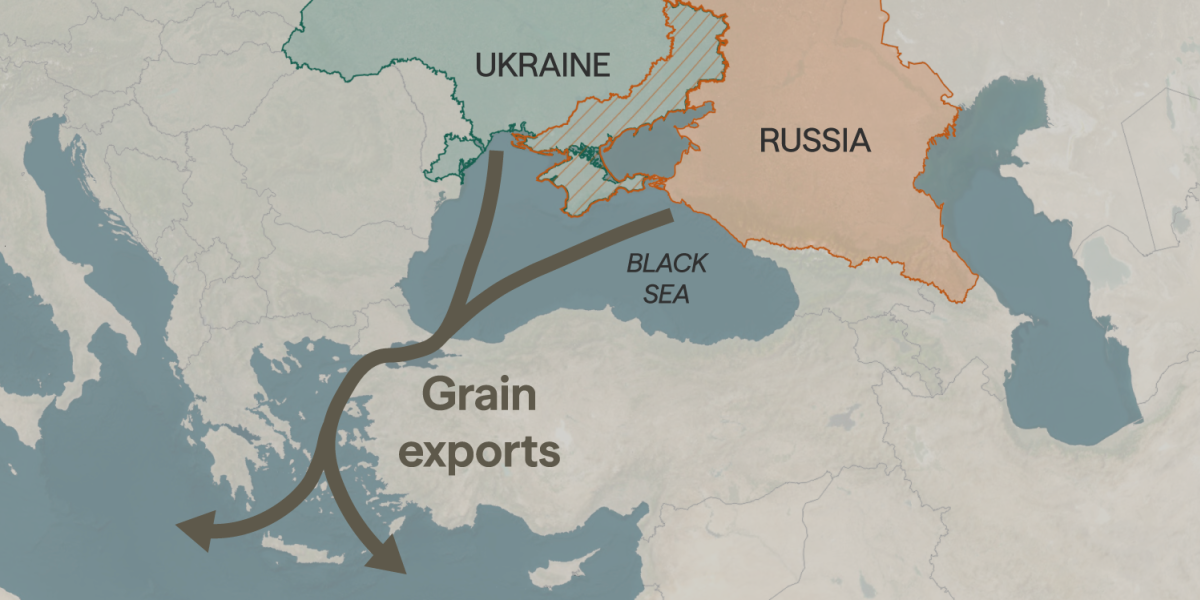
Read moreUkraine’s struggle to restore grain exports through the Black Sea carries consequences far beyond its national borders. As one of the world’s leading agricultural exporters, the country plays a significant role in supplying wheat, corn, barley and sunflower oil to international markets. The restoration of maritime shipments would support global food security while delivering substantial economic benefits to Ukraine, whose agricultural sector remains a vital source of export revenue, employment and foreign currency.
The scale of Ukraine’s agricultural capacity illustrates the importance of this issue. According to the United Nations Food and Agriculture Organization (FAO), Ukraine’s cereal exports for the 2025/26 marketing year were forecast at approximately 40 million tonnes, including 23 million tonnes of corn, 14 million tonnes of wheat and 2.5 million tonnes of barley. These figures demonstrate the country’s importance to international agricultural trade.
Grain occupies a central position in the global food system. Wheat provides a staple ingredient for bread and other essential foods, while corn serves as a major input for animal feed, food processing and industrial production. Sunflower oil also represents an important source of edible oil for millions of households.
Consequently, disruptions to Ukrainian agricultural exports can create pressure throughout the international food supply chain. Import-dependent countries face higher procurement costs, while millers, food processors and livestock producers encounter rising operating expenses. These pressures eventually reach consumers through higher prices for bread, cooking oil, meat and other basic products.
The impact becomes particularly significant in developing economies, where households devote a substantial share of their income to food. Egypt and several Asian and African countries rely on internationally traded wheat to support domestic consumption. For these markets, reliable supplies from the Black Sea help governments manage procurement costs and maintain affordable food distribution.
Recent disruptions have already intensified concerns among international grain buyers. Reuters reported in August 2026 that Chicago wheat futures had risen by more than 17% since July amid escalating attacks on Black Sea grain infrastructure. Alternative suppliers, including Argentina, Australia and the United States, offer valuable additional capacity, although longer shipping distances and higher transport costs can increase the expense of replacing Black Sea supplies.
These developments illustrate a fundamental feature of agricultural markets: export capacity matters as much as harvest volumes. Grain stored in warehouses contributes to global food security most effectively when farmers can transport it to buyers at competitive prices.
For Ukraine, the Black Sea corridor represents an essential economic lifeline. Maritime ports provide the capacity required to move millions of tonnes of agricultural products to international destinations efficiently. Ukrainian President Volodymyr Zelenskyy has said the ports can handle up to 40 million tonnes of grain during a marketing season, while the suspension of shipments since August has sharply constrained export activity.
The economic benefits of reopening the corridor would extend across the entire agricultural sector. Export revenues would provide farmers with funds for seeds, fertilisers, fuel, machinery and seasonal labour. Agricultural businesses would gain greater certainty when planning production, while traders and logistics companies could restore commercial operations and employment.
Foreign currency earnings also carry considerable importance for Ukraine’s wider economy. Agricultural exports generate international payment flows that support domestic businesses and contribute to the country’s external economic position. Greater export activity would strengthen the commercial foundations needed for reconstruction and investment.
Storage capacity presents another important consideration. A steady flow of grain through seaports would help farmers clear warehouses ahead of subsequent harvests, improve supply-chain efficiency and create room for new production. Reliable access to overseas markets would also encourage investment in processing facilities, transport infrastructure and higher-value agricultural products.
Ukraine is currently discussing the possible restoration of civilian shipping with Türkiye, Egypt and India. The proposed arrangement would provide safe passage for vessels flying the participating countries’ flags, with the objective of protecting commercial food shipments. Kyiv has also called for renewed European solidarity lanes, which previously enabled agricultural products to travel through European railways and ports.
These initiatives highlight the international value of secure maritime trade. A functioning corridor would connect Ukrainian producers with overseas buyers, improve the availability of agricultural commodities and support greater stability in food-importing economies.
Ultimately, restoring Ukraine’s grain exports would serve two closely connected objectives: strengthening the Ukrainian economy and supporting global food security. The world’s agricultural markets benefit from diverse suppliers, efficient transport routes and predictable deliveries. Ukraine possesses substantial productive capacity, established export infrastructure and access to major international markets.
A secure Black Sea corridor would help transform these advantages into tangible economic results. For Ukrainian farmers, it would mean stronger access to customers and more dependable revenues. For importing countries, it would mean greater supply flexibility and improved opportunities to manage food costs. For the global economy, it would reinforce the connection between secure trade routes, agricultural production and affordable food.
The future of Ukraine’s grain exports therefore carries significance far beyond the Black Sea. It represents a vital test of the international community’s ability to protect commercial food supplies and preserve the economic connections that sustain millions of livelihoods around the world.
Here we are to serve you with news right now. It does not cost much, but worth your attention.
Choose to support open, independent, quality journalism and subscribe on a monthly basis.
By subscribing to our online newspaper, you can have full digital access to all news, analysis, and much more.
You can also follow AzerNEWS on Twitter @AzerNewsAz or Facebook @AzerNewsNewspaper
Thank you!