
Russia’s peace deal could be Europe’s next security crisis
Elnur Enveroglu
Read more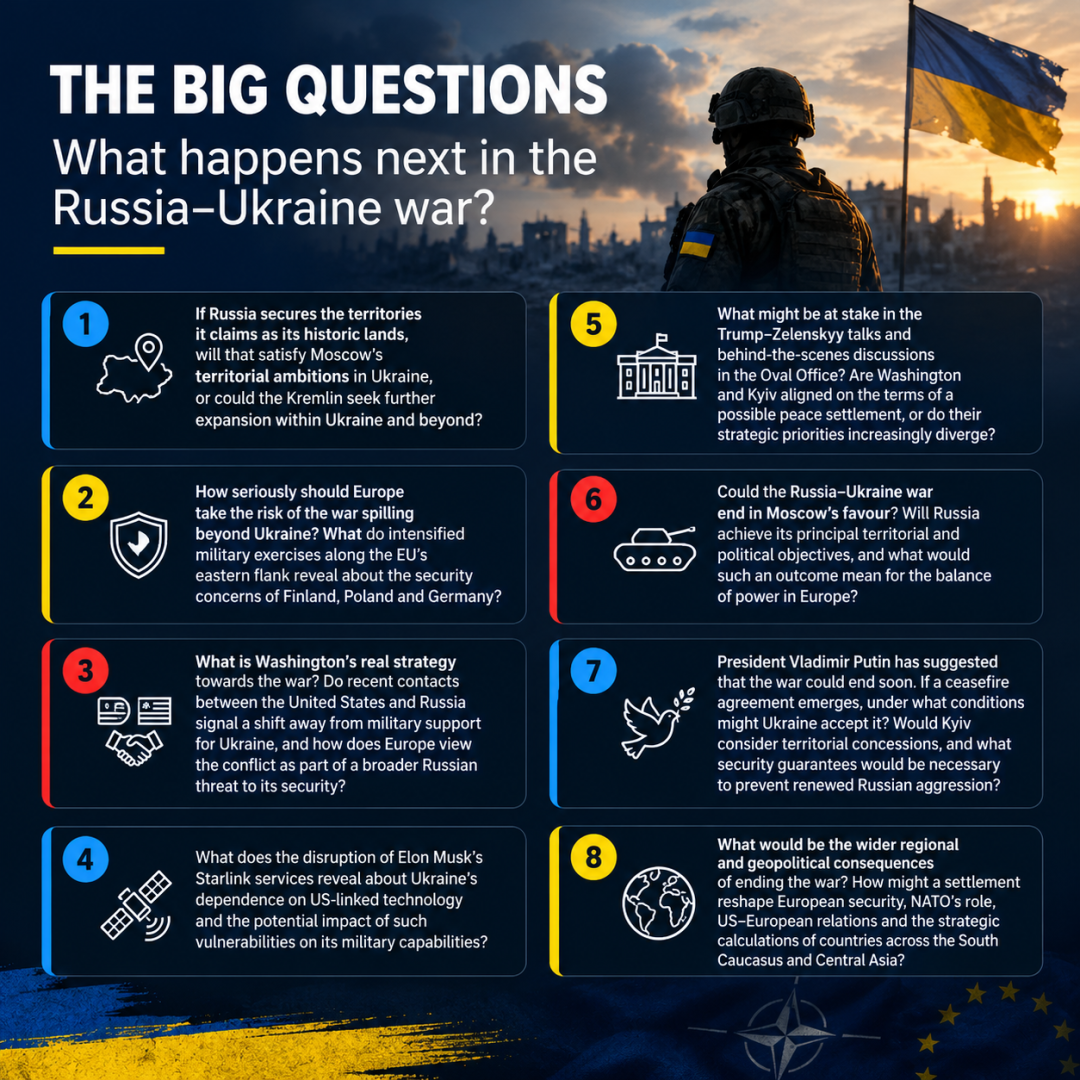
Russia may eventually secure a ceasefire in Ukraine on terms that preserve its territorial gains, but that would not necessarily mean Moscow had won a lasting peace. The real assessment is whether a settlement ends the Kremlin’s appetite for coercion or rewards the use of military force as a means of redrawing Europe’s borders.
As Washington renews its efforts to bring Moscow and Kyiv back to negotiations, the central question is no longer simply who controls which territory. It is whether a deal can prevent Russia from using the breathing space after the war to rebuild its military strength and exert further pressure on its neighbours.
Therefore, the diplomatic record offers reasons for caution. Let’s reflect on the past for a bit. US envoys Steve Witkoff and Jared Kushner visited Moscow and Kyiv in September 2026, seeking to revive negotiations after months of diplomatic stagnation. However, Russia continued to demand territorial concessions that Ukraine rejected. On October 22, Vladimir Putin again called for a permanent settlement addressing Russia’s security concerns and the wider European security order. The territorial dispute remained unresolved.
Of course, it can be argued that Putin’s language matters because Moscow is seeking more than a halt to the fighting. The Kremlin has consistently challenged Ukraine’s right to determine its own security alignment, opposed its potential NATO membership and demanded recognition of Russian control over occupied Ukrainian territories. But in fact, in Moscow’s preferred interpretation, a settlement should address the strategic choices of Ukraine and the wider European security system rather than only a battlefield. So, that is where a territorial compromise could become a dangerous precedent, as many experts also think like this. Russia already controls about a fifth of Ukraine’s internationally recognised territory, including Crimea, which it annexed in 2014. If further territorial concessions were extracted through military pressure, the Kremlin could present the outcome at home as proof that a costly invasion had delivered strategic rewards. However, that would not establish that Russia could easily conquer the rest of Ukraine or successfully threaten NATO members. The distinction between a limited territorial victory and a decisive strategic victory is essential.
Meanwhile, there is no compelling evidence that Russia would automatically stop seeking influence beyond the territory it holds. The Kremlin’s ambitions are sometimes translated into another invasion to threaten European security. Political interference, cyber operations, sabotage, coercive diplomacy and military intimidation could all be used to test the resolve of neighbouring countries. NATO itself reports an increase in hostile actions against its members, including airspace violations and suspected sabotage, and has strengthened its eastern flank accordingly. [source NATO]
The immediate danger is therefore not necessarily Russian tanks advancing towards Finland, Poland or Germany. It is the possibility that Moscow concludes that sustained military pressure can divide Western governments, weaken alliances and force concessions without triggering a unified response. In a nutshell, a ceasefire that leaves Ukraine vulnerable could encourage precisely that calculation.
Is Washington’s role decisive?
President Donald Trump has made ending the war a foreign policy priority, but the pursuit of a quick agreement creates an inherent tension: a deal that stops the fighting in the short term may be politically attractive while leaving its underlying causes unresolved. The latest US-led diplomatic efforts have produced no publicly established breakthrough on the core territorial dispute. The details of the proposals remain incomplete, and it would be premature to conclude that Washington has decided to abandon Ukraine. Nevertheless, uncertainty over American military assistance and intelligence support has increased Kyiv’s strategic vulnerability. European governments need therefore to consider whether they can sustain Ukraine’s defence if US backing becomes less reliable. [source UK House of Commons Library]
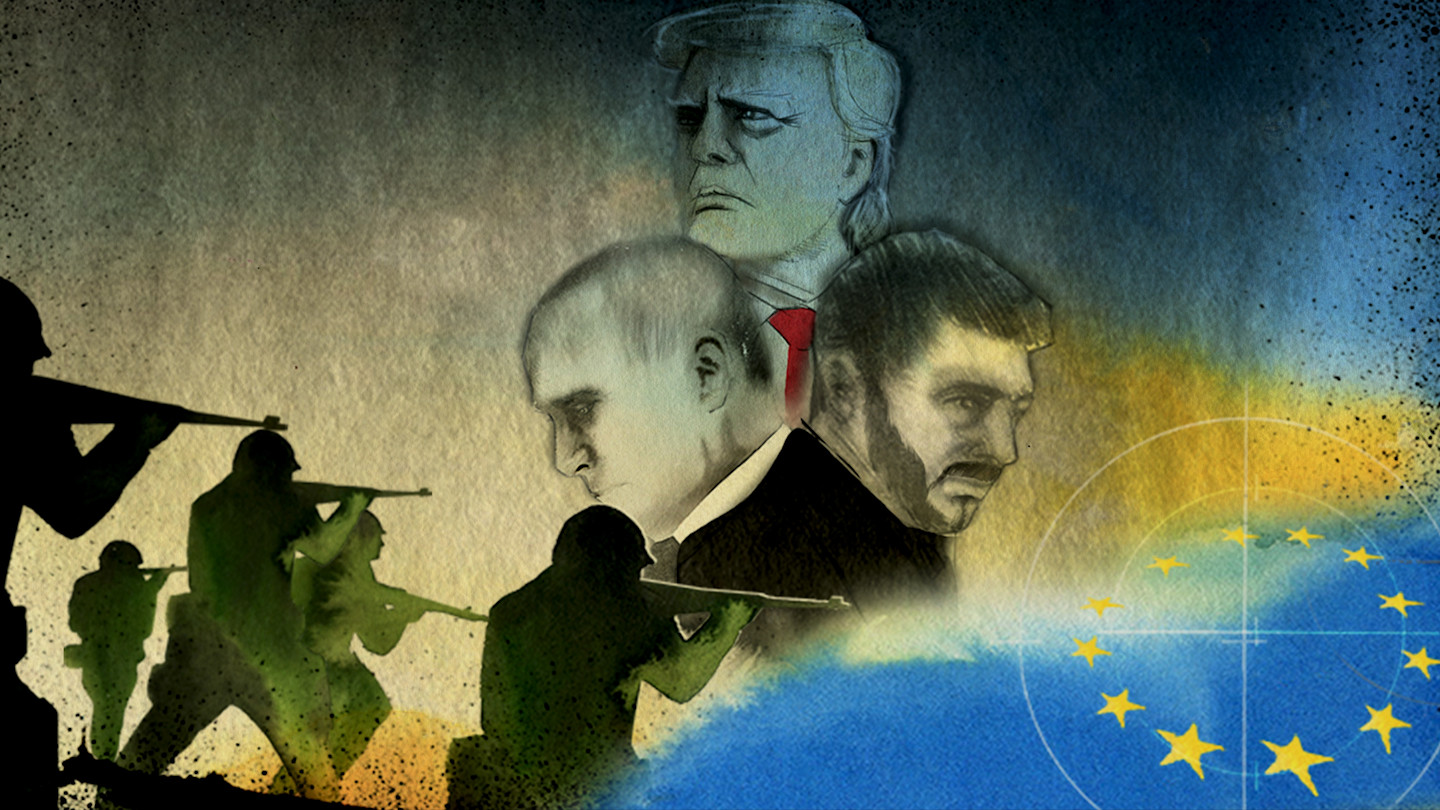
For instance, the recent Starlink controversy illustrates the above problem. In October, restrictions on some satellite services disrupted Ukrainian military drone operations, according to Ukrainian officials and Reuters. US President Trump subsequently said access had been restored, although reports differed over whether full functionality had returned. The episode exposed Ukraine’s dependence on privately operated technology and capabilities linked to the United States. It also demonstrated how decisions made outside the battlefield can have immediate military consequences. Now, what happens behind closed doors in the Oval Office cannot be established without evidence. But the public record points to a clash of priorities. Trump wants a diplomatic outcome that can be presented as a foreign policy success. Zelenskyy needs to ensure that ending the war does not leave Ukraine exposed to renewed aggression. Putin wants territorial gains and a settlement that limits Ukraine’s strategic freedom.
The danger for Kyiv is that pressure to accept a deal could increase if Washington decides that prolonging the war is more costly than accepting an imperfect settlement. However, Ukraine cannot be expected to regard a ceasefire as secure simply because the guns fall silent. Any agreement would need credible security guarantees, effective monitoring, provisions against renewed attacks and clarity about the consequences of violations. Without these safeguards, a ceasefire could become a pause rather than a peace.
Regarding Europe, the consequences would extend well beyond Ukraine’s borders. Poland and Finland would remain on the front line of NATO’s deterrence strategy, while Germany would face continued pressure to strengthen its military capabilities and sustain European defence spending. NATO’s expanding forward presence and multinational exercises demonstrate that European governments are preparing for a prolonged period of confrontation, not assuming that negotiations will eliminate the Russian threat. Because, in essence, the Ukrainian front played a buffer role for Eastern Europe over the past years, and today, the threat of Ukraine agreeing to end the war is a wake-up call for Europe in fact to prepare for a long war.
Alternatively, a settlement could also reshape European politics, such as governments might disagree over sanctions, reconstruction, military assistance and the future relationship with Moscow. Some would favour economic normalisation, and others would argue that easing pressure without enforceable Russian commitments would undermine deterrence. Thus, scepticism remains a major reason for all hesitations. Many understand that Ukraine’s reconstruction could create major investment opportunities, but those gains would depend on whether investors believed another war could be prevented.
The consequences would reach beyond Europe, too. Governments in the South Caucasus, Central Asia and other regions would examine whether the outcome reinforced territorial integrity or demonstrated that force could change internationally recognised borders. For countries balancing relations with Russia and Western powers, the credibility of security commitments would matter as much as the terms of the Ukrainian settlement itself.
Ultimately, Russia could emerge from the war with additional territory and claim victory. But holding land is not the same as achieving security, and a settlement that leaves Ukraine unstable could perpetuate the very confrontation it is intended to end. Russia would still face the economic costs of war, an increasingly militarised Europe and a NATO alliance that has expanded to include Finland and Sweden.
The decisive question is not whether Putin will accept a ceasefire. It is whether he will accept limits on what Russia can demand after the fighting stops.
If the answer is yes, diplomacy could open the way to a durable peace. If the answer is no, Europe may discover that the end of the Ukraine war was not the end of the crisis, but the beginning of a more uncertain and dangerous phase.
Photo credit: Financial Times
Here we are to serve you with news right now. It does not cost much, but worth your attention.
Choose to support open, independent, quality journalism and subscribe on a monthly basis.
By subscribing to our online newspaper, you can have full digital access to all news, analysis, and much more.
You can also follow AzerNEWS on Twitter @AzerNewsAz or Facebook @AzerNewsNewspaper
Thank you!