
Azerbaijan moves to extend its energy influence across Caspian

Qabil Ashirov
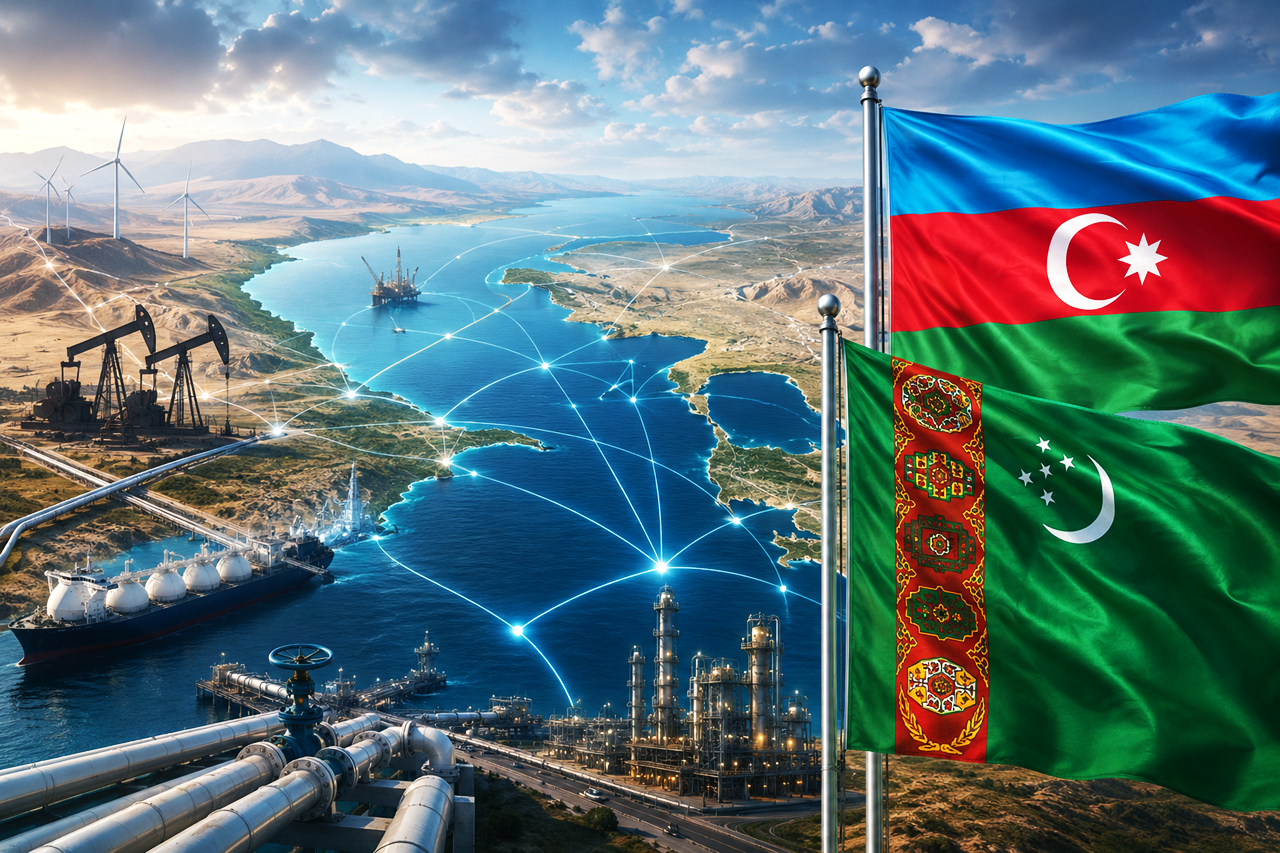
Read moreThe decision by Baku to propose routing Turkmen electricity to European markets via Azerbaijan marks a transformative leap in Trans-Caspian energy architecture. Announced at the OGT 2026 conference in Ashgabat by Deputy Energy Minister Kamal Abbasov, this initiative converts a longstanding maritime divide into a strategic power bridge. Turkmen generation capacity, long restricted by regional infrastructure constraints, now gains direct access to high-value Western power consumers. This project strengthens Azerbaijan's position as an indispensable transcontinental green energy corridor while unlocking massive commercial potential for both Caspian neighbors.
Turkmenistan holds a total installed power generation capacity of approximately 7.5 gigawatts, yielding over 28 billion kilowatt-hours of annual output. With internal national consumption holding steady at around 19 billion kilowatt-hours, Ashgabat commands a surplus of 9 billion kilowatt-hours available for long-term foreign delivery. Integrating desert solar installations with existing thermal power stations gives Turkmenistan the structural agility to supply clean and transition electricity westward. Initial exports through a Caspian high-voltage direct current link can channel 2 to 3 gigawatts toward European networks. That volume translates into an annual power transfer of roughly 10 billion kilowatt-hours through Caucasian lines.
Azerbaijan secures massive financial returns from managing this trans-Caspian energy flow. Standard international electricity wheeling charges average between 0.010 and 0.015 US dollars per kilowatt-hour. Transmitting an annual volume of 5 billion kilowatt-hours generates 75 million US dollars in pure transit revenues for the state treasury. Scaling transmission volumes up to the full 10 billion kilowatt-hour threshold doubles annual transit income to 150 million US dollars. Over a standard twenty-year operational lifespan, this single transit channel injects 3 billion US dollars directly into the Azerbaijani economy.
Financing this subsea power line draws billions of dollars in foreign direct investment toward local infrastructure. European financial institutions view the Trans-Caspian Green Energy Corridor as an essential asset for continental energy security. The construction phase foresees a 2.5 billion US dollar investment into underwater cabling, converter stations, and grid upgrades across Azerbaijan. Local supply chains, technical providers, and engineering firms will capture significant shares of this capital influx. Strengthening the high-voltage grid equally optimizes domestic distribution, lowering overall transmission losses across Azerbaijan to under 5 percent.
The geopolitical consequences of this electrical bridge elevate Baku's regional authority to unprecedented heights. Serving as the primary gateway for Turkmen energy gives Azerbaijan decisive leverage within global energy markets. European nations looking to diversify their power imports must rely fully on Azerbaijani transit reliability. This dynamic transforms Baku from a regional producer into a premier Eurasian energy hub controlling both physical supply and transit routes.
Ashgabat gains crucial diplomatic and commercial flexibility through this Western export channel. Accessing European power markets allows Turkmenistan to break its traditional reliance on localized regional buyers. Diversifying export destinations maximizes the market value of Turkmen electricity, raising average returns per megawatt-hour by over 35 percent. This mutual economic dependence deepens bilateral trust between Baku and Ashgabat, fostering long-term stability across the Caspian basin.
Connecting Turkmen electricity output to Caucasian transmission grids creates a unified Caspian power ecosystem. Blending Turkmen solar and natural-gas-generated electricity with Azerbaijani offshore wind capacity optimizes the operational stability of the entire route. European buyers receive a steady, baseload-capable flow of green power reaching 15 terawatt-hours annually across combined Caspian sources.
By linking Central Asian supply directly to European demand, Azerbaijan cements its status as an irreplaceable geopolitical anchor. The project secures predictable hard-currency revenues, attracts multi-billion-dollar infrastructure investments, and elevates Baku's voice in continental energy policy. This ambitious electrical corridor redefines Trans-Caspian relations, building a lasting foundation for shared economic growth and strategic integration.
Here we are to serve you with news right now. It does not cost much, but worth your attention.
Choose to support open, independent, quality journalism and subscribe on a monthly basis.
By subscribing to our online newspaper, you can have full digital access to all news, analysis, and much more.
You can also follow AzerNEWS on Twitter @AzerNewsAz or Facebook @AzerNewsNewspaper
Thank you!